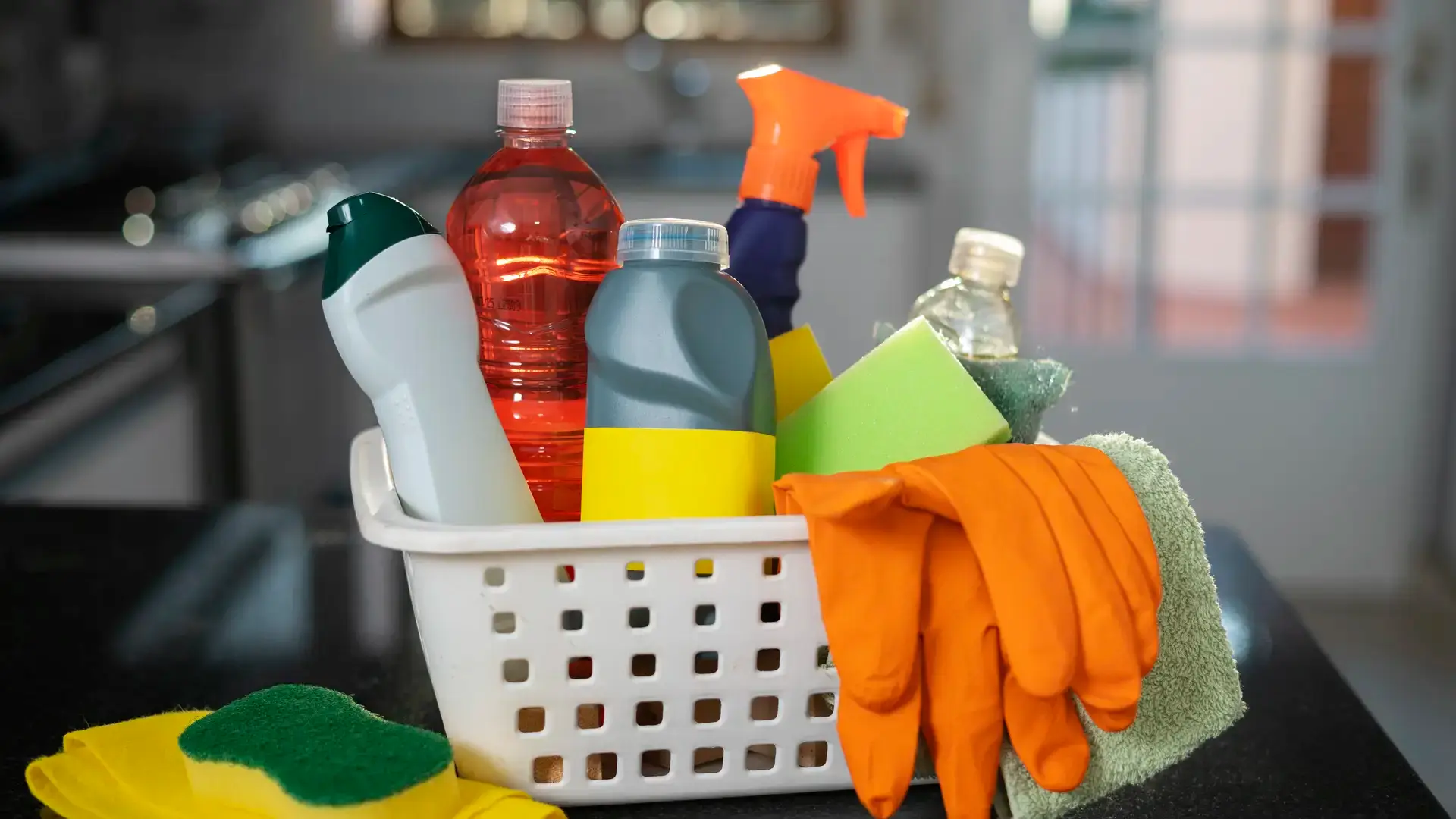
Most cleaning accidents at home do not happen from using the wrong product on the wrong surface. They happen from combining two products that seem perfectly safe on their own but turn dangerous the moment they contact each other.
Mixing chemicals in cleaning products is a common and underestimated risk. A bathroom spray followed by a bleach-based toilet cleaner, or a vinegar rinse after a bleach wipe down, can produce fumes or reactions strong enough to cause respiratory irritation, chemical burns, or worse in a poorly ventilated space. Knowing which combinations to avoid, and why, is one of the most practical pieces of safety knowledge for any household.
Which combinations to never use together
Never mix bleach with ammonia, vinegar, rubbing alcohol, or hydrogen peroxide. Never mix hydrogen peroxide with vinegar in the same container. Avoid using drain cleaners with any other product. Each of these combinations produces a chemical reaction that releases fumes or compounds harmful to skin, eyes, and lungs.
Why mixing chemicals in cleaning products is more common than people expect
Many households use cleaning products without checking ingredient lists, and a lot of products contain ingredients that react badly with each other without being labeled as such. Bleach, for example, appears in toilet bowl cleaners, mold sprays, bathroom disinfectants, and some laundry products. A homeowner who cleans a surface with a bleach spray and then uses a vinegar-based cleaner on the same spot moments later is mixing chemicals without realizing it.
The problem is that the reactions happen quickly, in the same space where breathing is unavoidable, which is what makes these accidents more serious than they first appear.
Bleach and ammonia: one of the most dangerous combinations
Mixing bleach with ammonia releases chloramine gas, a toxic compound that causes coughing, shortness of breath, chest pain, and watery eyes at even moderate concentrations. At higher concentrations, it can cause fluid buildup in the lungs.
Ammonia appears in many glass cleaners, multipurpose sprays, and floor cleaning products, often without the word “ammonia” printed prominently on the front of the bottle. Checking the ingredient list before using two products on the same surface is the safest approach, rather than assuming two cleaners with different names are chemically compatible.
Bleach and vinegar: still harmful even in small amounts
Bleach mixed with vinegar produces chlorine gas. The reaction is faster and more intense than many people expect, especially in a confined space like a bathroom or kitchen sink with limited airflow. Even the residue from a bleach wipe, if followed immediately by a vinegar spray, is enough to trigger the reaction.
This is one of the most commonly reported accidental mixing chemicals incidents in homes, simply because both bleach and vinegar are popular cleaning staples that seem like they belong together.
Bleach and hydrogen peroxide: a less obvious but real hazard
Mixing bleach with hydrogen peroxide accelerates the decomposition of the bleach, releasing oxygen rapidly and producing peracetic acid. Depending on concentrations, this can cause irritation to skin, eyes, and the respiratory tract, and at higher concentrations it creates a fire risk. Many people assume hydrogen peroxide is so mild it could not react badly with anything, but the reaction with bleach is well documented and worth taking seriously.
Hydrogen peroxide and vinegar: not as safe as it sounds
Using hydrogen peroxide and vinegar sequentially on a surface, spraying one and then the other, seems like a natural cleaning method, and some older cleaning tips online have promoted it as such. The problem is that when mixed, they form peracetic acid, which is corrosive enough to damage skin and irritate the lungs. The reaction is less intense than bleach-based ones but still worth avoiding.
Mixing chemicals in drain cleaners: always use alone
Commercial drain cleaners are among the most reactive products in most households. They are formulated to break down organic material chemically, which means they react strongly with almost any other cleaning product. Using a drain cleaner in combination with a bleach cleaner, an enzyme-based cleaner, or even water immediately after an earlier product can produce heat, splashing, and toxic fumes. Drain cleaners should always be used alone, exactly as directed on the label, with the drain closed between applications if a second treatment is needed.
Rubbing alcohol and bleach: another common mistake
Combining rubbing alcohol with bleach produces chloroform and other toxic compounds. This is another mixing chemicals combination that happens without intention, often when someone uses an alcohol-based surface spray and then follows up with a bleach wipe on the same countertop or surface.
Safe cleaning alternatives that do not require mixing chemicals
Avoiding these combinations does not mean giving up cleaning power. A few safer approaches:
- Use one product at a time and rinse the surface thoroughly with water before applying a second cleaner
- For general disinfecting, soap and warm water removes most bacteria and viruses without chemical risk
- For odors, baking soda alone handles most situations without needing to mix anything
- For mold, a commercial mold remover used exactly as directed performs better and more safely than a homemade bleach and vinegar combination
- For glass and mirrors, a purpose-formulated glass cleaner eliminates the need to mix two household products in hopes of better results
Room-by-room guide to avoiding mixing chemicals by mistake
Some rooms create more risk than others simply because of how many different products get used in them:
Bathroom: Bleach-based toilet bowl cleaners, mold sprays, glass cleaners with ammonia, and tile scrubs often coexist under the same sink. The tight space and limited ventilation make any accidental mixing chemicals situation more dangerous here than anywhere else in the home. Use one product, ventilate, and rinse the surface before switching to another.
Kitchen: Vinegar-based surface sprays are popular in kitchens for their ability to cut through grease without heavy chemicals. The problem arises when a bleach-based disinfectant spray is used on the same counter afterward, often without a rinse in between. Keeping vinegar and bleach products on separate shelves and using only one type per cleaning session reduces this risk.
Laundry room: Mixing chemicals here tends to happen with detergents and bleach in the washer drum. Using the bleach compartment in the machine, rather than pouring directly into a drum that still has detergent residue, manages the concentration safely.
How to read a label before using a new cleaning product
A few minutes with the label before the first use of any product prevents the most common accidental combinations:
- Look for active ingredients listed under “contains” or “ingredients,” usually in smaller print on the back or side
- Sodium hypochlorite means the product contains bleach
- Ammonium hydroxide means it contains ammonia
- Products labeled “do not mix with bleach” always state this on the label, but only for themselves, not for the products they are being combined with
If an ingredient list is not available on the packaging, the manufacturer’s Safety Data Sheet (SDS) is publicly available online and lists every reactive chemical in the product.
If fumes become noticeable after mixing chemicals, leave the space immediately and ventilate by opening windows and doors from a safe position. Move to fresh air and call Poison Control (1-800-222-1222 in the US) if any symptoms appear, including coughing, eye burning, dizziness, or difficulty breathing. Do not re-enter the space to clean up the mixture until the area has been fully aired out, and let water flush the mixture down the drain rather than attempting to manually mix or neutralize it further.
A scenario cleaning professionals encounter occasionally
During recurring residential visits, cleaning teams occasionally arrive to find a bathroom or kitchen with a sharp chemical smell that the household has not identified. In many cases, the source turns out to be an accidental bleach and ammonia combination from using two different products on the same surface in the same session. The smell usually dissipates within hours once windows are opened, but it is a consistent reminder that mixing chemicals between products is not always obvious from the packaging alone.
According to the CDC’s guidance on chemical safety in the home, chlorine gas and chloramine, two of the most common byproducts of household cleaning chemical combinations, are serious enough to be classified as hazardous materials in occupational safety contexts, even though they can be produced by common household products.
Frequently asked questions about mixing cleaning chemicals
Can you mix bleach with hydrogen peroxide to make a stronger cleaner?
No. Mixing these two produces peracetic acid, accelerates decomposition of the bleach, and creates a fire risk at certain concentrations. Using either product separately at full concentration is safer and more effective.
Is it safe to use vinegar after bleach if you rinse first?
A thorough rinse with water between the two products significantly reduces the risk, but the safest approach is to avoid using them on the same surface in the same session, since residue from bleach can linger even after rinsing.
What happens if you accidentally mix bleach and ammonia?
Chloramine gas is released, causing coughing, eye and throat irritation, and potentially more serious respiratory symptoms. Leave the space immediately, ventilate, and call Poison Control if symptoms appear.
Are natural cleaners like vinegar and baking soda safe to mix?
Mixing baking soda and vinegar produces carbon dioxide and water. While the fizzing looks effective, the chemical reaction cancels out the cleaning properties of both, leaving mostly water. It is not dangerous, but it is not useful either.
How can I tell if a product contains bleach or ammonia?
Check the ingredient list on the back of the bottle, not just the front label. Bleach-based products often list sodium hypochlorite. Ammonia may appear as ammonium hydroxide. If no ingredient list is visible, check the manufacturer’s website or avoid combining it with any other cleaner.
Cleaning effectively without putting the household at risk
Safe cleaning does not require more products or more powerful combinations. It requires knowing which products do what, using them one at a time, and rinsing between applications when more than one is genuinely needed.
For households that prefer leaving the chemistry decisions to someone else, professional deep cleaning services bring the right products for each surface without the guesswork, while a recurring residential cleaning plan keeps every room consistently clean with products chosen for safety and effectiveness together.