A gym is one of the highest-touch commercial environments outside of a hospital. Dozens or hundreds of people move through the space each day, sharing equipment, surfaces, and air with everyone around them. Sweat, skin contact, moisture, and warm temperatures combine to create conditions where bacteria and fungi spread faster than in almost any other public space.
Cleaning a gym properly goes far beyond wiping down equipment between members. It requires a systematic, scheduled approach that addresses every surface, every piece of equipment, and every high-contact area on a frequency that matches how hard the space gets used.
The real cost of a gym that isn’t cleaned properly
Before covering what professional cleaning involves, it’s worth understanding what happens without it. Gyms that rely solely on members wiping equipment after use accumulate bacteria on handles, benches, and floor mats that no quick spray removes completely. MRSA, ringworm, athlete’s foot, and other contagious conditions spread through fitness facilities with inadequate cleaning protocols. Member complaints follow, and so does reputational damage that affects retention far more than most gym owners expect.
Cleaning a gym at the level members and health regulations require is not an optional extra. It is a core operational responsibility.
How often does a gym need professional cleaning
Cleaning a gym effectively requires multiple frequencies running in parallel:
- During operating hours (daily): Equipment wipes by staff between members, trash bins emptied, bathroom checks every 1–2 hours, spills addressed immediately
- Daily deep clean after close: Full equipment sanitization, floor mopping, bathroom and locker room deep clean, mirror and glass cleaning
- Weekly: Stretching and yoga mat deep sanitization, weight rack and pulley system detail clean, steam cleaning of changing room benches
- Monthly: Gym floor deep scrub and resealing if applicable, ventilation grille cleaning, cardio machine inspection and detail clean including under units
Small boutique studios may manage some of this in-house, but a full-service gym or fitness center with locker rooms, pools, or sauna areas almost always needs a dedicated fitness center cleaning service for the daily and weekly tasks.
What a professional gym cleaning checklist covers
A thorough gym cleaning checklist divides the facility into zones, each with its own protocols:
Cardio equipment zone
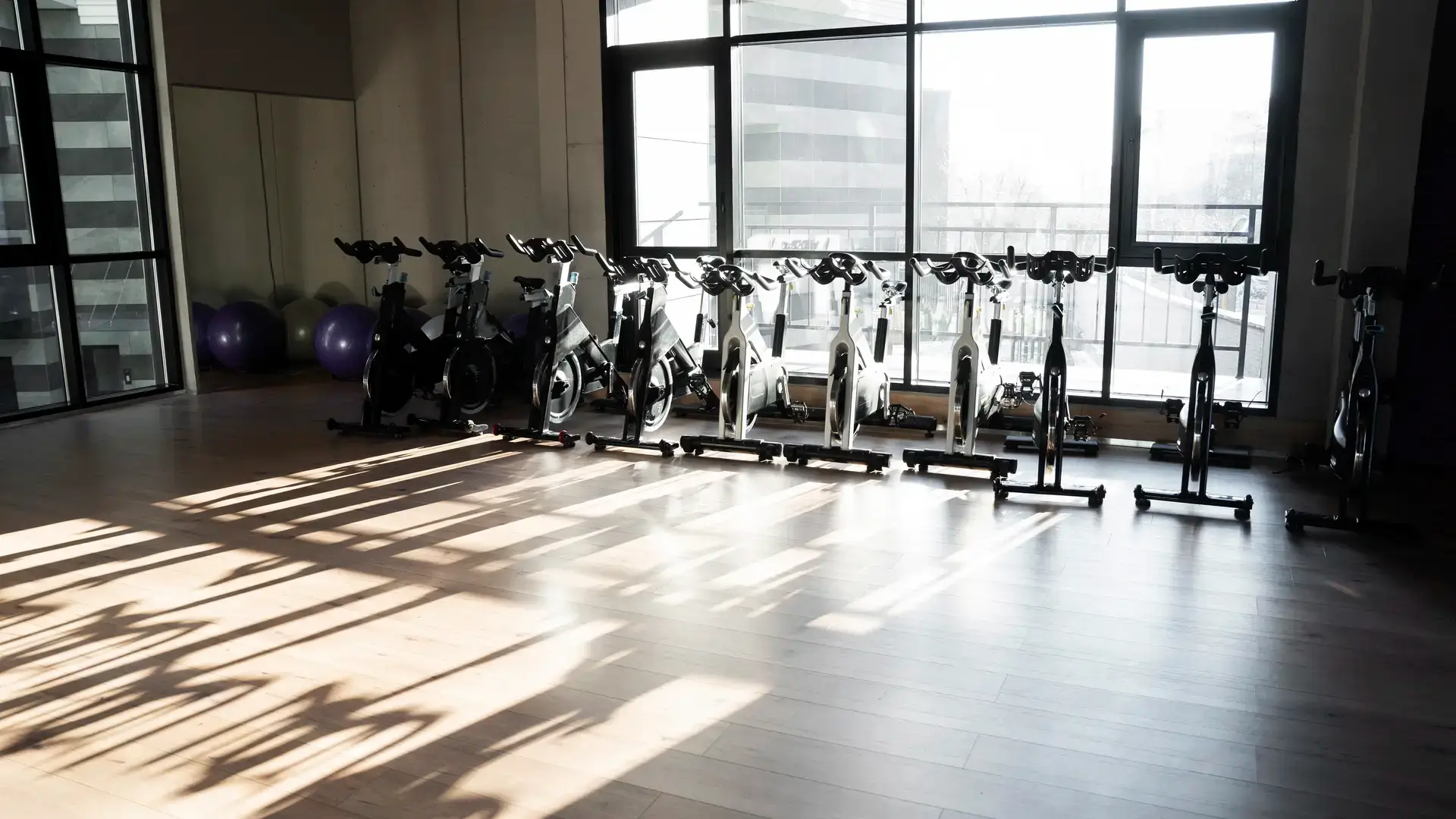
Treadmills, ellipticals, stationary bikes, and rowing machines have handles, screens, seat surfaces, and belt edges that collect sweat every session. Cleaning a gym’s cardio zone means wiping every contact surface with a hospital-grade disinfectant, cleaning under and behind units where dust and debris accumulate, and inspecting for any maintenance issues noted during the clean.
Free weights and strength equipment
Dumbbells, barbells, and plate-loaded machines are among the highest-touch surfaces in any facility. They require full disinfection of handles and grip areas after each operating day, along with a periodic clean of the racks and cradles themselves, which collect chalk, rust dust, and skin residue in grooves most surface wipes never reach.
Locker rooms, showers, and bathrooms
These areas carry the highest infection risk in any gym. Daily cleaning after close includes scrubbing shower floors, drains, and walls for mold and fungal buildup, sanitizing all toilet and sink surfaces, and replacing supplies. A fitness center cleaning service typically uses EPA-registered disinfectants rated for the specific organisms that thrive in humid locker room environments.
Studio and group class floors
Yoga and fitness studio floors come into direct contact with skin, bare feet, and faces during floor exercises. Daily mopping is a baseline, but gym equipment sanitizing for studio floors also includes attention to the corners, baseboards, and along mirror edges where mop heads rarely reach well.
Reception and lobby
Member-facing areas create first impressions and also carry high-touch surfaces including door handles, check-in kiosks, water stations, and seating. These are cleaned daily but often given lower priority than back-of-house areas, which is a common oversight in gym cleaning protocols.
Gym equipment sanitizing: what actually works
Not all cleaning products are appropriate for gym equipment sanitizing. Some disinfectants that work well on hard surfaces damage rubberized grips, foam padding, and screen coatings over time. A professional cleaning service selects products that match each surface type, which is one of the key reasons professional cleaning outperforms staff-only protocols for equipment care.
Key considerations for gym equipment sanitizing:
- Use quat-based or hydrogen peroxide-based disinfectants on hard surfaces
- Avoid bleach on rubberized or upholstered surfaces, which causes cracking and fading
- Test new products on a small hidden area before use on an entire machine
- Avoid products that leave a residue on touchscreens or digital displays
Cleaning a gym with multiple zones: why one schedule doesn’t fit all
A large gym facility is not a single environment. It contains cardio floors, locker rooms, studio spaces, reception areas, and sometimes a pool or sauna, each with a different surface type, humidity level, and contact frequency. Cleaning a gym effectively means applying a different protocol to each zone rather than running the same routine through every room.
The cardio floor and free weights area need the most frequent attention during operating hours. The locker rooms carry the highest hygiene risk per square foot. The studio spaces need a different type of floor care than rubber-floored weight rooms. And the reception area, while less immediately associated with hygiene concerns, is often the first surface a member touches on arrival.
A professional fitness center cleaning service builds this zone logic into the schedule, assigning different frequencies and products to different areas rather than treating the entire facility as a single cleaning task.
What members notice first when a gym isn’t cleaned well
Member perception of cleanliness in a gym is shaped by a small number of specific cues more than by overall neatness:
- The smell of the locker room when they walk in
- Visible residue or stickiness on equipment handles
- The condition of the shower area
- Smudges on mirrors in the studio or changing room
- Overflowing trash bins near the water stations
Cleaning a gym in a way that directly addresses these visible and sensory signals has a measurable effect on how members talk about the facility. A space that smells clean and has dry, residue-free equipment handles reads as well-maintained even before someone checks a cleaning schedule.
Commercial gym facilities in Maryland fall under general commercial sanitation standards, and fitness facilities with pools or saunas are also subject to Maryland Department of Health guidelines. While no single state law mandates a specific cleaning frequency for general gym equipment, facilities that operate under membership contracts and public health inspections benefit from documented cleaning protocols that demonstrate due diligence. A professional gym cleaning service in Maryland typically provides cleaning logs that serve this purpose.
What professional cleaners find during gym facility assessments
During initial walkthroughs of gym facilities that have relied primarily on members wiping down equipment between uses, cleaning professionals consistently find the same overlooked areas: underneath cardio equipment, the underside of weight benches, the tracks of cable machines, and the floor directly underneath free weight racks. These are the spots members never clean and staff rarely reach during operating hours, and they are also the spots where bacteria persist longest between visits.
Locker room drains and grout lines are another area that comes up consistently. A drain that looks clean from above often harbors fungal growth in the P-trap or in grout that has not been scrubbed in months, which keeps releasing spores into the air even after the surface above it appears clean.
According to the CDC’s guidelines on environmental infection control, high-touch surfaces in shared facilities require disinfection with EPA-registered products at frequencies that match the volume and type of use, a standard that applies directly to commercial gyms and fitness centers.
Frequently asked questions about gym cleaning
How often should gym equipment be sanitized during the day?
High-use equipment in a busy gym should be wiped down by staff at least once every two hours during operating hours, in addition to what members do between sets. This is a minimum, not a ceiling, for facilities with high membership density.
Can a regular commercial cleaning service handle a gym?
Most commercial cleaning companies can handle a gym’s common areas, bathrooms, and floors. For specialized gym equipment sanitizing and locker room deep cleaning, a service with experience in fitness facility environments applies the right products and protocols for each surface type.
What happens if a gym is not cleaned frequently enough?
Infection rates among members rise, complaints increase, and the facility risks failing health inspections or losing accreditation. Word-of-mouth around hygiene issues spreads quickly among members and can affect new sign-ups significantly.
How long does a full gym deep clean take?
For a mid-size gym of 3,000 to 8,000 square feet, a full after-hours deep clean typically takes a two-to-four-person crew two to four hours. Larger facilities with pools, saunas, or multiple studio spaces take longer.
Is gym equipment sanitizing different from general disinfection?
Yes. Equipment sanitizing in a gym context specifically accounts for rubberized, foam, and upholstered surfaces that react differently to cleaning agents than countertops or floors. The product selection and application method differ from general surface disinfection.
Making professional cleaning part of how a gym operates
Cleaning a gym consistently is not a task that can be delegated entirely to members or addressed only when something looks visibly dirty. It requires a documented protocol, the right products, and a professional team that understands what fitness facilities specifically need.
For gyms and fitness businesses in the DMV region, a commercial cleaning plan provides the structure and consistency that member-facing facilities require, and a professional office cleaning service covers the administrative and reception areas that are part of the same facility but follow a different cleaning protocol than the workout floor.
Facilities that start with a documented cleaning schedule, even a basic one, consistently perform better in member satisfaction surveys around hygiene than those relying entirely on informal staff wipe-downs. Cleaning a gym to the standard members expect is ultimately a retention strategy as much as a health one, and the return on a professional service is visible in both the environment and the feedback that follows. For gyms that are scaling up or adding new spaces, establishing a professional cleaning baseline early is far easier than trying to correct an entrenched hygiene issue after the membership base is already formed.