
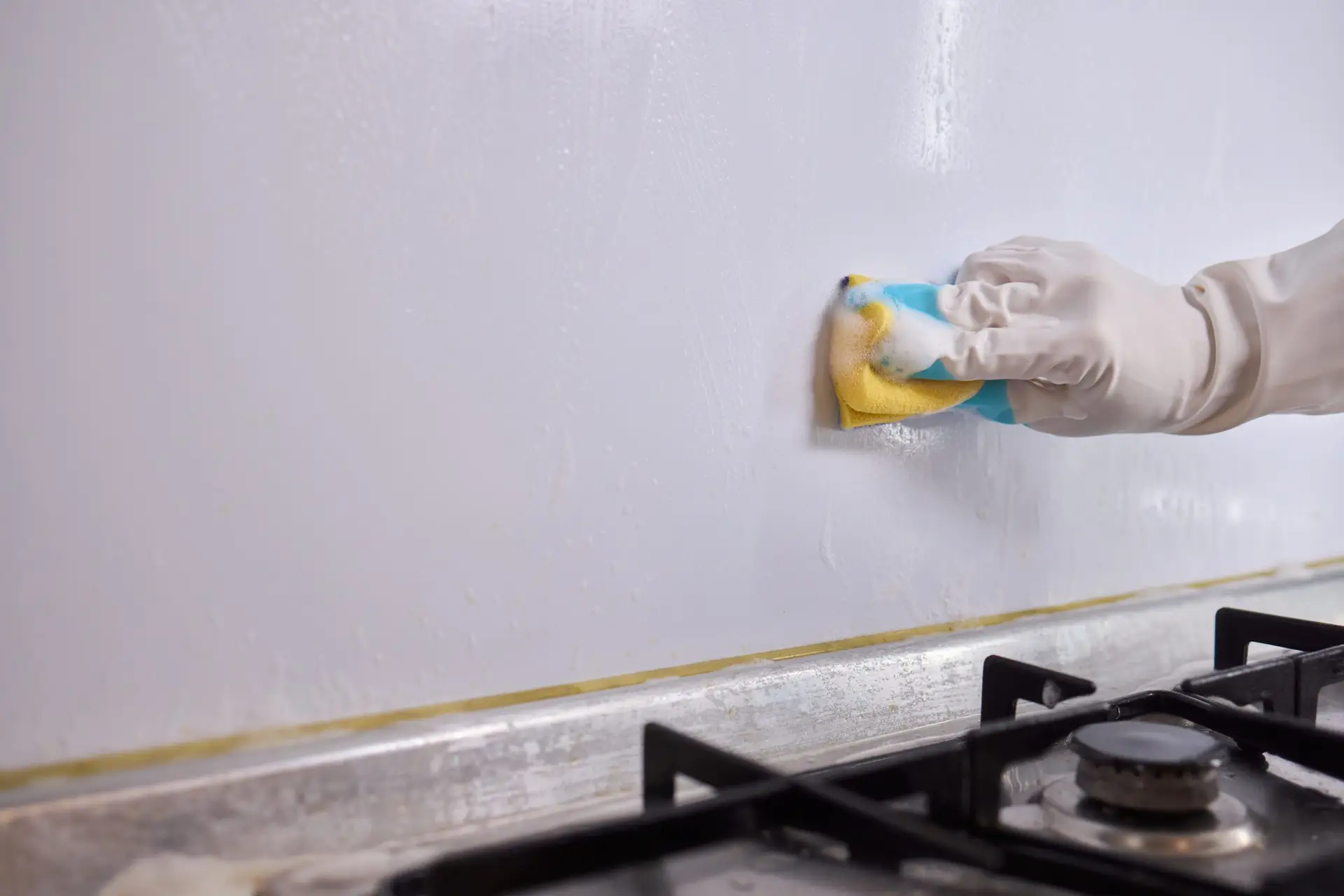
The kitchen backsplash is the unsung hero of your cooking space, but it pays a price for its proximity to the stove. Airborne grease, tiny oil splatters, and steam combine to form a stubborn, sticky film that attracts dust and dulls your kitchen’s shine. Knowing how to remove this buildup without damaging your finish—whether it’s stone, tile, or glass—is essential for maintaining a bright, sanitary kitchen.
Quick Answer: The Degreasing Process
To safely remove grease, you must first loosen the hardened oils. Apply a material-compatible degreaser, allow it to “dwell” for a few minutes so it can break the bond of the grease, then wipe it away using a soft microfiber cloth. Always finish by drying the surface to prevent streaks or water spots. Never use abrasive scrubbers, as they can permanently dull or scratch your backsplash.
Identify the Backsplash Material First
Before you spray, stop and look at your material. Using a “universal” degreaser can cause irreversible damage if you have high-end finishes.
- Ceramic & Porcelain Tile: Generally the most durable; can handle mild degreasers.
- Natural Stone (Marble, Slate, Travertine): Handle with extreme caution. These are porous and sensitive to acid. Only use pH-neutral cleaners specifically designed for stone.
- Stainless Steel: Use a stainless steel cleaner or a very mild soapy water solution. Avoid anything that will cause streaking.
- Glass: Best cleaned with alcohol or glass-safe cleaners to ensure a crystal-clear, streak-free finish.
- Painted Walls: Require the most delicate touch; use a very dilute soap solution and avoid heavy scrubbing, which could lift the paint.
Step-by-Step Grease Removal Method
- Prep the Surface: Before getting the backsplash wet, use a dry microfiber cloth to wipe away any loose dust or crumbs. If you get dust wet, it turns into “mud” and becomes harder to remove.
- Apply Solution: Spray your surface-safe degreaser or mild soap solution onto the cloth, not directly onto the wall. This gives you more control and prevents liquid from dripping behind outlets or into cabinetry seams.
- Dwell Time: Let the solution sit for 2–5 minutes. This is the secret to easy cleaning; the cleaner needs time to emulsify the grease.
- Wipe Gently: Use a clean microfiber cloth in circular motions.
- Rinse & Dry: If the product requires rinsing, use a second cloth dampened with plain water. Finally, always buff the surface dry. Leaving moisture behind is the #1 cause of streaks and water spots.
Clean Grout Lines and Edges Carefully
Grease is particularly fond of grout lines, which are porous and act like a magnet for oil.
- The Brush Technique: If you are dealing with ceramic or porcelain tile, a soft-bristled toothbrush is your best tool. Dip it in your cleaning solution and scrub the grout lines gently.
- Edge Work: Don’t forget the tight corners where the backsplash meets the counter and the areas around electrical outlets. Use a dry cotton swab to reach these narrow spots.
- Prevention: The best way to keep grout clean is to wipe down the area immediately after a high-heat cooking session, before the splatters have a chance to harden into “tacky” grease.
When Professional Kitchen Cleaning Helps
Even with a solid routine, grease has a way of migrating into the “hard-to-reach” places—the area behind your toaster, the top edge of the backsplash, or the tiny crevices around the stove controls.
At Clean Day Maids, we specialize in professional, recurring kitchen maintenance. We know how to identify your specific backsplash material and apply the right professional-grade, surface-safe cleaning agents to ensure your kitchen stays pristine without the risk of damage. Let us take care of the deep buildup so you can enjoy cooking without the stress of cleanup.
Book your professional kitchen cleaning visit with Clean Day Maids today!
Frequently Asked Questions
- What removes grease from a backsplash? A mild dish soap solution is the safest “home” option, as dish soap is chemically formulated to break down animal and vegetable fats. For tougher grime, look for a non-abrasive, pH-neutral degreaser.
- Can vinegar damage a backsplash? Yes. Vinegar is acidic and can permanently etch natural stone like marble or granite. It can also degrade certain types of tile sealants over time. Avoid it on stone surfaces.
- How often should I clean behind the stove? If you cook daily, a quick wipe-down once a week is ideal. Waiting longer allows grease to oxidize, which makes it much harder to remove.
- Why does my backsplash feel sticky after cleaning? This usually happens because you’ve used too much cleaning product or haven’t wiped it away completely. A “sticky” feeling is actually a thin film of left-behind detergent. Rinse with a damp, clean cloth and buff dry.