That hazy, cloudy film clinging to your shower glass and faucet handles isn’t just unsightly—it’s a buildup of soap residue, minerals from your water, and body oils. If left alone, this “soap scum” hardens into a stubborn crust that becomes significantly harder to remove. Keeping your bathroom surfaces crystal clear requires a mix of the right chemistry and a bit of “finishing” technique.
Quick Answer: The Residue-Removal Routine
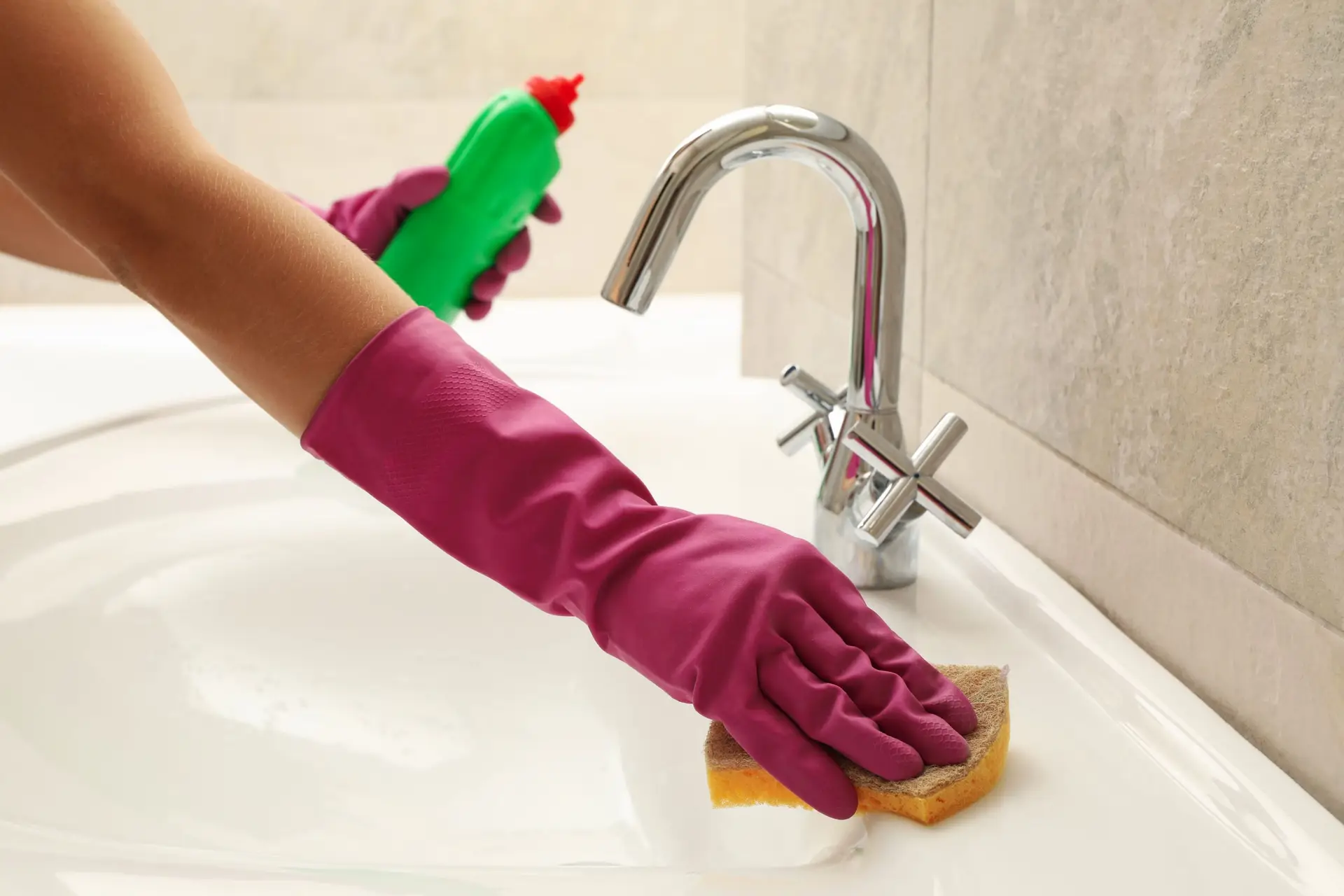
To clear away soap buildup, you must first soften the deposits. Apply a surface-safe cleaner, let it “dwell” for a few minutes to break down the bond, scrub gently with a non-scratch tool, and—most importantly—rinse thoroughly and buff dry. Drying is the step most people skip, yet it is the secret to preventing the cloudy haze from returning immediately.
Identify Where Residue Hides
Soap residue loves to congregate wherever water sits and evaporates. You’ll typically find it on:
- Shower Glass: The most visible spot; appears as a streaky, milky fog.
- Tile & Grout: Collects in the pores of the tile and the textured surface of grout lines.
- Tub Edges & Caddies: Horizontal surfaces where soap water pools.
- Faucets & Fixtures: Often combined with hard water mineral spots, giving them a dull, white, or crusty appearance.
What is the difference?
- Soap Residue: A gummy, slightly oily film caused by soap ingredients reacting with minerals in your water.
- Hard Water Spots: Dry, crunchy white mineral deposits left behind after water evaporates.
- Mildew: Often appears in pink or black spots and feels “fuzzy” rather than “filmy.”
Remove Residue Without Damaging Surfaces
Different surfaces require different strategies. Using a “one-size-fits-all” cleaner is a recipe for surface damage.
- Glass & Acrylic: Avoid anything gritty. Use a microfiber cloth with a dedicated glass or bathroom surface cleaner.
- Chrome & Faucets: Use a mild soap solution and a soft cloth. Never use steel wool or harsh scouring sponges, as these will permanently scratch the chrome finish, making it easier for residue to stick in the future.
- Natural Stone (Marble/Travertine): Handle with extreme care. Acids will etch the surface. Always use a pH-neutral cleaner safe for stone.
- The “Dwell” Secret: Spray your surface-safe cleaner and wait 3–5 minutes. This gives the chemical time to emulsify the oils so you don’t have to scrub hard. Scrubbing with force is what usually leads to scratches.
Prevent Soap Scum From Returning
The best cleaning is the cleaning you don’t have to do. Stop the buildup before it starts:
- Squeegee After Every Use: This is the #1 way to keep shower glass and tile clear. Removing the water before it evaporates eliminates the minerals and soap solids before they can bond to the surface.
- Switch to Liquid Body Wash: Bar soaps contain talc and other binding agents that are primary contributors to heavy soap scum. Switching to a high-quality liquid shower gel can drastically reduce residue.
- Consistent, Light Cleaning: A quick weekly wipe-down prevents the “hardening” phase of soap scum. It takes two minutes to wipe away fresh residue but 30 minutes to scrub away hardened buildup.
When Bathroom Cleaning Needs Professional Help
Soap scum, especially when combined with hard water minerals, can become deeply embedded in grout lines and shower corners. If your bathroom feels like it requires an “industrial” effort to get clean, it’s time to call in reinforcements.
At Clean Day Maids, we specialize in professional bathroom hygiene. We utilize surface-safe, detail-oriented techniques to lift buildup from every corner of your shower, tub, and fixtures. By scheduling recurring cleaning, we prevent that stubborn crust from ever forming, keeping your bathroom feeling fresh and hotel-clean all year round.
Ready for a brighter, clearer bathroom? Book your professional bathroom cleaning visit with Clean Day Maids today!
Frequently Asked Questions
- What removes soap residue best? For most surfaces, a non-abrasive, pH-neutral bathroom cleaner is best. If you have significant mineral deposits, a specialist hard-water remover (safe for your specific tile type) is the most effective choice.
- Is soap residue the same as soap scum? Yes, they are often used interchangeably. “Soap scum” is the hardened, stubborn result of fresh soap residue left to dry and react with water minerals.
- How often should shower surfaces be cleaned? For a home with daily use, a quick wipe-down once a week prevents buildup. A deep, professional-level clean should happen at least twice a month.
- Can professional cleaners remove soap buildup? Absolutely. Professional cleaning services are designed to address the deep, stubborn layers of buildup that standard household cleaning often misses.