
Quick Answer
To clean a mattress and eliminate stubborn odors effectively, strip all bedding, vacuum the entire surface with a soft upholstery attachment, spot-treat light stains with a mild soap mixture without soaking the fabric, and deodorize the mattress using baking soda before letting it air out completely.
Why Mattresses Collect Dust, Sweat and Odors
Every night, your mattress absorbs sweat, body oils, sloughed-off skin cells, and microscopic dust mites. Over time, these trapped particles accumulate deep within the inner padding, creating an ideal breeding ground for allergens and unpleasant odors.
What You Need Before You Start
Vacuum attachment
A clean upholstery or soft-bristled brush attachment on your vacuum is essential for lifting surface dust, hair, and dry debris off every tuft and crevice.
Mild cleaning solution
A gentle mixture of cold water and a few drops of mild dish soap or laundry detergent helps break down surface stains without damaging synthetic or cotton mattress ticking.
Baking soda for odor absorption
Plain baking soda acts as a natural deodorizer, absorbing trapped moisture, body oils, and lingering smells safely.
Step-by-Step Mattress Cleaning
Strip bedding and vacuum slowly
Remove all sheets, mattress protectors, and pillowcases. Run your vacuum slowly across the top, sides, and corners of the mattress to capture dust mites and debris.
Spot clean stains without soaking
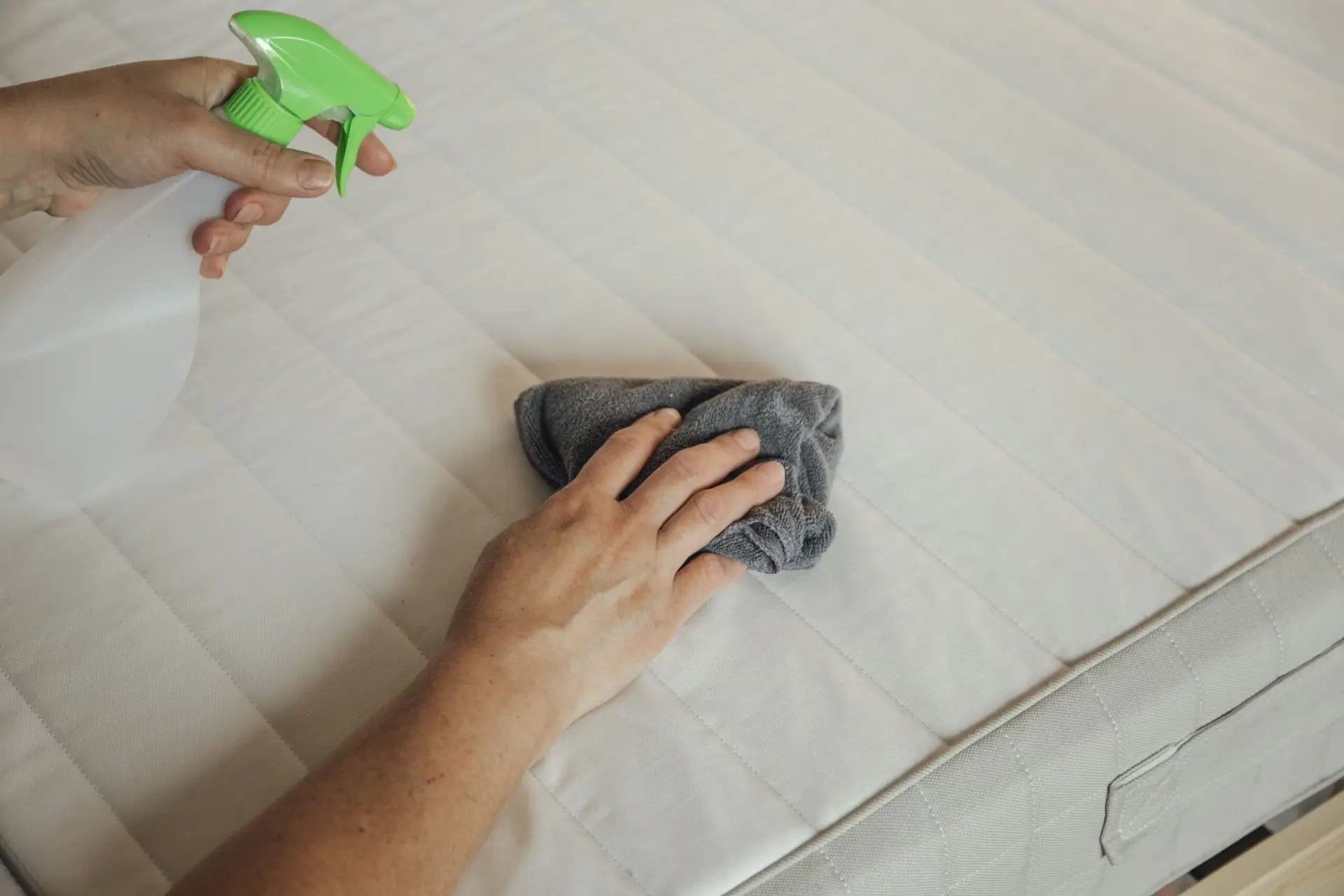
Dampen a clean cloth with your mild soap solution and dab gently at stains. Never saturate the mattress foam, as trapped moisture can lead to mold and mildew growth.
Deodorize and air dry fully
Generously sprinkle baking soda across the entire surface of the mattress. Let it sit for at least a few hours to absorb odors, then vacuum it up thoroughly. Keep windows open or use a fan to ensure the mattress dries completely.
How to prevent moisture problems
Always allow spot-cleaned areas to dry 100% before remaking the bed, use a breathable waterproof mattress protector to shield against future sweat and spills, and wash your sheets weekly—aligning with our guide on How Often Should You Wash Your Bedding.
When mattress cleaning should be part of deep cleaning
While regular sheet washing handles surface hygiene, periodic mattress freshening is best paired with a thorough bedroom reset. Incorporating mattress care into broader deep cleaning and ongoing residential cleaning routines ensures your sleeping quarters remain truly pristine and allergen-free.
CTA: Refresh bedrooms with professional house cleaning
Frequently Asked Questions
Can you wash a mattress?
You cannot submerge or wash a mattress like traditional laundry because excessive water will ruin the interior foam and springs. Instead, you should spot-clean surface stains and use dry deodorizing methods.
How do I remove odors from a mattress?
Sprinkle a generous layer of baking soda over the entire mattress, let it sit for 3 to 4 hours to neutralize trapped oils and smells, and vacuum it away completely.
How often should a mattress be cleaned?
You should vacuum and deodorize your mattress every 3 to 6 months, and wash your mattress protector and sheets weekly.
Can baking soda clean a mattress?
Baking soda cannot remove liquid stains on its own, but it is unmatched at absorbing and neutralizing organic odors and surface moisture.
Should I clean my mattress during deep cleaning?
Yes! Deep cleaning is the perfect time to tackle mattress freshening alongside washing baseboards, cleaning windows, and vacuuming upholstery.