
Quick Answer
To clean kitchen countertops safely without damaging the material, use warm water and a drop of mild dish soap for daily wipedowns, avoid acidic solutions like vinegar on natural stone, and always use specialized cleaners formulated specifically for your specific countertop surface—whether quartz, granite, marble, laminate, or butcher block.
Why Countertop Material Matters
Kitchen countertops endure heavy daily use from food prep, spills, hot pans, and cleaning chemicals. Because different materials possess unique chemical properties, using the wrong cleaning product can etch marble, strip the seal off granite, or warp butcher block wood, making material-specific care essential.
How to Clean Common Countertop Surfaces
Quartz
Quartz is engineered stone that resists stains well, but harsh bleach or abrasive scouring pads can dull its glossy finish. Clean daily using warm soapy water or a non-abrasive multi-surface cleaner, and wipe dry with a microfiber cloth.
Granite
Natural granite requires a balanced pH cleaner. Never use vinegar, ammonia, or lemon juice, as these acidic liquids will slowly eat away at the protective stone sealant. Use warm soapy water or a dedicated stone cleaner.
Marble
Marble is highly porous and sensitive to acids. Even mild citrus or vinegar will instantly etch and dull polished marble. Clean gently with warm water and specialized stone soap, wiping spills immediately.
Laminate
Laminate counters are budget-friendly and easy to maintain, but excessive standing water can seep into seams and cause swelling. Wipe clean with mild soap and water, avoiding harsh scouring powders that scratch the surface.
Butcher block
Wood countertops require special care to prevent drying and cracking. Clean with mild soap and warm water, dry immediately, and periodically condition the wood with food-safe mineral oil or beeswax.
Daily Cleaning vs Deep Cleaning
Safe disinfecting habits
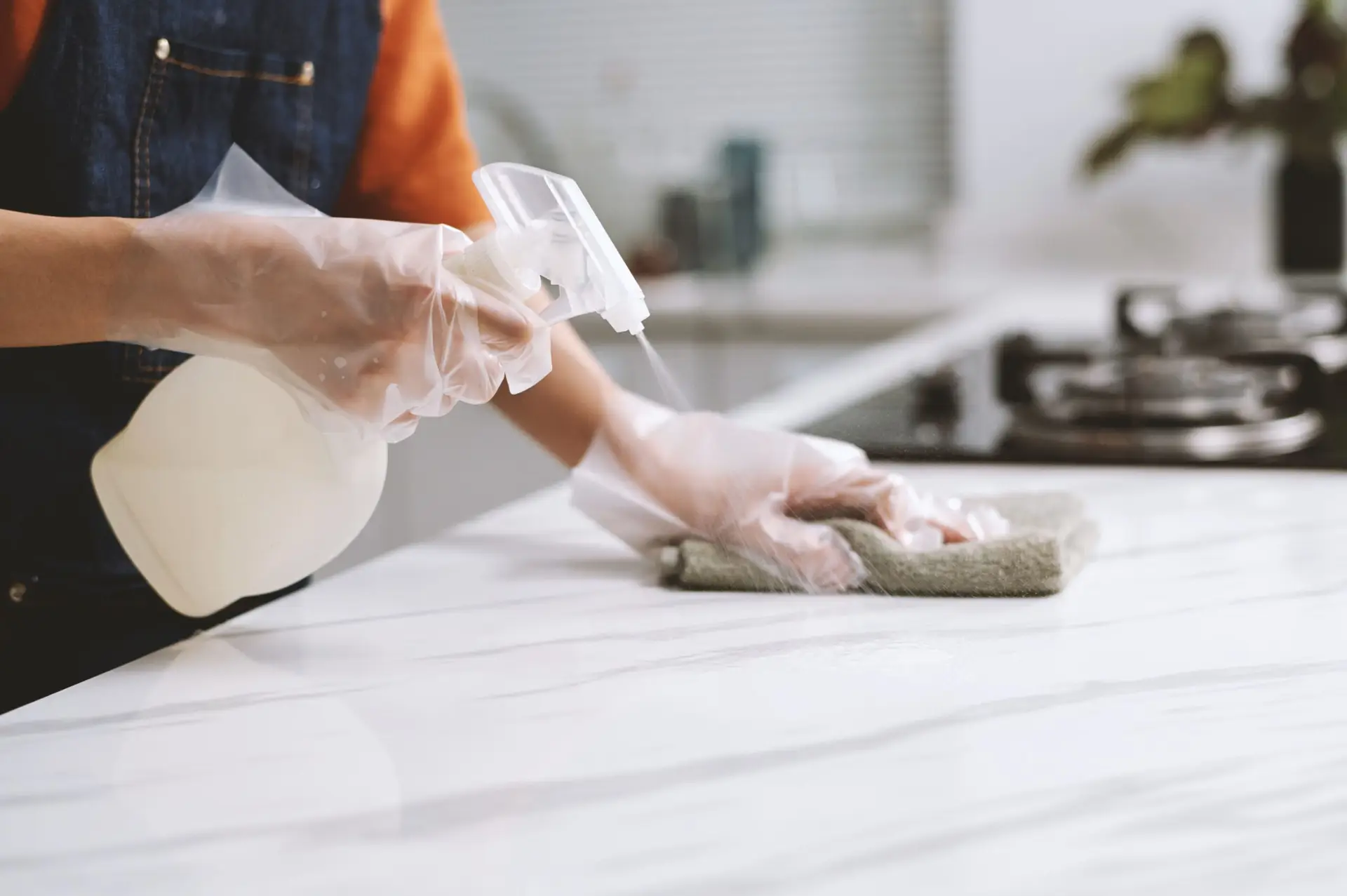
While daily cleaning removes crumbs and surface spills, sanitizing is important after handling raw meats. Use a food-safe disinfectant spray that matches your countertop material’s compatibility guidelines.
Avoiding residue and dullness
Soap scum buildup can leave countertops looking hazy. Always follow up your soapy wipe with a clean damp rinse cloth and buff the surface dry with a microfiber towel to restore its natural sheen.
Mistakes that damage countertops
Using abrasive steel wool, leaving acidic spills (like wine, lemon juice, or tomato sauce) to sit overnight, placing hot pans directly onto laminate or solid surface seams, and using harsh bleach on natural stone are the fastest ways to permanently ruin countertops.
Professional cleaning for high-use kitchens
Maintaining immaculate kitchen counters takes continuous daily effort, but you don’t have to carry the load alone. Integrating regular upkeep with a professional residential cleaning or intensive deep cleaning service ensures your entire cooking space—including sticky trouble spots often detailed in our guide on kitchen cabinets sticky after cleaning—stays spotless and hygienic.
CTA: Schedule a customized residential cleaning plan
Frequently Asked Questions
What is the best cleaner for kitchen countertops?
For most everyday surfaces, warm water mixed with a single drop of mild dish soap is the safest and most effective all-around cleaner.
Can vinegar damage stone countertops?
Yes! Vinegar is acidic and will etch, dull, and erode natural stone surfaces like marble, travertine, and poorly sealed granite over time.
How do I disinfect counters safely?
Use a pH-balanced, food-safe antibacterial spray designed for your specific countertop material, or a mild mixture of water and gentle dish soap for daily sanitation.
How often should kitchen counters be cleaned?
Counters should be wiped down multiple times a day—before and after food preparation—and given a thorough deep-clean and disinfection weekly.
Do professionals clean countertops by material?
Yes, professional cleaners are trained to identify different stone, wood, and synthetic surfaces and apply the correct, non-damaging cleaning products to protect your investment.