
Quick Answer
To clean a smelly bathroom sink drain, remove and wash the pop-up stopper to clear trapped hair and slime, pour a half cup of baking soda followed by white vinegar down the opening to dissolve buildup naturally, and flush the drain with boiling water to restore a fresh, clean scent.
Why Bathroom Sink Drains Smell
Hair and soap residue
Every time you wash your hands, brush your teeth, or rinse styling products down the basin, stray hairs and body oils combine with soap residue to form a sticky trap that catches ongoing debris.
Toothpaste buildup
Spit toothpaste mixed with mineral scale from hard water creates a dense, pasty layer along the inner walls of the drain pipe, which begins to sour as it traps bacteria.
Drain stopper grime
The mechanical pop-up stopper itself is a major hidden hotspot, accumulating slimy black mold, hair clumps, and soap scum right at the mouth of the drain.
Step-by-Step Drain Cleaning
Clean the stopper
Unscrew or pull out the sink’s pop-up stopper. Wipe away trapped hair, scrub off slimy residue using an old toothbrush and mild dish soap, and rinse it thoroughly before reinserting.
Flush buildup safely
Pour a half cup of baking soda directly into the drain opening, followed immediately by one cup of warm white vinegar. Let the mixture fizz for 15 minutes to break down organic buildup and grease, then flush the pipes with a kettle of boiling water.
Wipe faucet and sink basin
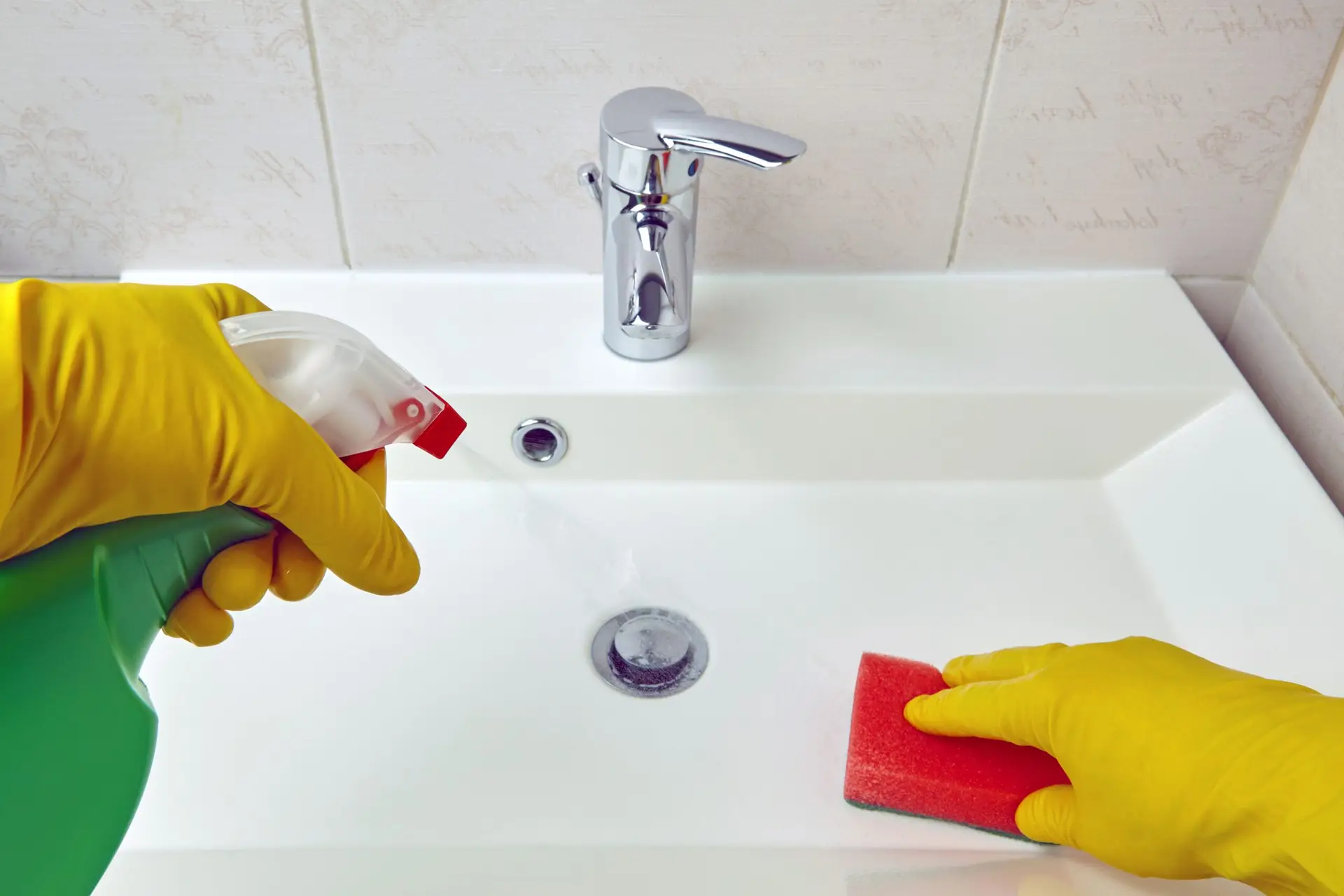
Finish by cleaning around the base of the faucet, the overflow hole, and the sink basin to eliminate surface bacteria and water spots.
What Not to Pour Down the Drain
Never pour harsh chemical drain openers repeatedly on minor clogs, grease, leftover cosmetics, or heavy paints down your bathroom sink, as these chemicals can corrode metal pipes, damage porcelain finishes, and release toxic fumes.
When odor points to a plumbing issue
If stubborn foul odors persist even after deep-cleaning the stopper and flushing the pipes with baking soda and vinegar, the problem may stem from a dry P-trap, a venting issue, or a deeper plumbing blockage that requires professional attention.
How bathroom deep cleaning prevents buildup
Maintaining clean drains is a key part of overall bathroom hygiene, but keeping your entire space fresh takes comprehensive care. To ensure every fixture shines, explore our guides on how to deep clean a shower, maintain general residential cleaning standards, and tackle troublesome bathroom mold and mildew content.
CTA: Book a bathroom-focused deep clean
Frequently Asked Questions
Why does my bathroom sink drain smell?
Bathroom sink drains smell because hair, soap scum, toothpaste, and bacteria accumulate inside the pipe and on the stopper, creating decomposing organic sludge.
How do I clean a sink stopper?
Remove the pop-up stopper by unscrewing or pulling it upward, scrub away trapped hair and slime with soap and an old toothbrush, rinse, and place it back.
Can baking soda clean bathroom drains?
Yes! Baking soda combined with vinegar is a fantastic, natural way to deodorize drains, neutralize sour smells, and break down light organic buildup.
How often should bathroom drains be cleaned?
You should remove and clean the sink stopper monthly, and run a baking soda and vinegar flush every 1 to 2 months to prevent major clogs and odors.
Do cleaners remove drain odors?
Professional house cleaners typically wipe and sanitize the visible sink basin, overflow hole, and stopper, but deep pipe clogs and chemical plumbing repairs usually require targeted drain maintenance.