
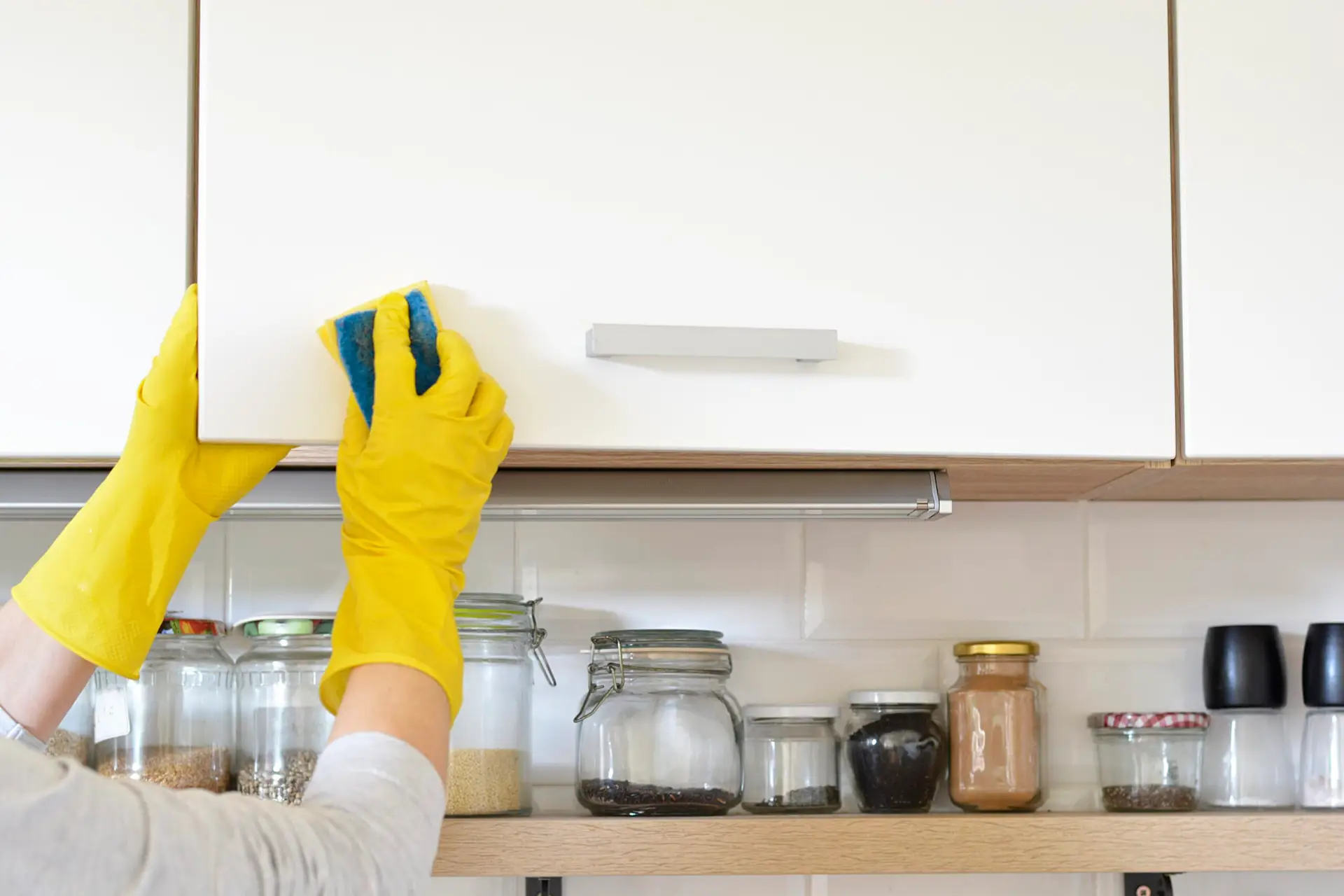
You just finished wiping down every cabinet in the kitchen, and the surface still feels tacky once it dries. That sticky film is frustrating, especially right after a thorough clean.
The good news is that dirt is rarely the cause. In most homes, sticky kitchen cabinets after cleaning point to a chemical reaction or leftover product, not a scrubbing problem. Once you understand why it happens, fixing it and keeping it from coming back becomes much easier.
The short answer
Sticky cabinets after cleaning almost always come from one of two things: soap or grease residue that was not rinsed off, or a cleaning product that leaves a film behind. The fix is a proper wash and rinse cycle with a mild, pH-neutral soap, followed by an immediate dry buff. For heavier buildup, a citrus degreaser or a small amount of mineral spirits on sealed wood can lift old wax and grease safely.
Why kitchen cabinets feel sticky after cleaning
Kitchen surfaces face two constant challenges: airborne grease from cooking and water that evaporates and leaves residue behind. When those two combine with the wrong cleaning routine, a tacky layer builds up right where you just cleaned.
Cabinet material plays a role too. Painted and laminate finishes tend to show grease film faster than sealed wood, since the surface is smoother and residue sits on top instead of settling into the grain. That does not mean sealed wood is immune. It just means the buildup may take longer to notice.
Grease and soap residue create a tacky film
This is the most common reason for sticky kitchen cabinets after cleaning, and it shows up most often in homes that clean with regular dish soap or oil-based sprays.
- Saponification. Cooking oil vaporizes and settles on cabinet surfaces. When you wipe it with a detergent, the soap starts breaking down the grease. If the surface is not rinsed thoroughly afterward, a thin, waxy mix of soap and oil stays behind. That mix is what feels tacky under your fingers.
- Layering over time. Every cleaning session without a proper rinse adds another thin sticky layer on top of the last one. After a few weeks, the buildup becomes noticeable.
Professional cleaners frequently find this exact pattern on cabinets near the stove, where grease exposure is highest and rinsing often gets skipped to save time.
Using the wrong product or too much cleaner
Some products cause more harm than the grease they were meant to remove.
- Oil-based polishes and soaps. Products that claim to “feed” or shine wood often contain heavy oils or waxes. They look good at first, then attract dust and grease until the surface turns dull and gummy.
- Overusing concentrates. A strong degreaser used in excess leaves behind more residue once the water evaporates, even if the product itself works well.
- Caustic cleaners. Oven cleaner and heavy-duty degreasers can react with varnish or painted finishes, softening the surface and creating a sticky layer that is hard to reverse.
How to remove sticky residue from kitchen cabinets
To get rid of sticky kitchen cabinets after cleaning, you need a cleaner strong enough to break down grease and soap, but gentle enough to protect the finish. Working slowly and rinsing properly matters more than the product you choose.
Degrease with warm water and mild dish soap
A mild, pH-neutral dish soap is both the cause of the problem when it is not rinsed and the cure when it is used correctly.
- Prepare the solution. Mix a small amount of mild dish soap into a bowl of warm water, just enough to create light bubbles.
- Wash the surface. Dampen a microfiber cloth with the solution, wring it out well, and wipe the sticky area gently. Warmth helps loosen the grease.
- Rinse thoroughly. Use a second cloth dampened only with plain warm water to remove all soap residue. Do not skip this step.
- Dry immediately. Buff the area dry with a third, clean microfiber towel right away.
Try a citrus or mineral-safe degreaser for heavy buildup
If residue has built up for months or years, a stronger product may be needed.
- Citrus degreasers. Products with d-limonene, a natural solvent from citrus peels, cut grease effectively and are generally safe on sealed wood and painted cabinets.
- Mineral spirits. For sealed, unpainted wood with heavy wax buildup, mineral spirits can help as a last resort. Always spot test in a hidden area first, such as the inside of a cabinet door, since it can dull or soften some finishes.
Choosing certified low-toxicity formulas also protects indoor air quality. The EPA Safer Choice program lists cleaning products that meet strict safety and performance standards, which is a useful reference when picking a degreaser for daily use.
How to protect cabinet finishes while cleaning
The tools you use matter as much as the product itself.
Stick to microfiber, skip abrasive pads
- Why microfiber works. It absorbs grease and liquid without scratching the surface. Keep separate colors for washing and rinsing so you do not mix soap back into the rinse water.
- What to avoid. Scouring pads, steel wool, and the rough side of sponges can scratch sealant or paint. Those scratches trap dirt and grease, which makes future cleaning harder and stickiness more likely.
Always rinse and dry after cleaning
- Two steps, not one. Treat cabinet cleaning as wash, then rinse. Skipping the rinse step is the single biggest reason cabinets stay sticky.
- Buff dry right away. Water left on the surface can leave mineral spots or mix with leftover residue, causing streaks and a dull finish.
Preventing sticky cabinets after cleaning
A few small habits stop residue from building up in the first place, which saves time on deep cleaning later.
Wipe splatters right after cooking
Most sticky buildup starts as a splatter of oil or sauce that dries and hardens before anyone notices it.
- Pay close attention to cabinets directly above and beside the stove.
- Wipe these spots with a damp cloth right after cooking, before the splatter has time to bond to the surface.
Deep clean handles and doors every few months
Handles and knobs collect finger grease and airborne dust even when the rest of the cabinet looks clean.
- Disinfect handles weekly since they are high-touch surfaces.
- Every three months, clean all cabinet doors using the full wash-and-rinse method described above to prevent gradual buildup.
Signs your cabinets need a deeper clean
Not every sticky spot needs the same level of attention. Watch for these signals that point to a bigger buildup problem:
- A tacky feel that returns within days of cleaning, even with a proper rinse.
- A dull, slightly yellow film near the stove or above the cooktop.
- Grime that collects faster around handles than on flat surfaces.
- Cabinets that felt fine last year but now need scrubbing every week.
When these signs show up across most of the kitchen, a single wipe-down usually is not enough. That is a good moment to schedule a professional deep cleaning service, since built-up grease on cabinets often means other kitchen surfaces need attention too.
Real scenarios cleaners see most often
These situations come up again and again during kitchen cleanings, and each one has a slightly different fix.
- The renter who inherited old wax buildup. A previous tenant used an oil-based polish for years. The cabinets look shiny at first glance but feel gummy to the touch. Mineral spirits on sealed wood, followed by a soap-and-water rinse, usually solves this within one session.
- The home cook with cabinets above the stove. Daily frying and sautéing send fine grease into the air, and it lands hardest on the cabinets closest to the burners. A quick wipe after each meal keeps this area from turning into a bigger job later.
- The family that switched to a stronger degreaser. Someone upgraded from mild soap to a heavy-duty concentrate to save time, but skipped the rinse step. The stronger product left more residue behind than the mild soap ever did, since any concentrate needs a proper water rinse to lift away.
Recognizing which scenario matches your kitchen makes it easier to pick the right fix instead of guessing.
Common mistakes that keep cabinets sticky
- Skipping the rinse step to save time. This is the root cause in most cases.
- Using too much cleaning product, assuming more soap means a cleaner surface.
- Wiping with the same cloth used for washing and rinsing, which just moves residue around.
- Reaching for oil-based polish on cabinets that already have grease exposure, which adds to the buildup instead of solving it.
- Waiting too long between cleanings near the stove, where grease accumulates fastest.
FAQs
Is vinegar safe on painted wood?
No, vinegar is generally not safe for routine use on painted wood or high-gloss laminate cabinets. It is acidic, and repeated exposure can dull the finish or break down the protective sealant over time. Mild dish soap and warm water is a safer, pH-neutral choice for regular cleaning.
How do I remove old polish buildup?
If the stickiness comes from old wax or oil polish rather than cooking grease:
- For finished wood, apply a small amount of mineral spirits to a microfiber cloth and gently wipe to dissolve the buildup, then rinse with mild soap and water.
- For painted or laminate surfaces, use a citrus degreaser after spot testing, since the citrus solvent breaks down polish without harsh abrasives.
How often should kitchen cabinets be cleaned to avoid stickiness?
A quick wipe near the stove after cooking, combined with a full wash-and-rinse of all cabinet doors every three months, is usually enough to prevent buildup in most homes.
Can sticky residue permanently damage cabinet finishes?
Yes, in some cases. Caustic cleaners and prolonged vinegar exposure can soften varnish or paint over time. Left untreated, layered grease and soap residue can also attract dust and become harder to remove without stronger, more abrasive products, which raises the risk of damage.
When it is time to bring in a professional team
Sticky kitchen cabinets after cleaning are usually fixable with the right soap, rinse, and dry routine. Still, when buildup has accumulated for years or covers a full kitchen, a DIY fix can take hours without fully resolving it.
A team that handles this daily knows how to match the cleaner to the finish, work efficiently, and avoid the trial and error that can damage cabinets. That experience matters most in older kitchens, where years of layered residue can hide underneath a surface that looks clean at first glance.
If your kitchen needs more than a quick touch-up, our residential cleaning services include cabinet detailing as part of a full kitchen clean.
Don’t let sticky cabinets take the shine off a clean kitchen. Contact us today to schedule a cleaning that gets every surface, including the ones you touch the most.