A steam cleaner bathroom routine kills 99.9% of bacteria on contact without leaving chemical residue on any surface. High-temperature vapor sanitizes tiles, grout, glass, and fixtures using only water heated above 200 degrees Fahrenheit. For families with children, pets, or allergy sensitivities, this method delivers hospital-grade sanitation without the health trade-offs that chemical products create.
Most homeowners in Maryland, DC, and Virginia deal with persistent bathroom mold caused by seasonal humidity. A steam cleaner bathroom approach addresses this problem at the source. The heat destroys mold spores on contact while the pressure reaches deep into porous grout where sprays and brushes cannot penetrate. This guide covers the full process in seven clear steps, plus the surfaces to avoid and the maintenance schedule that works best.
Why a Steam Cleaner Bathroom Method Beats Chemical Products
Traditional bathroom cleaners use volatile organic compounds to dissolve grime and kill bacteria. Many of these products release fumes that linger in enclosed bathroom spaces for hours. According to the EPA, indoor concentrations of VOCs can reach two to five times higher than outdoor levels. Bathroom cleaning is a major contributor to this problem.
A steam cleaner bathroom method eliminates this issue entirely. Steam uses only water. No chemical residue remains on surfaces after cleaning. No fumes accumulate in the air your family breathes.
Additional benefits of steam over traditional cleaning:
- Steam penetrates porous grout where spray cleaners only coat the surface.
- High-pressure vapor loosens soap scum and mineral deposits without abrasive scrubbing.
- Surfaces dry faster because steam uses far less water than mopping or spraying.
- You eliminate the ongoing cost of buying specialized bathroom cleaning products.
Which Surfaces Work with a Steam Cleaner Bathroom Approach
Not every material tolerates high-temperature vapor. Knowing which surfaces are safe prevents accidental damage during your steam cleaner bathroom sessions.
Safe surfaces:
- Ceramic and porcelain tile on walls and floors.
- Grout lines between tiles throughout the shower and floor.
- Glass shower doors and enclosures.
- Chrome and stainless steel faucets, showerheads, and towel bars.
- Toilet exterior, base, seat, and hinges.
- Sealed vinyl or linoleum flooring.
- Mirrors when used with a squeegee attachment.
Surfaces to avoid:
- Painted walls and wood trim. Heat causes paint to bubble and peel.
- Natural stone like marble, limestone, or travertine. Heat damages seals and etches soft stone.
- Lacquered or varnished wood cabinets. Steam clouds the finish and causes wood to swell.
- Unsealed grout. Steam pushes moisture deeper into unprotected grout.
- Electrical outlets and switches. Never direct steam toward electrical components.
Before your first session, confirm your tile and grout type. If your bathroom has natural stone, consult the manufacturer’s care guidelines first.
Step 1: Remove Items and Pre-Clean Loose Debris
Steam sanitizes and loosens grime, but it does not dissolve large debris. Removing loose dirt first lets the steam work on embedded contamination rather than surface-level mess.
- Pick up all items from the floor, shower ledges, and countertops.
- Sweep or vacuum the floor to remove hair, lint, and dust.
- If heavy soap scum is present, do a quick wipe with a damp cloth to reduce the top layer. This helps the steam cleaner bathroom process work faster on embedded residue underneath.
This preparation takes five minutes and doubles the effectiveness of every steam minute that follows.
Step 2: Fill the Tank with Distilled Water and Heat
Always use distilled water in your steam cleaner. Tap water contains minerals that calcify inside the boiler and heating element over time. This buildup reduces steam pressure and eventually damages the machine permanently.
Fill the tank to the indicated line. Plug in the unit and wait for the ready indicator. Most consumer steam cleaners heat within three to eight minutes. While waiting, attach the nozzle you need for the first surface you plan to clean.
Step 3: Start with Grout Lines
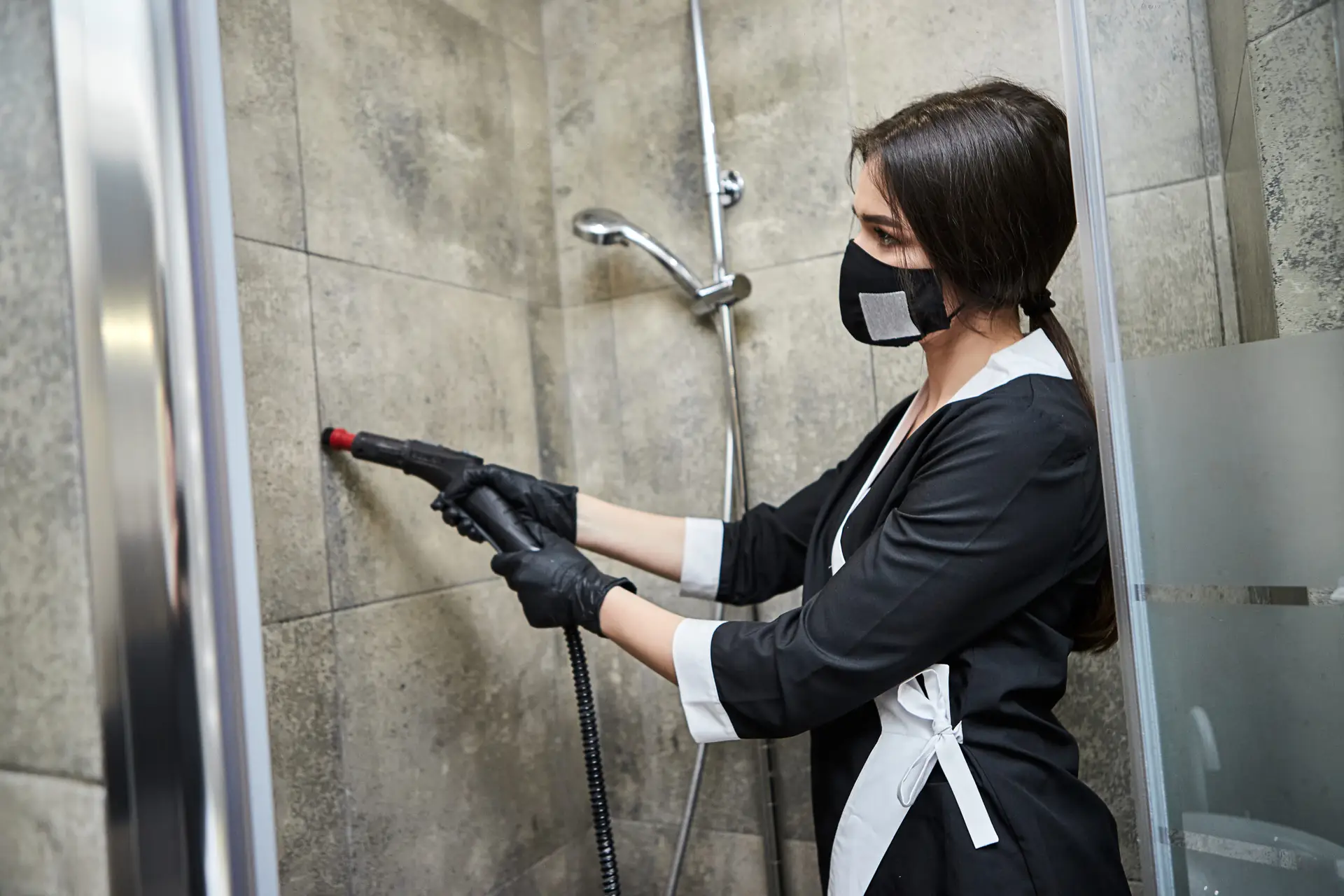
Grout is the most bacteria-prone surface in any bathroom. Therefore, your steam cleaner bathroom session should always start here. Use the jet nozzle or small brush attachment for focused, high-pressure delivery.
- Hold the nozzle one to two inches from the grout line.
- Move slowly along each line, spending five to ten seconds per section.
- Immediately wipe the loosened residue with a microfiber cloth before it dries back onto the surface.
- Work in small sections: steam one area, wipe it clean, then move to the next.
This is where the steam cleaner bathroom technique delivers results that no other method can match. The pressurized vapor reaches deep into porous grout that brushes and sprays only clean on the surface. Dark grout lines visibly lighten after a single pass.
Step 4: Clean Tile Walls and Shower Surfaces
Switch to the larger triangular or floor attachment for broad surfaces. Work from the top of the wall downward so loosened grime flows down and does not settle on areas you already cleaned.
- Move the head in slow, overlapping passes. Speed reduces effectiveness significantly.
- After each section, wipe with a clean microfiber cloth to remove loosened residue.
- For shower floors, follow the same top-to-bottom approach and finish at the drain.
- Pay extra attention to corners where soap scum accumulates fastest.
Tile surfaces respond immediately to steam. The heat melts soap film and mineral deposits on contact, and the pressure pushes them off the surface. As a result, you spend less time scrubbing and more time simply wiping away what the steam already loosened.
Step 5: Steam Glass Doors and Chrome Fixtures
Glass and chrome respond extremely well to a steam cleaner bathroom session. Vapor dissolves mineral deposits and soap film instantly without the streaking that spray cleaners often leave behind.
For glass doors:
- Use the squeegee attachment or a flat cloth attachment.
- Steam one pane at a time and wipe immediately for a streak-free finish.
- Polish with a dry microfiber cloth for maximum clarity.
For faucets and showerheads:
- Use the jet nozzle to reach around handles and into crevices where mineral buildup hides.
- Steam the entire fixture surface, then polish with a dry cloth.
- For heavily calcified showerheads, hold the steam nozzle on the buildup for 10 to 15 seconds before wiping.
Step 6: Sanitize the Toilet Exterior
A steam cleaner bathroom session should always include the toilet. Steam sanitizes the areas that harbor the most bacteria in the entire room, especially the base and the floor junction.
- Steam the toilet base where it meets the floor. This area collects splashes and bacteria that regular wiping misses.
- Clean the seat, lid, and hinges with the jet nozzle.
- Steam the flush handle and tank exterior.
- Wipe each section with a clean cloth immediately after steaming.
Note: steam cleaners do not replace toilet bowl cleaners for the interior bowl. Use a dedicated toilet brush and bowl cleaner for interior sanitation separately.
Step 7: Finish with the Floor
Use the floor attachment to steam the entire bathroom floor as the final step.
- Start at the far corner and work toward the door so you do not step on freshly steamed surfaces.
- Pay extra attention to edges along the tub, toilet base, and cabinets where moisture and bacteria concentrate.
- Move slowly in overlapping rows for thorough coverage.
- Allow to air dry. Steam uses so little water that most bathroom floors dry within two to three minutes.
How Often to Use a Steam Cleaner in the Bathroom
A steam cleaner bathroom session is a deep sanitization tool, not a daily maintenance method. You do not need to steam every week to maintain results.
Recommended frequency:
- Full steam clean of all surfaces: once per month for bathrooms used daily by multiple people.
- Quarterly steam clean: sufficient for guest bathrooms or single-user bathrooms.
- Grout-only steam clean: monthly for showers in homes with hard water.
- Glass and fixtures: as needed when mineral buildup becomes visible.
Between steam sessions, maintain the bathroom with regular weekly cleaning. Weekly routines handle surface disinfection, toilet scrubbing, and floor mopping. The steam cleaner bathroom method then handles the deep sanitization that routine cleaning cannot reach.
For homes with persistent mold or hard water issues common throughout Maryland and Virginia, monthly steam sessions deliver the strongest ongoing results. Our bi-weekly cleaning service maintains bathroom hygiene between those deep sessions.
Common Mistakes That Reduce Steam Cleaning Results
Even with the right equipment, technique matters. Avoid these errors during your steam cleaner bathroom sessions:
- Moving too fast. Steam needs contact time to kill bacteria and loosen grime. Rushing reduces effectiveness by half or more.
- Skipping the wipe step. Steam loosens dirt but does not remove it from the surface. If you do not wipe immediately, the residue dries back in place.
- Using tap water. Mineral buildup inside the machine reduces steam pressure and temperature gradually over months.
- Steaming cold glass. Rapid temperature changes can crack glass. Let the bathroom reach room temperature first.
- Forgetting the exhaust fan. Steam adds moisture to the room. Run the exhaust fan during and after your session to prevent humidity from settling back onto freshly cleaned surfaces.
When Professional Help Makes More Sense
Some situations go beyond what a consumer steam cleaner can handle effectively:
- Mold growth behind tiles or inside walls requires professional inspection and remediation.
- Severely discolored grout that does not respond to steam may need chemical treatment or re-grouting.
- Large bathrooms with extensive tile take hours with a consumer-grade unit.
- Hard water damage on fixtures sometimes requires professional descaling products.
Our deep cleaning service includes professional grout treatment, mold inspection, and fixture restoration for bathrooms that need more than a steam cleaner can deliver. For regular maintenance, our residential cleaning team keeps your Maryland, DC, or Virginia bathroom consistently clean between steam sessions.
Clean Heat, Zero Chemicals, Real Results
A steam cleaner bathroom routine is one of the most effective sanitization methods available to homeowners. It kills bacteria without chemicals, reaches deep into grout, and leaves surfaces cleaner than traditional scrubbing. Used monthly alongside regular maintenance, it protects your bathroom from the mold and moisture challenges that DMV homes face every season.