
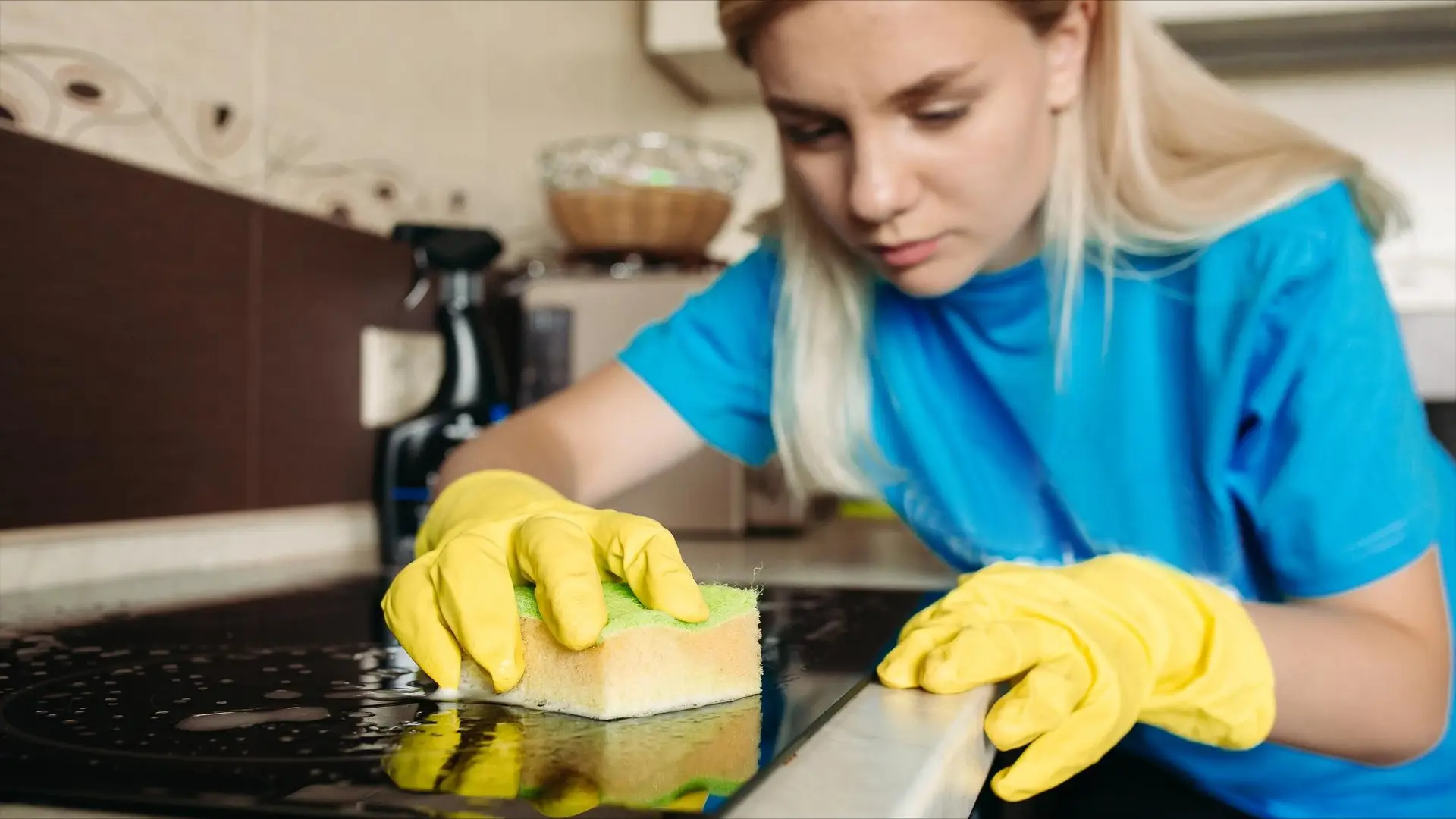
A kitchen can look clean and still harbor bacteria in places you never think to check. The sink faucet handle, the sponge sitting by the drain, and the grease film on upper cabinets all collect contaminants that daily wiping misses. Most homeowners make at least two or three kitchen cleaning mistakes without realizing the impact on food safety.
These are not obscure problems. They are common kitchen cleaning mistakes that feel normal until you understand what they actually do to your home’s hygiene. This guide covers nine specific errors, explains why each one matters, and provides the practical fix. Correcting these kitchen cleaning mistakes keeps your surfaces in better condition and your food preparation areas genuinely sanitary for your family.
1. Kitchen Cleaning Mistakes: Using the Same Sponge for Everything
The kitchen sponge is often the dirtiest object in the entire house. Research has found that sponges harbor more bacteria per square inch than a toilet seat. Despite this, most households use a single sponge for dishes, countertops, and stovetop spills throughout the entire week.
This is one of the most widespread kitchen cleaning mistakes because it transfers bacteria across every surface the sponge touches. Grease from the stovetop moves to the counter. Raw meat residue from a cutting board travels to the sink basin and then to the dish drying rack.
The fix:
- Replace kitchen sponges every one to two weeks without exception.
- Sanitize sponges daily by microwaving a damp sponge for 60 seconds or running it through the dishwasher on the hottest cycle available.
- Use separate cloths for different tasks: one dedicated to dishes, another for counters, and a third for floors.
- Consider switching to microfiber cloths that can be machine washed at high temperatures for thorough sanitization between uses.
2. Cleaning the Counter but Skipping the Sink
Most people wipe kitchen counters daily but rarely scrub the sink basin itself. This seems backward when you consider that the sink is where raw food, dirty dishes, and standing water constantly interact. According to FDA food storage safety guidelines, maintaining clean food preparation and storage areas is essential for preventing foodborne illness in the home.
Skipping sink sanitation creates a hidden contamination source in the exact room where you prepare food for your family.
The fix:
- Scrub the sink basin with a disinfectant cleaner at least twice per week.
- Clean the faucet base and handles where water and food residue accumulate daily.
- Treat the garbage disposal weekly with ice cubes and coarse salt to break up trapped residue.
- Wipe the sink strainer daily to prevent food particles from decomposing in the drain overnight.
3. Ignoring the Range Hood Filter for Months
The range hood captures grease, smoke, and cooking odors during every meal you prepare. Over time, the filter becomes saturated with grease and stops working effectively. When the filter is clogged, grease particles stay in the air, settle on cabinets, and coat surfaces throughout the kitchen.
Neglecting the range hood is one of the kitchen cleaning mistakes that affects the entire room rather than just the immediate cooking area.
The fix:
- Remove the filter monthly and soak it in boiling water with degreasing dish soap for at least 15 minutes.
- Scrub remaining grease deposits with a brush after soaking.
- Replace metal mesh filters that no longer come clean even after thorough soaking.
- Wipe the hood exterior and the underside where grease collects near the vent opening.
A clean range hood improves ventilation noticeably. As a result, cooking odors dissipate faster, and the greasy film that settles on nearby surfaces between cleanings decreases significantly.
4. Using Too Much Cleaning Product
More product does not mean a cleaner surface. Excess cleaning solution leaves a sticky residue that attracts dust, food particles, and fingerprints. Over time, this residue builds into a film that makes countertops feel grimy even right after you finish cleaning.
This is one of the kitchen cleaning mistakes that feels counterintuitive. You think you are being more thorough, but you are actually creating the exact problem you are trying to solve.
The fix:
- Follow the dilution ratio on every product label. Concentrating the solution beyond recommendations does not improve effectiveness.
- Spray cleaner onto a cloth first, then wipe the surface. This prevents over-application.
- Rinse countertops with a clean damp cloth after applying any cleaning product to remove residue.
- For daily maintenance, a simple solution of warm water with a small amount of dish soap works effectively for most kitchen surfaces.
5. Forgetting High-Touch Surfaces Between Meals
Cabinet handles, refrigerator door pulls, oven knobs, faucet levers, and light switches get touched dozens of times per day by every family member. They are also frequently touched with hands that are dirty from food preparation, which transfers grease and bacteria to every handle in the kitchen.
Skipping these surfaces allows bacteria to spread to every family member who touches a handle after you, throughout the entire day.
The fix:
- Wipe all handles, pulls, and switches with a disinfectant at least twice per week as part of your routine.
- Include the dishwasher handle, microwave buttons, and trash can lid in this routine.
- After handling raw meat, wash hands before touching any handle. Also wipe all handles at the end of every meal preparation session.
- During cold and flu season, increase the frequency to daily disinfection for maximum protection.
6. Never Cleaning Inside Appliances
The outside of your appliances may look spotless after a quick wipe. However, the inside tells a very different story. Microwave interiors collect food splatter that bakes on with each subsequent use. Refrigerator shelves develop spills that leak and dry into sticky residue. Oven interiors accumulate carbonized grease that affects cooking performance.
Skipping interior appliance cleaning creates odors, reduces appliance efficiency, and can contaminate food through smoke and off-gassing.
The fix:
- Clean the microwave interior weekly using the steam method: heat a bowl of water with lemon juice for three minutes, then wipe all surfaces clean easily.
- Thoroughly clean the refrigerator every three months. Remove all items, wipe shelves with a baking soda solution, and check that the temperature stays at 40 degrees or below.
- Clean the oven interior every three to four months. Use the self-clean cycle or a dedicated oven cleaner product.
- Run an empty dishwasher cycle with white vinegar monthly to remove mineral buildup, grease residue, and odors.
For thorough interior appliance cleaning that covers every unit in the kitchen, our deep cleaning service includes all appliances as part of the standard visit.
7. Mopping Without Sweeping First
Mopping a floor that has not been swept or vacuumed first simply pushes dirt around the room. Crumbs, sand, and debris get pushed into corners and along baseboards. The mop absorbs dirty water and redistributes grime across the entire surface instead of removing it.
This is one of the kitchen cleaning mistakes that makes the floor look wet and clean temporarily but leaves it dirtier once the surface dries completely.
The fix:
- Always sweep or vacuum the kitchen floor thoroughly before mopping.
- Use a vacuum with a hard floor setting to pick up fine particles that brooms miss.
- Mop with clean water and an appropriate floor cleaner. Change the mop water when it becomes visibly dirty.
- Pay careful attention to edges along cabinets, under the toe kick, and around the base of island units and appliances.
8. Using Abrasive Tools on Delicate Surfaces
Steel wool on a glass cooktop. Scouring powder on a stainless steel refrigerator. A rough scrub brush on a granite countertop. These kitchen cleaning mistakes cause permanent damage that cannot be reversed: scratches that trap bacteria, dull spots that show every fingerprint, and etched stone that cannot be polished back to its original condition.
The fix:
- Use soft cloths or non-scratch sponges on stainless steel, glass cooktops, and all natural stone surfaces.
- Choose cleaning products that are specifically labeled safe for your particular surface type.
- For stuck-on food, soak the area with warm soapy water for several minutes before wiping rather than scrubbing aggressively with abrasive tools.
- When in doubt about a new product or tool, test it on a small hidden area first before applying to the full surface.
Protecting surfaces from unnecessary damage is one of the reasons many homeowners choose a weekly cleaning service. Professional teams know which products and tools are safe for each surface type in your kitchen.
9. Cleaning Only When the Kitchen Looks Dirty
Bacteria are invisible to the naked eye. Grease buildup happens gradually without obvious signs. By the time a kitchen looks visibly dirty, contamination levels are already high and surfaces require significantly more aggressive cleaning to restore.
Waiting until problems become visible is the root cause of most other kitchen cleaning mistakes on this list. Prevention is always easier, faster, and cheaper than restoration.
The fix:
- Follow a structured schedule rather than cleaning reactively. Wipe counters and sinks daily. Clean floors and appliance exteriors weekly. Tackle appliance interiors and hidden zones monthly.
- Add kitchen tasks to your regular cleaning routine rather than treating the kitchen as a separate weekend project.
- A bi-weekly cleaning service maintains consistent kitchen hygiene between deep sessions, ensuring contamination never reaches problematic levels.
Structured routines also reduce the total time you spend cleaning because you prevent the heavy buildup that requires intensive scrubbing. Prevention takes minutes. Restoration takes hours.
Cook with Confidence in a Truly Clean Kitchen
These nine kitchen cleaning mistakes are common because they feel like normal, harmless habits. Once you recognize them, however, the fixes are simple and take only minutes per day to implement. Correcting these errors keeps bacteria levels low, protects your surfaces from unnecessary damage, and creates a food preparation environment your family can trust.