
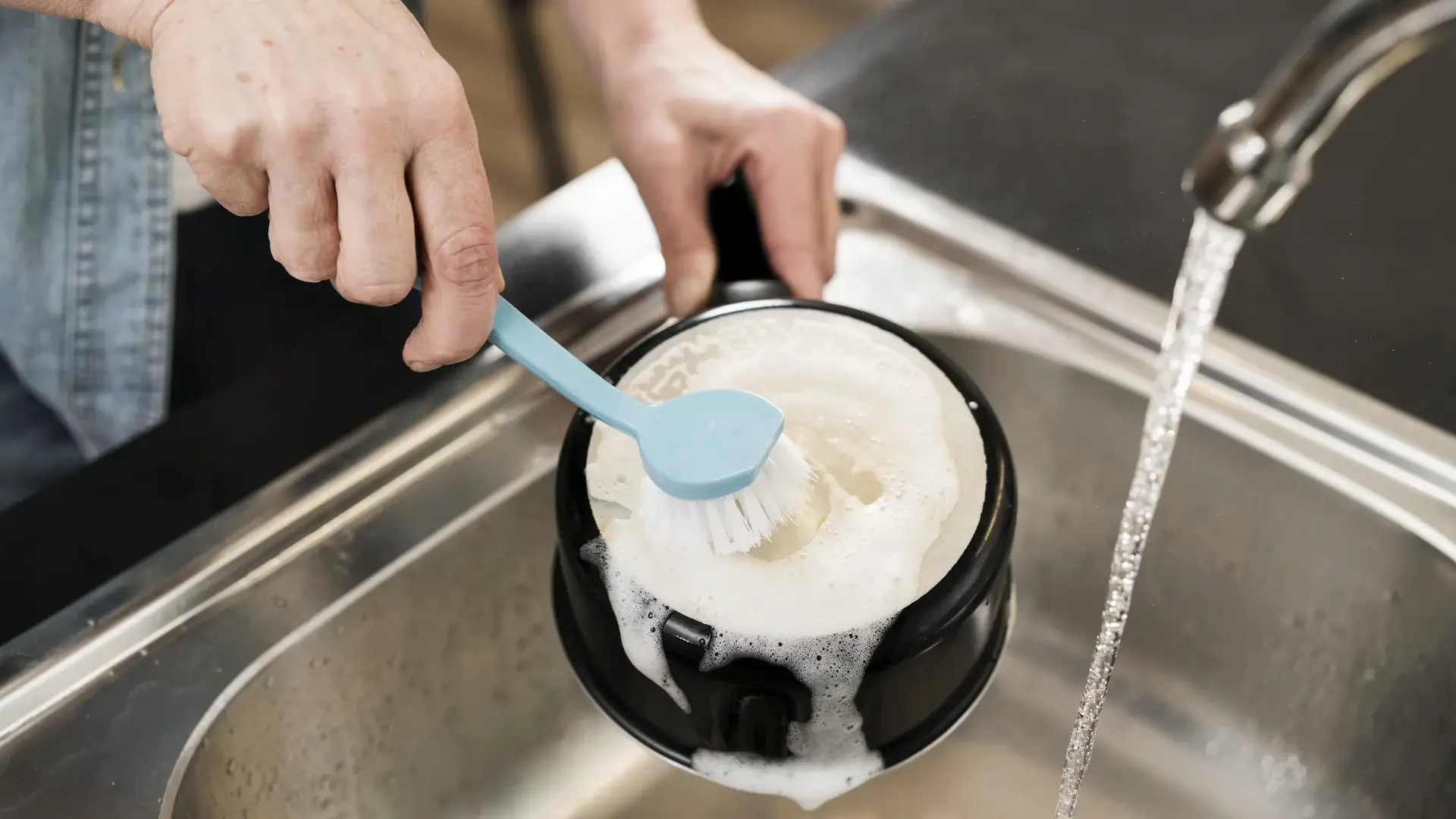
Rust stains are among the most stubborn household stains because they cannot be scrubbed away. Standard cleaners do not dissolve them, and force alone spreads the residue rather than removing it. Whether you are dealing with orange streaks on a bathtub, discoloration on tile grout, or a rust mark on fabric from a metal buckle or drain contact, the approach needs to match both the stain type and the surface.
Using baking soda for rust stains is one of the most practical household methods, but it works best in combination with an acid — which is where most home attempts fall short.
Why rust stains behave differently from other stains
Rust is iron oxide, the result of iron or steel reacting with water and oxygen over time. When rust deposits onto a surface, it bonds chemically with the material rather than simply sitting on top. That chemical bond is why scrubbing alone rarely works. You need a chemical reaction to break the bond, and that reaction requires an acidic agent.
The most effective rust removers are acidic. Common household acids that work against rust include white vinegar, lemon juice, and cream of tartar. Baking soda, while alkaline and mildly abrasive, is most useful as a scrubbing agent in combination with an acid rather than on its own. This two-component approach — acid to break the bond, baking soda to mechanically lift the loosened residue — is the foundation of effective rust stain removal at home.
How to remove rust stains from fabric
Timing is critical for fabric. The longer rust sets into fibers, the more difficult removal becomes. Act as quickly as possible after the stain appears.
Lemon juice and salt method. Squeeze fresh lemon juice directly onto the stained area. Cover generously with table salt. Let the combination sit in direct sunlight for one to two hours. UV exposure helps activate the reaction. Rinse thoroughly with cold water, then wash on a normal cycle. This handles mild to moderate rust marks on cotton, linen, and most natural fabrics.
White vinegar method. Soak the stained area in white vinegar for 30 minutes to loosen the iron oxide bond. Apply a paste of baking soda and water, scrub gently with a soft brush, and rinse completely. Repeat for persistent staining.
Important warnings for fabric: Never use bleach on rust stains. Chlorine bleach reacts with iron oxide compounds and permanently sets the stain into the fiber. Also avoid hot water during treatment — heat accelerates the setting process and reduces your chances of full removal.
For delicate fabrics — silk, wool, synthetic blends — test any method on an inconspicuous area before treating the visible stain.
Rust stains on bathtub: what actually works
Rust stains on bathtubs typically come from dripping faucets, metal shaving cans left on the tub ledge, or iron-heavy water. They appear as orange or brown streaks that standard bathroom sprays cannot touch.
Baking soda and lemon paste. Combine baking soda with enough fresh lemon juice to form a thick paste. Apply directly to the rust stain and leave for 30 to 60 minutes. Scrub with a non-abrasive sponge in circular motions. Rinse thoroughly. Repeat for deeper or older stains.
Oxalic acid-based cleaners. Products containing oxalic acid — Bar Keepers Friend is the most widely available — are specifically effective for rust stains on bathtubs, sinks, and tile. Apply according to package instructions, scrub with a non-scratch pad, and rinse completely. Oxalic acid is significantly more aggressive against iron oxide than any home remedy and handles stains that baking soda combinations cannot.
One important caution: avoid abrasive scrubbers on fiberglass or acrylic tubs. These scratch the surface and create texture that traps future staining.
Rust stains on tile and grout
Rust on tile often originates from metal fixtures, corroding pipes behind walls, or outdoor furniture dragged across tile floors. The porous texture of grout makes rust particularly persistent.
Baking soda method for tile. Apply a thick paste of baking soda and water directly to the stain. Allow it to sit for 15 minutes, then add a small amount of white vinegar or lemon juice directly to the paste. The fizzing reaction helps loosen iron deposits from the tile surface. Scrub with a stiff-bristled brush and rinse well.
For deep grout staining. Oxalic acid-based cleaners applied with a grout brush address staining that has penetrated into the grout body. Apply with a small brush, allow to sit for the time recommended on the label, scrub, and rinse. More than one application is often needed for stains that have set over weeks or months.
How to remove rust stain with baking soda: a general framework
Across all surfaces, the most effective approach is:
- Apply an acidic agent (lemon juice, white vinegar, or oxalic acid cleaner) directly to the stain
- Let it sit long enough to break the iron oxide bond — at least 15 minutes for mild stains, up to 60 for deep ones
- Apply baking soda paste over the acid and work it into the stain with a soft brush
- Rinse thoroughly with clean water
- Repeat if needed — most significant rust stains require more than one treatment
Identifying and eliminating the rust source
Rust stains removed without addressing the source will return. Identify what is causing the rust deposit:
- A dripping faucet deposits iron-containing water repeatedly in the same location
- Metal containers (shaving cans, aerosol cans) left on wet surfaces corrode and transfer rust directly
- Iron pipes beginning to corrode behind walls or under sinks cause staining in fixture areas
- Outdoor furniture or tools stored near or on tile floors
The U.S. Environmental Protection Agency notes that elevated iron content in tap water is a common issue in many municipalities. If rust stains appear throughout the home, particularly on white fixtures, a water quality test and potential filtration solution addresses the source rather than just the symptoms.
When professional cleaning is the practical answer
Some rust stains, particularly those that have penetrated grout deeply or set into porous tile over years, resist home methods. In those situations, professional cleaning using commercial-grade rust removers and targeted techniques can address what DIY approaches cannot.
Bathroom deep cleaning — included in deep cleaning services — covers stain-prone areas including tubs, tile, grout, and fixtures with appropriate products for each surface type.
Frequently asked questions about rust stain removal
Does WD-40 remove rust stains? WD-40 can help loosen rust from metal surfaces but is not effective on rust stains deposited onto tile, tubs, or fabric. It leaves an oily residue that creates a secondary cleaning problem on most household surfaces.
Will Magic Eraser remove rust stains from a bathtub? Magic Eraser (melamine foam) can remove light surface rust staining from porcelain but is mildly abrasive. Use with care on fiberglass and acrylic tubs, as repeated use can dull the surface over time.
Why do rust stains keep coming back in the same spot? Recurrence almost always points to an ongoing iron source: a dripping fixture, corroding metal stored in the area, or iron-heavy water that leaves deposits each time it dries.
Is it safe to use oxalic acid cleaners around children or pets? Oxalic acid is effective but moderately toxic. Ensure thorough ventilation during use, wear gloves, and rinse the treated surface completely before allowing contact. Store away from children.
Getting rust out for good
Rust stain removal depends on chemistry, not force. Using baking soda for rust stains is a practical starting point, and it becomes significantly more effective when paired with an acidic agent that breaks the iron oxide bond first. Act quickly on fabric, use surface-appropriate methods for tubs and tile, and address the source of recurring staining to avoid repeating the work.
DIY rust removal versus commercial rust removers: which is better?
For minor to moderate rust staining on common household surfaces, DIY methods — lemon juice, white vinegar, baking soda — are adequate and avoid the chemical exposure that stronger commercial products involve. For persistent, deep, or widespread staining, commercial oxalic acid-based cleaners are significantly more effective and save considerable time and repeated effort.
The practical decision point: if the stain has not lifted after two full DIY treatment cycles, switch to a commercial rust remover designed for the specific surface type rather than continuing to apply methods that are not working.
What “iron bacteria” means for DMV homeowners
Some households in Maryland and Virginia experience an orange-brown slime in toilet tanks, sink drains, and water fixtures that is not standard rust — it is iron bacteria, a naturally occurring microorganism that feeds on dissolved iron in water. It produces the same orange-brown staining as rust but in a mucilaginous, slime-like form. Treating iron bacteria requires different approaches than standard rust removal, including shock chlorination of the water supply in some cases. If rust-colored deposits appear in places where standing water accumulates, consult your local water utility or a water treatment specialist.