
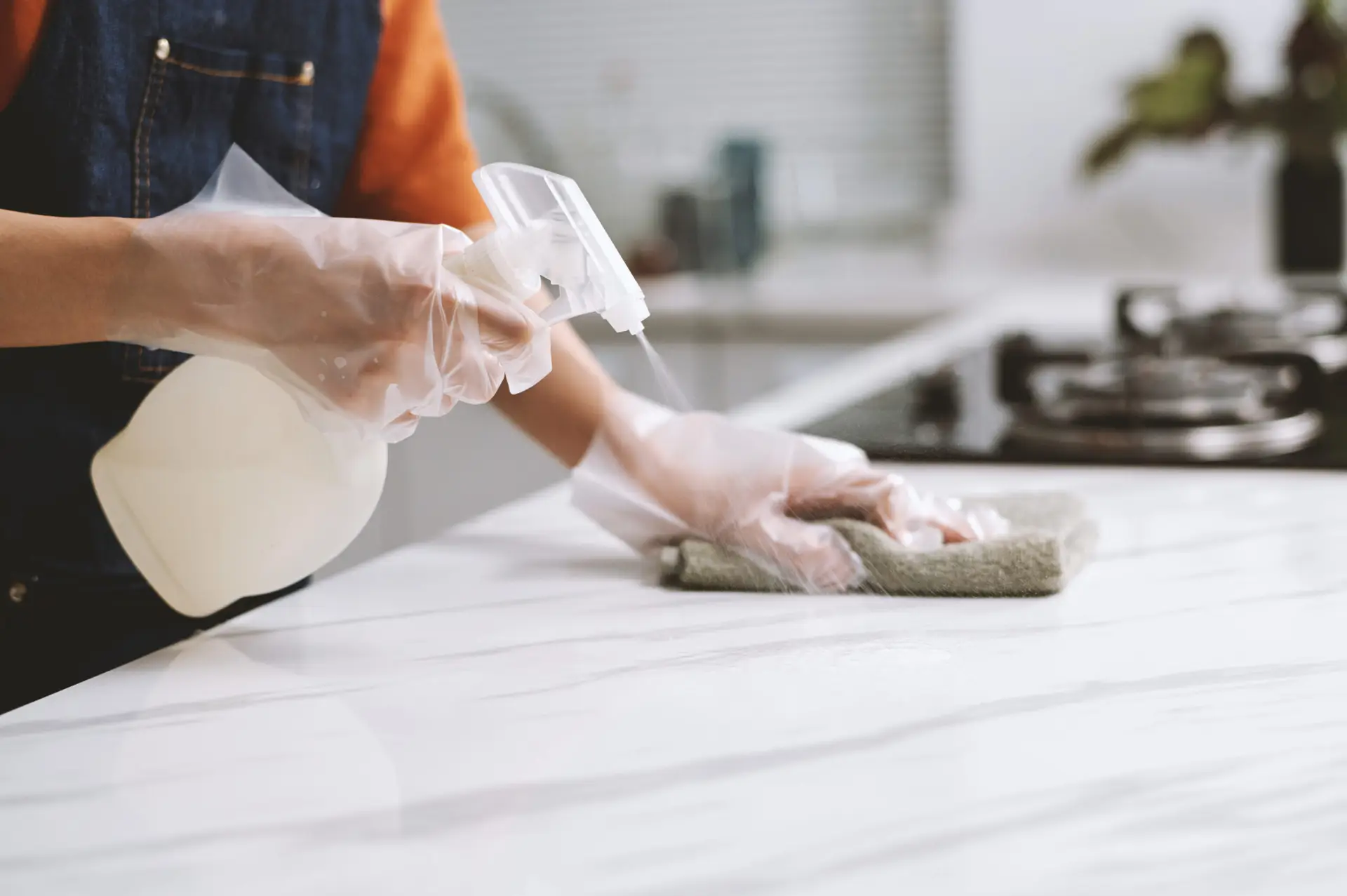
Granite is one of the most popular natural stone choices for kitchen and bathroom surfaces, celebrated for its unique patterns and impressive durability. However, because granite is a porous natural stone, it requires specialized cleaning products and careful techniques to prevent staining and damage. Using the wrong cleaner can strip the protective sealant, dull the stone’s natural luster, and even cause etching.
This guide details exactly what to use—and more importantly, what to avoid—to ensure your granite countertops remain stunning for decades.
Why Granite Needs Special Care
Unlike engineered materials, natural granite has a geological structure that dictates its maintenance needs. Understanding this structure is key to cleaning it correctly.
The Importance of pH-Balanced Cleaners
Granite is primarily composed of silicate minerals, which are highly vulnerable to harsh chemicals—specifically, strong acids and bases (alkalines). This sensitivity is why pH-balanced (or pH-neutral) cleaners are mandatory for granite care.
- Acidity (Low pH): Cleaners containing vinegar, lemon juice, or harsh commercial acids will chemically react with the minerals in the stone, leading to permanent surface damage known as etching. Etching appears as dull, lighter spots or streaks on the polished finish.
- Alkalinity (High pH): Strong alkaline cleaners, like ammonia or certain heavy-duty degreasers, can break down and strip the protective sealant applied to the granite, leaving the stone vulnerable to staining.
Avoiding Dullness and Etching
A polished granite surface relies heavily on the intact state of both the stone and its sealant.
- Etching: As mentioned, acids chemically destroy the stone itself, leaving behind visible damage. This requires professional polishing to fix.
- Dullness: Caused by the build-up of residue from non-neutral soaps, or, more commonly, by the erosion of the sealant. When the sealant is gone, the stone’s pores are exposed, and the stone looks less vibrant and darker when wet. pH-neutral cleaners ensure the sealant stays intact, preserving the granite’s rich color and shine.
Best Store-Bought Granite Cleaners
When choosing a commercial product, look past the general-purpose bathroom cleaners and invest in a dedicated, stone-safe formula.
Recommended pH-Neutral Products
Dedicated granite cleaners are formulated with non-ionic surfactants (cleaning agents) that effectively cut through grease and surface grime without disturbing the stone’s delicate pH balance or stripping the sealant.
- Look for: Products explicitly labeled “Stone Cleaner,” “Granite & Marble Safe,” or “pH-Neutral.”
- Benefits: These cleaners are safe for daily use and rinse cleanly, minimizing the risk of residue buildup that attracts dust.
Cleaners with Polish for Daily Maintenance
Many specialty granite cleaners are “2-in-1” formulas that incorporate a polishing agent.
- Purpose: These products contain waxes or light polymers that refresh the sealant’s surface protection and enhance the depth and shine of the stone.
- Application: While not a substitute for a professional sealant, using a cleaner with a polish component once or twice a week is an excellent way to maintain a streak-free, glossy appearance between deep-sealing treatments. Always buff the surface thoroughly with a dry microfiber cloth after application.
DIY Cleaning Solutions
For simple, day-to-day cleaning, safe, household ingredients work perfectly well and minimize chemical exposure.
Mix Mild Dish Soap and Water
This is the cheapest, safest, and most effective solution for daily spills and light cleaning.
- Mix a few drops of mild, pH-neutral dish soap (like Dawn or other gentle brands) into a small basin of warm water.
- Dampen a soft microfiber cloth with the mixture and wipe down the countertops.
- Crucial Step: Immediately follow up with a second cloth dipped in plain water to rinse the surface thoroughly. Soap residue left behind can dull the finish and attract dust over time.
Add Rubbing Alcohol for Disinfection
While mild soap is safe, it may not sanitize effectively. For occasional disinfection, you can incorporate rubbing alcohol (isopropyl alcohol).
- Mix a solution of $1/4$ cup of rubbing alcohol with $3$ cups of water and $1$ drop of dish soap.
- Spray the solution onto the countertop.
- Let the solution dwell for about $5$ minutes to disinfect.
- Wipe clean with a damp, soft cloth, followed by a dry buffing with a clean microfiber towel.
What Not to Use on Granite
The products listed below are the most common culprits for granite damage and should be kept far away from your countertops.
Vinegar, Bleach, or Acidic Products
These chemicals are highly corrosive to granite surfaces and their protective sealants:
- Acidic Products (Vinegar, Lemon Juice, Orange Cleaners): Instantly etch the stone, especially in high-traffic areas.
- Alkaline Products (Ammonia, Chlorine Bleach): Can quickly dissolve and weaken the existing sealant, leaving the granite prone to deep staining from coffee, oil, or red wine.
- Oven Cleaners or Drain Cleaners: These are extremely caustic and will cause immediate, permanent chemical burns and color damage.
Abrasive Pads that Scratch the Sealant
Never use anything abrasive to scrub stuck-on food or grime.
- Avoid: Steel wool, scouring powders, and the abrasive side of a standard scrubbing sponge.
- Risk: These materials will micro-scratch the sealant, creating dull spots and potentially scratching the stone itself over time. Use a plastic scraper (like a credit card) or a non-scratch nylon scrub pad (such as Scotch-Brite Non-Scratch Scrub Sponge) to lift hardened messes.
FAQs
How often should I reseal granite countertops?
The general recommendation is to reseal granite every 6 to 12 months. However, this varies based on the type of granite (some are naturally denser) and how often you use and clean the surface.
The Water Test: A quick way to determine if sealing is needed is the water test:
- Pour a small amount of water (about $3$ inches in diameter) onto a few different spots on the counter.
- If the water remains beaded on the surface for more than $5$ minutes, your sealant is still performing well.
- If the granite absorbs the water and darkens the stone in less than $5$ minutes, it’s time to reseal.
Can I use disinfecting wipes on granite?
Disinfecting wipes (like Clorox or Lysol) are a convenience, but they should be used sparingly on granite. While they won’t cause immediate etching, many contain high concentrations of alcohol or citrus acids. More importantly, they leave behind a residual chemical film on the non-porous sealant which can dull the surface and attract dirt.
If you must use a wipe for a quick job, always follow up immediately by wiping the area with a clean cloth and plain water to remove the residue.
Protect your investment with professional care.
Granite is a durable investment, but it requires the right touch. If you want peace of mind knowing your countertops are being cleaned with pH-neutral, sealant-safe products and the correct non-abrasive techniques, contact Clean Day Maids today. Schedule your service and let us handle the delicate work of preserving your granite’s natural beauty.