
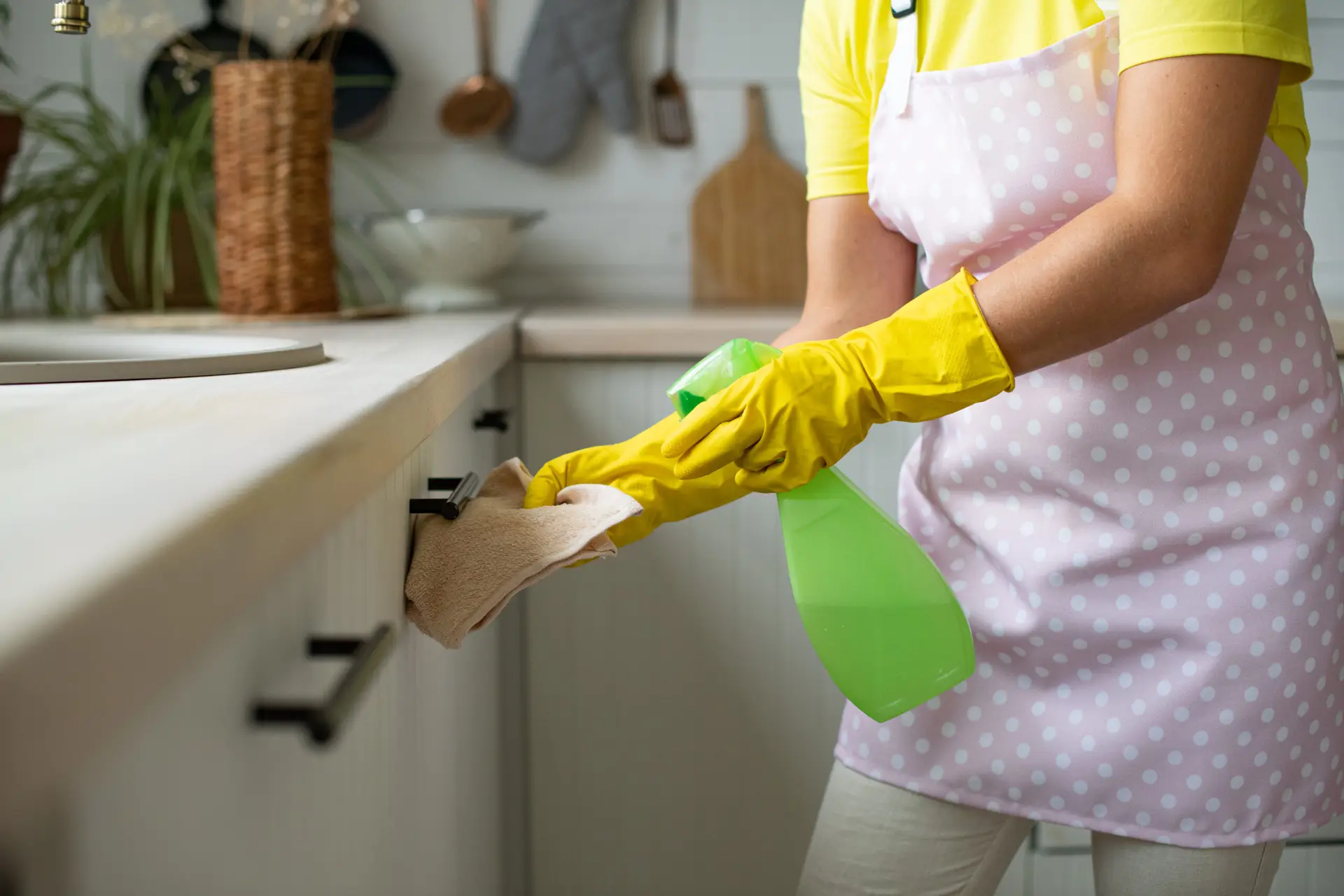
Kitchen cabinets represent a significant investment in your home, yet they endure daily exposure to grease, humidity, and constant touching. Unlike countertops, cabinet surfaces are often delicate, covered in wood stain, paint, or veneer that can be easily damaged by harsh chemicals.
This guide provides the definitive list of safe, effective cleaning solutions—both commercial and DIY—to cut through tough kitchen grime without compromising your beautiful cabinet finishes.
Why Kitchen Cabinets Get Greasy and Sticky
Understanding the cause of the mess helps you choose the right cleaning strategy.
Common Causes – Cooking Oils, Dust Buildup, and Humidity
The stickiness on kitchen cabinets is a complex mixture of everyday elements fusing into a hard-to-remove film.
- Vaporized Cooking Oils: When you cook, especially by frying or sautéing, microscopic droplets of oil are aerosolized. These droplets rise with heat and land on all nearby surfaces, particularly the cabinets above and beside the range hood. Over time, these oil particles polymerize, becoming hard and sticky.
- Dust and Dander: The sticky oil acts as a powerful adhesive, trapping airborne dust, pet dander, and pollen circulating through your home. This forms a gritty, often dark-colored, layer of grime.
- Humidity and Steam: Steam from boiling water or dishwashers can carry minerals that, when evaporated, leave behind residue. In high-humidity areas, this moisture also encourages the growth of mild surface molds or mildew, particularly near the sink or corners.
Why Regular Maintenance Matters
A sticky cabinet is a reactive cleaning problem; a well-maintained cabinet is a proactive solution.
- Protection of Finish: Grease and grime are corrosive. Allowing them to sit can permanently dull, etch, or discolor painted and stained wood finishes, requiring expensive refinishing.
- Preventing Layering: Regular, light cleaning prevents the airborne grease from turning into a tough, layered film. It is infinitely easier to wipe away a fresh oil splatter than to scrub off a sticky layer that has accumulated over six months.
- Air Quality: Cabinets, especially the tops, are massive dust collectors. Keeping these surfaces clean reduces the amount of dust and allergens recirculated by your home’s HVAC system.
Best Store-Bought Cleaners
When choosing a commercial product, the type of finish (wood, laminate, or painted) dictates the safest choice. Always look for pH-neutral formulas labeled “wood-safe.”
Recommended Brands for Wood, Laminate, and Painted Finishes
The best cleaners are specialized to maintain the finish’s integrity while offering strong degreasing power.
| Finish Type | Recommended Cleaner Properties | Examples of Suitable Products |
| Sealed Wood/Stain | pH-neutral, non-abrasive, non-oil based, and specifically formulated for furniture. Look for formulas with natural solvents like d-Limonene (citrus). | Commercial wood cleaners, gentle multipurpose surface sprays, or mild soap and water (see DIY section). |
| Laminate/Vinyl | Can handle slightly stronger degreasing, but avoid anything that leaves residue or is highly acidic (like straight vinegar). Requires a thorough rinse. | Multi-surface cleaners, mild grease-cutting dish soaps, or alcohol-based sprays. |
| Painted Cabinets (especially matte) | Requires the gentlest approach. Absolutely avoid abrasives, bleach, and heavy oil polishes, which will dull the paint. | Gentle dish soap solutions, mild commercial kitchen cleaners, or cleaning products specifically labeled “safe for painted surfaces.” |
Non-Toxic and Eco-Friendly Options
For homeowners concerned about harsh chemicals, several natural options provide excellent degreasing power.
- Citrus-Based Solvents (D-Limonene): Many eco-friendly cleaners use this natural solvent derived from orange peels. It is superb at cutting through grease quickly and safely.
- Enzyme Cleaners: These use non-pathogenic, “good” bacteria to break down organic soils, grease, and food residue. They are excellent for continuous maintenance and are completely non-toxic.
DIY Kitchen Cabinet Cleaning Solutions
Simple, affordable household items are often the safest and most effective cabinet cleaners, provided you use the proper rinsing technique.
Vinegar and Dish Soap Mixture
This combination provides a balanced degreasing and cleaning solution, but must be used carefully, especially on painted wood.
| Ingredient | Role | Ratio and Application |
| Warm Water | Base solvent, aids in dissolving grease. | 1 gallon (approx 3.8 liters) |
| Mild Dish Soap | Primary degreaser and emulsifier (cuts grease). Use a small amount of clear soap. | 1 tablespoon |
| White Vinegar (Optional) | Secondary solvent for very greasy surfaces. Use sparingly. | 1/4 cup (Max) |
Application Method:
- Mix ingredients thoroughly.
- Dampen a microfiber cloth with the solution and wring it out completely so it is barely moist.
- Wipe the cabinet doors in sections, working top-to-bottom.
- Crucially: Follow immediately with a cloth dampened only with clean, plain water to rinse all soap and vinegar residue.
- Dry immediately with a fresh, dry cloth.
Baking Soda Paste for Tough Spots
For heavy, localized grease buildup (like on the handles or under the cabinet lip), a soft abrasive is needed.
- Mixture: Mix baking soda with water to create a thick, frosting-like paste.
- Application: Apply the paste directly to the stubborn grease spot.
- Cleaning: Let it sit for 5–10 minutes. Then, gently rub the spot with a soft, clean cloth (microfiber is best), applying very light pressure. The fine particles of the baking soda act as a non-scratching scrub.
- Rinse and Dry: Rinse thoroughly with plain water and dry the area completely.
How to Clean Cabinets Without Damaging the Finish
The success of your cleaning is often determined by your technique and tools, not just the chemical solution.
Use Microfiber Cloths and Mild Products
Microfiber is non-abrasive and highly absorbent, making it the perfect tool for cabinet care.
- High Absorbency: Microfiber cloths are designed to lift and trap grease and dust, unlike sponges, which merely push dirt around.
- Gentle Application: Always clean gently, using a straight, back-and-forth motion following the wood grain (if applicable). Never scrub aggressively in circles, which can damage the finish.
- Damp, Not Soaking: Your cloth should be damp, not dripping. Excess water can penetrate seams, causing wood swelling, peeling, or paint blistering.
Avoid Abrasive Sponges and Ammonia-Based Sprays
These products pose the biggest risk of permanent damage to cabinet finishes.
- Abrasive Materials: Steel wool, green scrubbing pads, and stiff brushes will scratch or dull the glossy topcoat of any cabinet material, creating tiny crevices where dirt will stick more easily in the future.
- Ammonia-Based Sprays: Products containing ammonia can aggressively eat away at varnish, lacquer, or polyurethane topcoats on wood and painted cabinets. They should be completely avoided in the kitchen.
- Bleach: While bleach is an effective disinfectant, it can discolor wood finishes, especially when the finish is aged or compromised. Use only the most diluted bleach solution for targeted mold/mildew areas, followed by a thorough rinse.
FAQs
Can I use vinegar on wooden cabinets?
Use caution. While diluted white vinegar (1 part vinegar to 4 parts water) can cut through grease, its acidity can dull or etch the protective sealant or topcoat of wooden cabinets over time. It is safer to use mild dish soap, which is pH-neutral, for routine cleaning. Reserve vinegar for very heavy, stubborn grease buildup, and always follow immediately with a clear water rinse and a dry buff.
What’s the best cleaner for white kitchen cabinets?
White cabinets (usually painted or thermofoil) show stains and yellowing easily. The best approach is a two-part solution:
- For Routine Grime: A mixture of warm water and mild dish soap (or a citrus-based eco-cleaner). Focus on rinsing thoroughly to prevent soap residue film.
- For Yellowing/Stubborn Stains: Create a paste of baking soda and water and apply it gently. For very persistent stains, a magic eraser (melamine sponge) can be used very sparingly and lightly, as it is a micro-abrasive and can dull the finish if rubbed too hard.
Don’t risk damaging your cabinet investment with the wrong cleaner. If you’re unsure about tackling tough grease or need a professional touch that ensures the longevity of your finishes, we can help. Contact us today for a cabinet detailing consultation and deep cleaning service!