
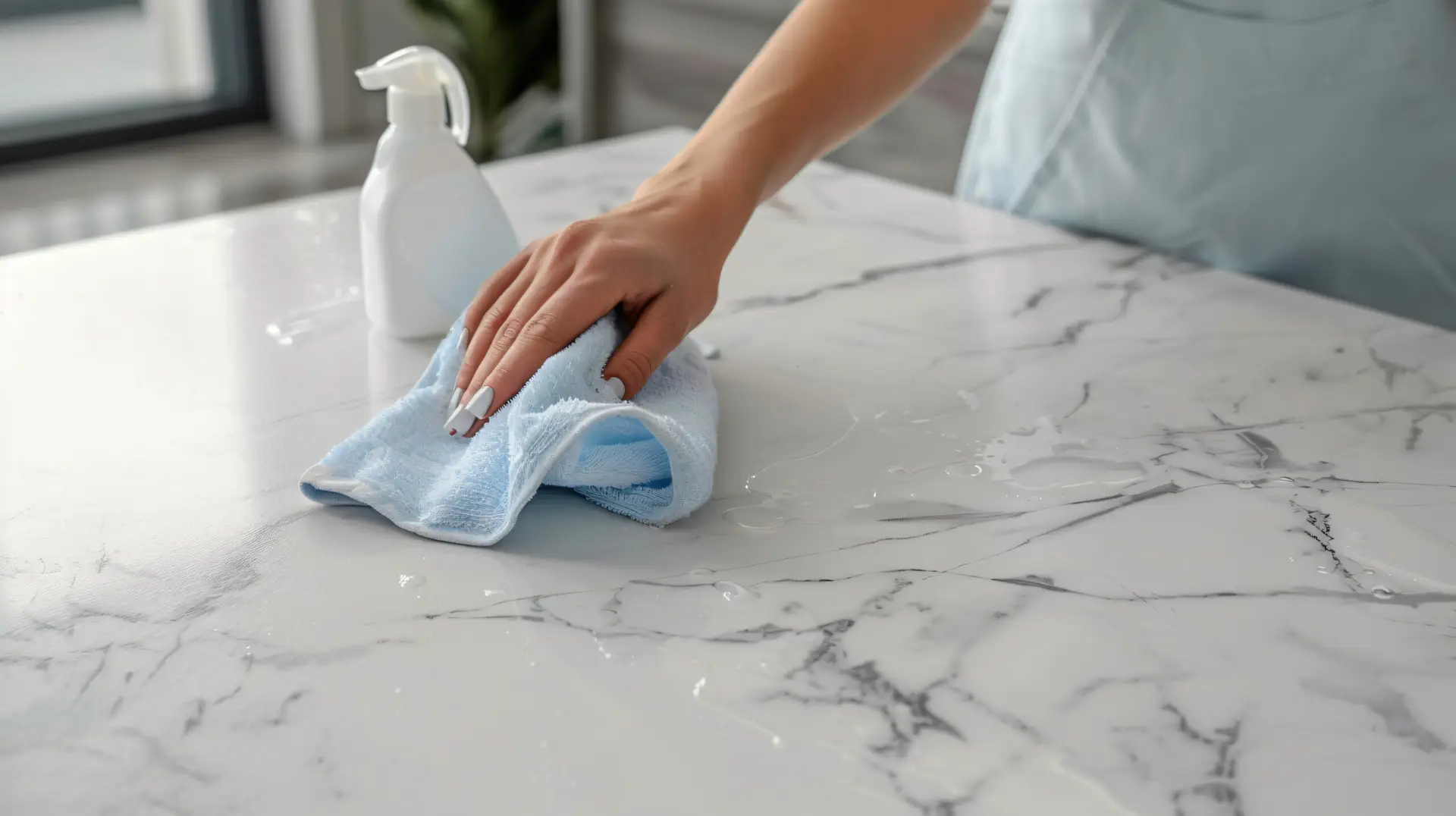
Quartz countertops resist stains, scratches, and bacteria better than most surface materials. However, the resin binder that holds the engineered stone together is sensitive to certain chemicals and high heat. Using the wrong product can dull the finish, cause permanent discoloration, or weaken the bond that gives quartz its strength. Knowing how to clean quartz countertops correctly protects your investment and keeps the surface looking new for years.
This guide covers daily care, stain removal, product safety, and the specific mistakes that cause irreversible damage. Whether your quartz surfaces are in the kitchen, bathroom, or laundry room, these methods apply to all standard engineered quartz in Maryland, DC, and Virginia homes. Follow these steps and your countertops will maintain their original shine without expensive professional restoration.
Daily Care: How to Clean Quartz Countertops Every Day
Daily cleaning prevents residue buildup and keeps the surface streak-free. The best daily method to clean quartz countertops requires only two things: mild dish soap and a microfiber cloth.
Daily routine:
- Mix a few drops of pH-neutral dish soap with warm water in a spray bottle or small basin.
- Dampen a soft microfiber cloth with the solution. Do not soak the cloth.
- Wipe the entire surface in one direction, not in circles. Circular wiping redistributes residue.
- Follow with a clean, damp cloth to rinse away soap residue from the surface.
- Dry with a separate microfiber cloth to prevent water spots from forming.
This process takes less than two minutes. It prevents the film that makes countertops look dull over time. Microfiber is essential because it lifts particles instead of pushing them across the surface. Paper towels and cotton cloths leave lint and can spread grime rather than removing it.
If you prefer a spray product, choose one labeled specifically for quartz or engineered stone. The product must be pH-neutral. Acidic or alkaline sprays damage the resin binder with repeated use, even if the damage is not immediately visible.
Products That Are Safe to Clean Quartz Countertops
Not all cleaning products work safely on quartz. The resin that binds the stone particles reacts negatively to strong acids, strong alkalis, and abrasive compounds. Knowing which products to use and which to avoid is essential when you clean quartz countertops regularly.
Safe products:
- Mild dish soap diluted in warm water. This is the safest and most effective daily cleaner for quartz surfaces.
- pH-neutral stone or quartz spray cleaners from brands that specify “safe for engineered stone” on the label.
- Isopropyl alcohol at 70% or 91% concentration for spot treatment of sticky residue. Use sparingly and rinse the area immediately afterward.
- Non-abrasive cream cleansers for stubborn spots. Bar Keepers Friend Soft Cleanser in liquid form works well when gentle scrubbing is needed. Avoid the powder version.
Products to never use when you clean quartz countertops:
- Bleach or bleach-based cleaners. These break down the resin and cause permanent discoloration over time.
- Oven cleaner, drain opener, or paint remover. The caustic chemicals destroy the surface bond irreversibly.
- Ammonia-based glass cleaners. Repeated use dulls the finish gradually.
- Abrasive powders like Comet or Ajax. They scratch the polished surface and leave visible marks.
- Steel wool, scouring pads, or rough scrub brushes. These create scratches that trap bacteria.
- Vinegar or lemon juice. While safe for many surfaces, the acidity etches quartz resin with repeated exposure.
How to Remove Stains from Quartz Surfaces
Quartz is non-porous, which means most spills sit on the surface and wipe away easily with routine cleaning. However, some substances leave marks if not addressed promptly. These stain removal methods help you clean quartz countertops effectively when daily wiping is not enough.
Common stain types and solutions:
- Dried food or grease. Soak the area with warm soapy water for five minutes. Wipe with a soft cloth. If residue remains, use a plastic scraper held at a low angle to lift it gently without scratching.
- Coffee, tea, or wine rings. Apply isopropyl alcohol to a cloth and rub the stain gently. Rinse with water and dry immediately to prevent new marks.
- Permanent marker or ink. Dampen a cloth with isopropyl alcohol and hold it on the stain for 30 seconds. Wipe clean and rinse the area thoroughly.
- Sticky residue from tape or labels. Apply a small amount of isopropyl alcohol. Wait one minute, then wipe clean. Do not use acetone or nail polish remover on quartz.
- Hard water spots. Wipe with a cloth dampened in a 50/50 water and isopropyl alcohol solution. Buff dry with a clean microfiber cloth.
For any stain treatment, apply the least aggressive method first. Soak before scrubbing. Rinse thoroughly after every treatment. Patience works better than pressure when you clean quartz countertops for stain removal.
Heat Protection: The Most Important Rule for Quartz
Quartz resists heat better than many natural stones. However, the resin component has clear limits. Placing a hot pan directly from the stove or oven onto quartz melts or scorches the resin. This leaves a permanent white or yellow mark that cannot be polished out or repaired without professional intervention.
Heat protection habits:
- Always use trivets or hot pads under pots, pans, and baking dishes without exception.
- Place a trivet under slow cookers, electric skillets, and air fryers. These appliances generate sustained heat that damages resin over extended contact periods.
- Allow hot items to cool before placing them on the counter, even when using a trivet for added protection.
- Never use quartz as a cutting surface. While it resists scratching better than most materials, repeated knife contact dulls both the blade and the surface finish over time.
Heat damage is the number one cause of irreversible quartz damage in busy kitchens. These habits protect the investment you made in your countertops.
Weekly Maintenance to Clean Quartz Countertops Thoroughly
Daily wiping handles surface cleanliness effectively. A weekly routine addresses the areas that daily cleaning consistently misses.
Weekly tasks:
- Wipe the entire surface with the dish soap and water method described in the daily section. Include the backsplash area and the edges where the counter meets the wall.
- Clean around the sink and faucet base where water, soap, and food residue collect in narrow gaps.
- Wipe the underside of any items that sit permanently on the counter. Paper towel holders, knife blocks, and small appliances trap moisture and grime beneath them.
- Check seams between counter sections. Wipe along the seam line where crumbs and moisture settle over the course of a week.
- Clean the edge profile of the countertop. The front edge collects fingerprints and cooking splatter that are visible at eye level.
A consistent weekly routine to clean quartz countertops keeps them polished and prevents the gradual buildup that eventually requires more aggressive cleaning methods. Our weekly cleaning service includes countertop maintenance as part of every visit to your home.
Seasonal Quartz Care for Long-Term Protection
Twice a year, give your quartz countertops a deeper refresh that goes beyond daily and weekly routines. Seasonal attention catches developing problems early.
Seasonal tasks:
- Move all items off the counter. Clean the entire surface, including areas that normally stay covered by appliances and accessories.
- Inspect for chips, cracks, or seam separation anywhere along the countertop. Small chips can be repaired with quartz-specific epoxy before they worsen.
- Clean the areas where the countertop meets cabinets and appliances. These junctions collect crumbs, grease, and moisture throughout the year.
- If any area feels rough or looks dull, contact a professional. DIY polishing compounds can damage quartz finishes rather than restore them.
Seasonal quartz attention is a natural part of a comprehensive deep cleaning session that resets your entire kitchen to baseline condition.
Special Situations: How to Clean Quartz Countertops After Specific Events
Certain situations create heavier-than-normal contamination on quartz surfaces. Knowing how to respond keeps the surface protected during events that push beyond routine care.
After holiday cooking: Heavy cooking sessions produce grease splatter, flour dust, and food stains across large surface areas. Clean the entire countertop immediately after cooking rather than waiting until the next morning. Dried grease bonds to quartz within hours and requires more effort to remove later.
After a party or gathering: Multiple guests handling food and drinks create spills in unexpected locations. Walk the kitchen after guests leave and spot-treat any wine, sauce, or food stains before they dry overnight. Check edges and seams where liquids flow and accumulate.
After a renovation: Construction dust settles on countertops and contains fine particles that can scratch the surface if wiped dry. Dampen the surface first with clean water, then wipe gently with a microfiber cloth. Avoid pressing hard until all grit is lifted from the surface safely.
After installing new appliances: Adhesive residue, packaging materials, and metal shavings from installation can scratch quartz if not removed carefully. Use isopropyl alcohol for adhesive residue and a damp microfiber cloth for everything else.
5 Mistakes That Permanently Damage Quartz
Some damage to quartz countertops is completely irreversible. Knowing what causes it is just as important as knowing how to clean quartz countertops safely.
- Placing hot pans directly on the surface. The burn mark cannot be polished out by any method.
- Using bleach habitually. One accidental use may not cause visible damage, but regular use breaks down the resin bond over months.
- Scrubbing with steel wool or abrasive pads. The scratches trap dirt and bacteria, creating a surface that looks permanently dull and feels rough.
- Letting acidic spills sit for extended periods. Wine, lemon juice, and tomato sauce should be wiped within minutes of contact.
- Using the countertop as a cutting board. Knife marks accumulate and dull the finish progressively over time.
Protect the Surface You Paid For
Learning how to clean quartz countertops correctly takes five minutes to understand and seconds to execute each day. The right products, consistent daily care, and proper heat protection keep the surface looking factory-new for years.