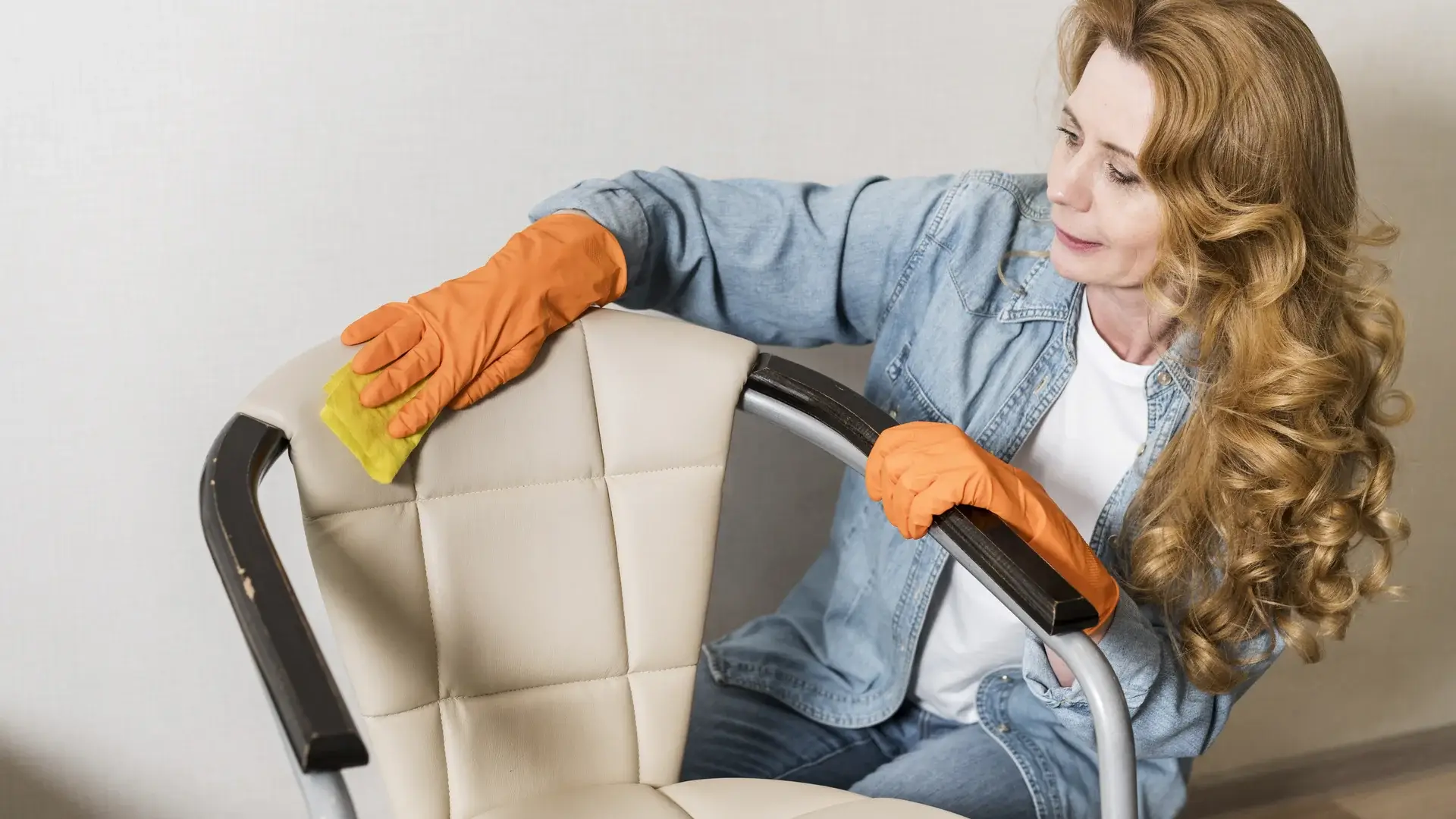
The best leather cleaner for furniture is not universal. The right product depends on the type of leather you have, and using the wrong one can cause staining, surface drying, or damage that is difficult and expensive to reverse.
Before buying anything or applying any cleaner, identify your leather type. That single step is what separates a successful cleaning from a costly mistake.
How to identify your leather type
Finished (protected) leather has a thin surface coating that makes it resistant to stains and moisture. It is the most common type in modern sofas and chairs. The surface feels smooth and relatively uniform. Water beads on top rather than absorbing.
Aniline leather is dyed throughout with no protective coating. It looks more natural, shows visible grain variation, and feels softer. Water absorbs almost immediately. It is common in higher-end European furniture and is significantly more vulnerable to staining.
Semi-aniline leather has a light protective topcoat. It sits between finished and aniline in both durability and sensitivity.
Bonded or faux leather is not genuine hide. It is made from polyurethane or from leather scraps bonded together. Methods appropriate for real leather may damage bonded leather, which tends to crack and peel within a few years regardless of care.
If you are unsure which type you have: check the manufacturer label or documentation. Test any product on a hidden seam before applying to a visible surface and observe for 24 hours.
What is the best leather cleaner for furniture?
For finished leather, the best leather cleaner for furniture is a pH-balanced leather-specific cleaner. Products like Leather Honey, Weiman Leather Cleaner, and Chemical Guys Leather Cleaner are widely used and safe for most modern finished leather furniture.
For aniline leather, use only products specifically labeled for aniline or unprotected leather. Standard leather cleaners can leave marks or alter the tone on uncoated hide. When in doubt, a barely damp microfiber cloth with no product at all is preferable to the wrong cleaner.
What to avoid on all genuine leather:
- Saddle soap: too alkaline for modern furniture leather, strips the finish over time
- Baby wipes: contain alcohol, fragrance, and preservatives that dry leather with repeated use
- Multi-surface household sprays
- Anything containing bleach or ammonia
A simple DIY option for finished leather: equal parts white vinegar and linseed oil, applied sparingly and buffed in, is a traditional cleaning and light conditioning treatment. Test on a hidden area first, as linseed oil can slightly darken some leather tones.
How to clean a leather couch: step by step
Finding the best leather cleaner for furniture is only useful if the application method is correct.
- Vacuum first. Use a soft brush attachment to remove crumbs, dust, and debris from seams and cushion gaps. Skipping this step means grit gets rubbed into the surface during cleaning.
- Apply cleaner to the cloth, not the leather. Work in small sections of roughly one square foot. Use gentle circular motions. Never saturate the surface.
- Wipe clean with a second damp cloth. Remove all product residue. Leaving cleaner on the leather surface attracts new dirt and leaves a tacky feel.
- Dry completely. Use a dry cloth to remove visible moisture. Allow the sofa to air dry fully, at least 30 to 60 minutes, before sitting on it or applying conditioner.
- Apply conditioner. This step is the one most people skip, which is why leather furniture cracks prematurely. Cleaning removes the oils that keep leather flexible. Conditioning puts them back.
How to condition leather furniture
Leather is dried animal hide. Without regular conditioning, it loses flexibility, becomes brittle, and eventually cracks from the surface inward. This process is permanent: cracked leather cannot be fully restored.
Apply a leather conditioner suited to your leather type. Work a small amount into the surface in circular motions across one section at a time. Buff away any visible excess with a clean dry cloth. The result should look nourished and slightly more supple, not oily.
Condition leather furniture two to four times a year. In the DMV region, where winter heating drops indoor humidity significantly, conditioning more frequently prevents the drying that accelerates cracking. The Leather Industries of America notes that properly maintained leather furniture can last decades, making consistent conditioning a practical investment.
How to remove a stain from a leather couch
Speed matters more for leather stain removal than for almost any other surface. The faster you act, the less likely the stain is to penetrate through the finish layer.
Fresh liquid spills. Blot immediately with a clean dry cloth. Do not rub: rubbing spreads the spill and drives it deeper into surface seams. Continue blotting with fresh sections until no more liquid transfers. Allow to dry fully before assessing.
Oil and grease stains. Sprinkle baking soda or cornstarch directly onto the stain without rubbing. Leave for several hours or overnight to absorb the oil. Brush off gently, then clean the area lightly with a leather cleaner.
Ink stains. Apply 70% isopropyl alcohol to a cotton swab. Work it onto the ink mark only, moving from the outer edge inward to avoid spreading. Apply to a fresh swab as the stain transfers. Follow immediately with conditioner on the treated area, as alcohol is drying.
Old or set stains. If the stain has been in place for days or weeks, home methods are unlikely to fully resolve it. A professional leather cleaning service can treat deep or complex stains with commercial-grade products. Attempting aggressive removal without professional tools on aniline leather in particular can make the stain significantly worse.
Common mistakes in leather furniture care
Using baby wipes for quick cleaning. They seem convenient, but repeated use deposits alcohol and fragrance compounds that progressively dry the leather surface.
Skipping conditioning after cleaning. Every cleaning session removes some of the leather’s natural oils. Without conditioning afterward, each clean accelerates the drying process rather than maintaining the material.
Placing leather furniture in direct sunlight. UV exposure fades leather and accelerates drying faster than almost any other environmental factor. Keep leather pieces out of direct sun or use UV-filtering window film.
Over-polishing. Leather polish adds shine but builds up a residue layer over time that requires periodic stripping. If the leather’s finish is intact, conditioning is sufficient and preferable to regular polishing.
Ignoring humidity levels. The humidity swings in the DC metro area, from very humid summers to dry heated winters, are particularly hard on leather. A humidifier in winter and prompt attention to any moisture exposure in summer significantly extend the time between conditioning cycles.
How often should you clean leather furniture?
For leather in regular daily use:
- Light vacuuming and dry wipe: weekly
- Full clean with leather cleaner: monthly
- Conditioning: every two to four months, more frequently in dry winter months
Leather furniture used less frequently can be cleaned and conditioned quarterly. The goal is to maintain consistent moisture balance in the material year-round.
Protecting leather from future damage
A few consistent habits significantly reduce staining and wear:
- Apply a leather protector product after conditioning. These create a barrier that slows moisture and oil absorption, giving you more time to blot spills before they penetrate.
- Keep pets off leather if possible. Claw marks scratch the surface, and pet oils and dander transfer to the finish over time.
- Avoid sitting on leather in wet clothing. Transferred moisture and dye both stain leather.
- Store leather furniture away from vents and radiators. Direct heat exposure dries the surface faster than any other interior factor.
Frequently asked questions about leather furniture care
Can I use olive oil to condition leather furniture? Olive oil can go rancid over time and leave an odor. Food-grade mineral oil is a more stable and neutral alternative if you prefer a non-commercial option.
Why does my leather sofa have a white powdery residue? This is spew: fats and oils within the leather that migrate to the surface and dry there. Wipe with a clean dry cloth. Regular conditioning reduces spew frequency by maintaining oil balance within the material.
What causes leather to crack even with regular cleaning? Almost always insufficient conditioning rather than insufficient cleaning. Conditioning is the maintenance step that prevents cracking. If leather has already begun cracking, a professional leather restorer can sometimes address surface-level cracks, but deep cracking requires specialist repair.
Is professional leather cleaning worth the cost? For quality pieces that have accumulated staining, significant wear, or fading that home methods cannot address, yes. Professional services use tools and products that produce results not achievable at home, particularly on aniline leather where incorrect home methods carry real risk of damage.
How do I clean the back and sides of a leather sofa that are not cleaned as often? The same method as the front-facing surfaces, but these areas often accumulate more dust. Vacuum thoroughly first and confirm no different material is used on the rear panels before applying any product.
Leather furniture that lasts
Finding the best leather cleaner for furniture is the starting point, not the whole picture. Consistent cleaning, regular conditioning, fast response to spills, and protection from the environmental factors that accelerate drying are what actually determine how long a leather piece holds its quality.
For homes in the DMV where seasonal humidity swings create specific challenges for leather care, the conditioning schedule matters as much as the product you use. A well-maintained leather sofa, cared for properly from the beginning, looks significantly better after ten years than one that has been cleaned occasionally but never conditioned.
What professionals observe about leather furniture care in DMV homes
Cleaning professionals who work regularly in homes across Silver Spring, Bethesda, and Arlington see consistent patterns in leather furniture care. The most common issue is not using the wrong product. It is using no conditioner at all. Homeowners clean their leather sofa occasionally and notice it looks dull or stiff after a few years, which they attribute to age. In most cases, it is dehydration from repeated cleaning without conditioning.
The second most common issue is sun exposure. Leather furniture placed near large windows in DC rowhouses and suburban homes gets direct afternoon sun exposure during summer months, which accelerates fading and surface drying faster than any cleaning product could cause. Repositioning furniture or adding UV-filtering window film is a more effective protective measure than any single product.
Finding the best leather cleaner for furniture is a meaningful first step. Maintaining the conditioning schedule and controlling environmental factors are what determine whether the furniture holds its quality long-term. The best leather cleaner for furniture used correctly and consistently, combined with regular conditioning, extends the useful life of quality leather pieces significantly beyond what occasional care produces.