
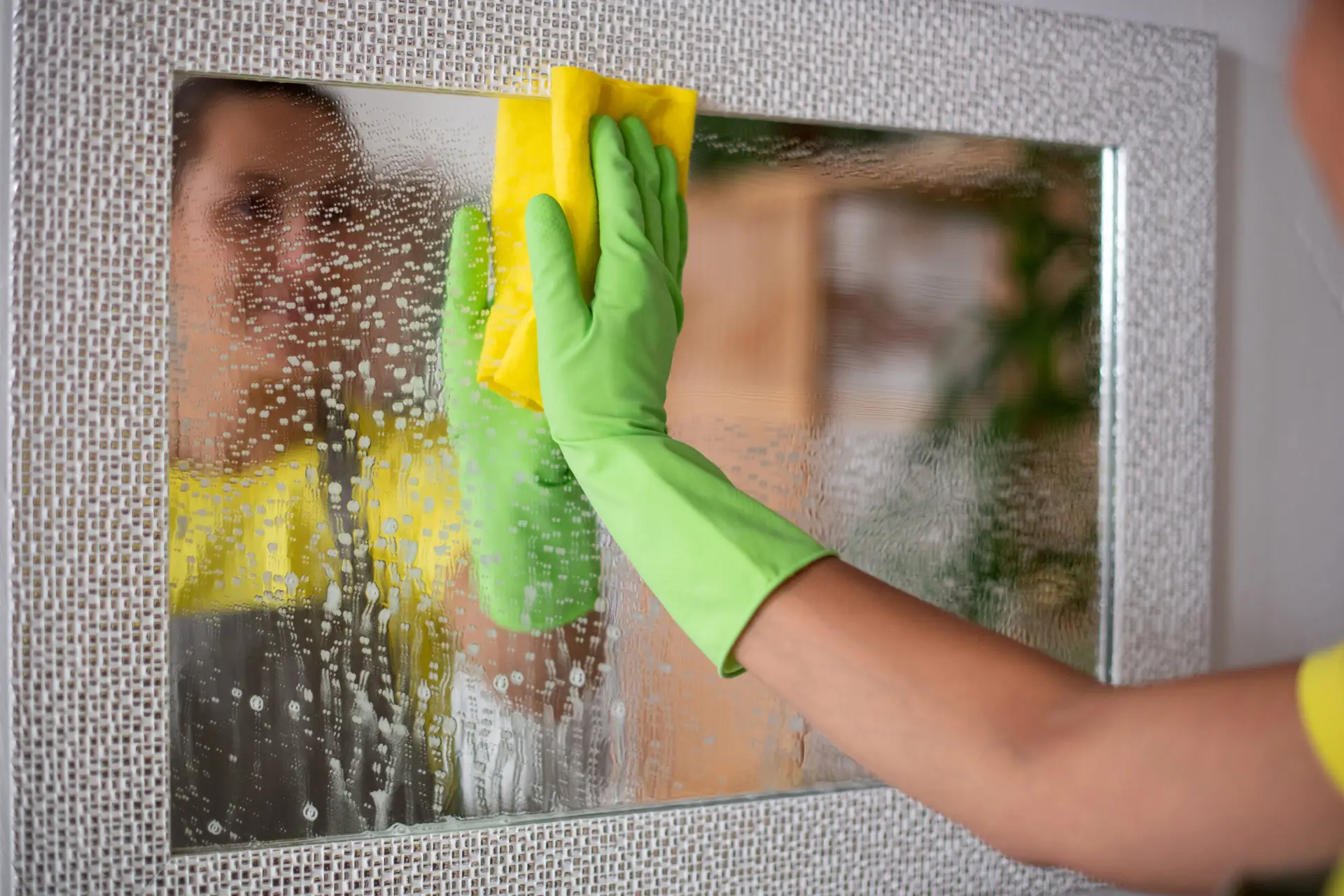
The short answer is yes, you can use glass cleaner on mirrors, but with a critical caveat: the cleaner must be ammonia-free, and you must avoid over-saturating the mirror.
Mirrors are ubiquitous in homes and require frequent cleaning, yet they are more delicate than a window pane. While the front surface is robust glass, the back—where the reflective magic happens—is highly sensitive to moisture and harsh chemicals. Understanding this difference is key to maintaining their clarity and longevity.
How Glass and Mirrors Differ
A mirror is essentially a piece of glass that has been transformed by a chemical process.
Why Mirror Coatings Need Gentle Care
While a standard window is just a sheet of glass, a mirror is complex:
- Glass Substrate: The front layer of glass you see through.
- Silver/Aluminum Coating: A fine metallic layer applied to the back of the glass, creating the reflection.
- Protective Paint/Sealer: A layer of paint applied over the metallic coating to protect it from moisture, oxygen, and scratches.
The chemicals in many heavy-duty glass cleaners, specifically ammonia, can degrade this protective paint layer over time. Once the protective layer is compromised, liquid and harsh chemicals can creep in and attack the metallic reflective coating.
Avoiding Streaks and Residue Buildup
The ammonia and dyes found in conventional blue window cleaners can sometimes leave a hazy residue when they evaporate, making a mirror appear streaky. This issue is often compounded by the mirror’s environment, such as bathroom mirrors that accumulate humidity and soap spray. Choosing a gentle, clear, alcohol-based, or plant-derived cleaner often results in a better, more residue-free shine.
Safe Cleaning Products for Mirrors
The best cleaners for mirrors effectively break down oils (like fingerprints and hairspray) without attacking the mirror’s delicate backing.
Ammonia-Free Glass Cleaners
This is the top choice for commercial products. Ammonia-free formulas rely on gentler solvents and surfactants to lift grime.
- Look For: Labels that explicitly state “Ammonia-Free,” “Safe for Tinted Windows,” or “Mirror Safe.”
- Why it Matters: Removing ammonia eliminates the highest risk factor for corrosion of the mirror’s silver backing (often called “mirror rot” or “black edge”).
- Recommendation: Clear liquid formulas are generally preferred over heavily dyed solutions, as they tend to leave less residual film.
DIY Vinegar and Water Mix
A simple homemade solution is incredibly effective, inexpensive, and perfectly pH-safe for mirrors.
- The Recipe: Mix $1$ part distilled white vinegar with $4$ parts water in a spray bottle. You can add a drop or two of dish soap (like Dawn) to help cut through heavy grease or hairspray residue.
- The Benefit: Vinegar is a gentle acid that breaks down hard water spots and soap scum without being strong enough to damage the protective backing of the mirror. It also evaporates quickly, minimizing streaks.
Proper Cleaning Technique
The way you clean a mirror is just as important as the product you use. The goal is to clean with minimal moisture, especially around the edges.
Spray onto the Cloth, Not Directly on the Mirror
This is the most critical technique for preserving your mirrors, especially those in high-humidity areas like bathrooms.
- The Problem with Direct Spray: When you spray directly onto the glass, the liquid runs down and inevitably seeps into the vulnerable gap between the glass edge and the frame (or wall). Once moisture breaches the edge, it begins to corrode the metal backing, leading to permanent black spots or deterioration around the border.
- The Safe Method: Always spray your cleaning solution liberally onto a clean, folded microfiber cloth first. The cloth should be damp, but not dripping wet. Use the cloth to wipe the surface.
Wipe in Circular Motions with Microfiber
The type of cloth you use directly impacts the final result.
- Application: Use a damp, pre-sprayed cloth to clean the mirror’s surface in gentle, overlapping circular motions to lift the dirt.
- Buffing (The Key to Streak-Free): Immediately follow up with a second, completely dry, clean microfiber cloth. Use the dry cloth to buff the mirror in a steady, back-and-forth or up-and-down motion until the surface is completely dry. This two-cloth method is the secret to a professional, streak-free shine.
Common Mirror Cleaning Mistakes
Avoid these pitfalls to ensure your mirrors stay pristine and your cleaning efforts aren’t wasted.
Overspraying Near the Mirror Edges
As noted, excessive liquid near the edges is the number one cause of long-term mirror damage, often referred to as desilvering. This damage starts subtly as small black spots or a widening haze along the border and is irreversible. Keep your cleaning efforts centered on the main glass surface.
Using Paper Towels That Leave Lint
While convenient, standard paper towels are a major contributor to streaking and fuzzy residue.
- The Issue: Paper towels are made of wood pulp, which leaves tiny fibers and lint behind, especially when wet. They also tend to absorb cleaner unevenly, leading to smears.
- The Fix: Always use high-quality, woven microfiber cloths or, failing that, use crumpled black and white newspaper (the ink in some colors can transfer) which is surprisingly effective at polishing glass without lint.
FAQs
Can I use alcohol wipes on mirrors?
For quick spot cleaning (like removing toothpaste splatter or makeup residue), alcohol wipes are generally safe. Alcohol evaporates very quickly, minimizing the risk of moisture damage. However, do not use them for regular, full-surface cleaning, and always check the wipe’s packaging to ensure it does not contain high concentrations of citrus acids or other harsh chemicals, which can cause dullness.
Why do mirrors streak even after cleaning?
Streaking almost always comes down to one of three issues:
- Too Much Product: The cleaner left behind is evaporating unevenly. Ensure you are rinsing with a damp cloth and buffing dry.
- Dirty Cloths: Using a cloth that already has residual soap, oil, or fabric softener from the laundry process will re-deposit those films onto the mirror surface. Always use clean cloths laundered without heavy fabric softeners.
- Poor Technique: Failing to buff the mirror completely dry with a separate dry cloth allows the residual moisture to leave behind mineral deposits or cleaner residue.
Focus on the detail. Leave the streaks to us.
For a perfectly maintained, streak-free home, trust the experts. Our teams use professional-grade, ammonia-free cleaning solutions and strict techniques to protect the delicate finishes on all your surfaces—from mirrors to countertops.
Contact Clean Day Maids today to schedule a service and experience the difference a truly professional clean can make!