Your home’s decorative items—from that antique frame to your favorite ceramic vase—add personality and warmth to your space. However, they are also magnets for dust and grime. Because these items are often fragile, have intricate details, or feature sensitive finishes, cleaning them requires more finesse than wiping down a countertop.
Quick Answer: The Gentle Approach
To clean decorative items safely, always dust gently first, then clean by material. Use a soft-bristled brush or a microfiber cloth to prevent scratches. If you must use a cleaning solution, never spray the object directly; spray your cloth instead to prevent liquid from seeping into joints or porous surfaces. When in doubt, stick to dry dusting.
Sort Decor by Material Before Cleaning
Different materials have “kryptonite”—cleaning agents that can ruin them instantly. Sorting your decor helps you choose the right tool before you begin.
| Material | Cleaning Method | Caution |
| Glass / Crystal | Microfiber + glass cleaner | Don’t spray cleaner near the base |
| Ceramic / Porcelain | Warm water + mild soap | Handle slippery items over a towel |
| Wood / Gilt Frames | Dry dust only | Avoid moisture; it can cause peeling |
| Metal | Soft, dry cloth | Avoid abrasive polishes unless necessary |
| Books / Paper | Soft brush / dry cloth | Keep away from moisture |
Use Gentle Dusting Techniques
The biggest risk to decorative items isn’t the cleaner—it’s physical damage from accidental knocks.
- Secure Your Workspace: If you are cleaning fragile items, place a thick towel on your workspace. If you accidentally drop a ceramic piece, the towel acts as a cushion.
- The “Brush-and-Catch” Method: For intricate items like candle holders or statues, use a clean, soft-bristled paintbrush. Brush the dust directly into the nozzle of a vacuum held a few inches away to capture the particles rather than letting them settle back down.
- Avoid Direct Spray: Never spray a cleaning agent directly onto a decorative object. It can seep into cracks, damage finishes, or ruin delicate painting. Always spray the cloth until it is lightly damp, then wipe the item.
Cleaning Specific Decor Items
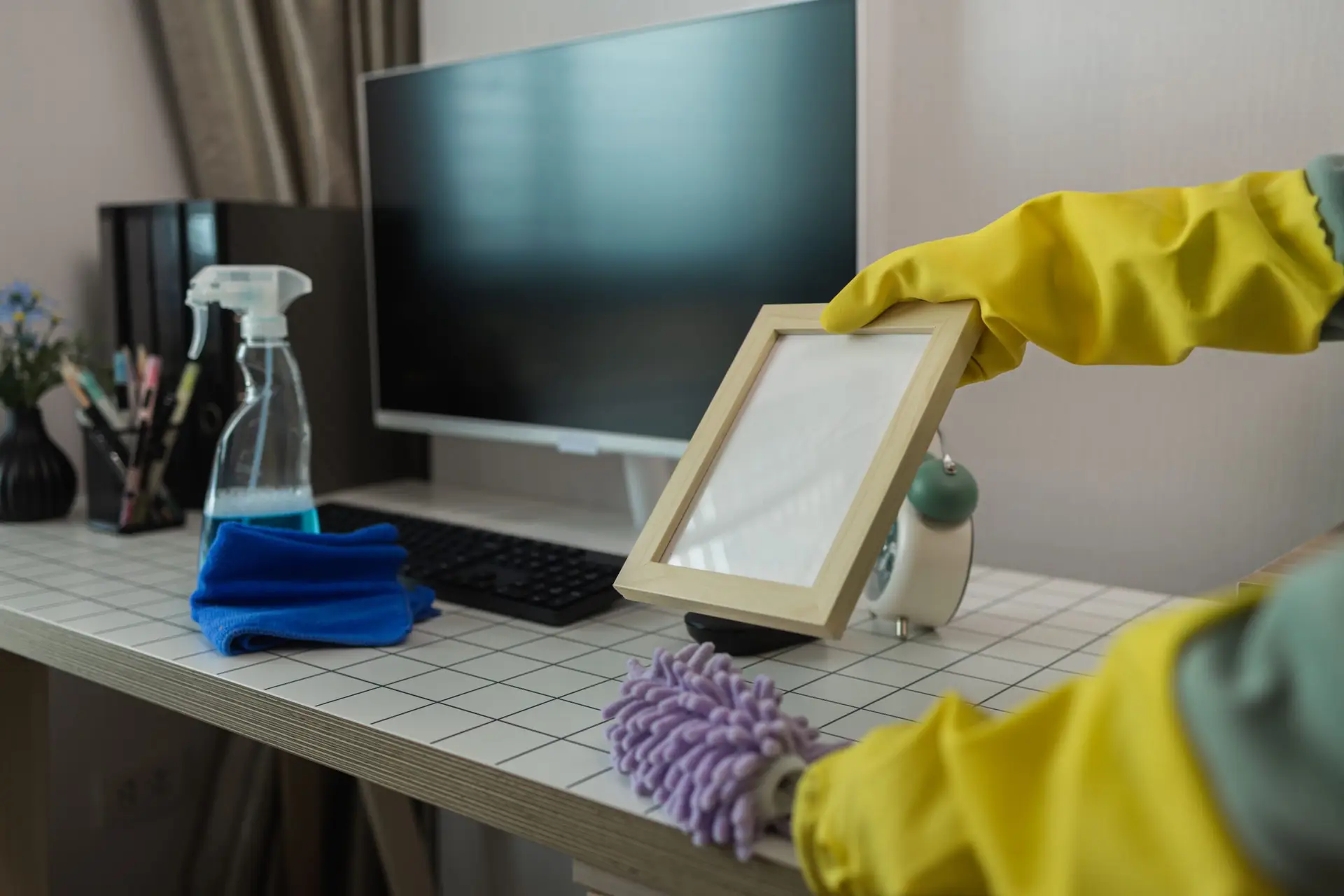
- Picture Frames: Never spray glass cleaner directly on a frame. Liquid can drip into the edge of the frame, damaging the paper backing or, worse, the photo itself. Spray your cloth, wipe the glass, and use a dry cloth to buff the frame.
- Vases: If a vase needs a deep clean, wash it with warm, soapy water inside, but ensure the exterior (especially if painted or gilded) stays dry.
- Display Shelves: Don’t dust the items on the shelf. Remove the items, clean the shelf surface first, then dust each item individually before placing it back. This prevents dust from immediately settling back onto your hard work.
When to Let Professional Cleaners Handle Detail Dusting
Dusting a shelf full of delicate decor is time-consuming and risky. If you are worried about breakage or simply don’t have the time for meticulous detail work, a professional service is the best solution.
At Clean Day Maids, we understand that your decor is precious. We can customize your cleaning plan to include specific instructions for “fragile-only” zones. Our team uses delicate dusting techniques and surface-safe tools to ensure your collections remain pristine without the risk of damage. You can trust us to handle your items with the same care you would.
Want your decor to shine without the stress?
Click here to schedule a detail-focused cleaning with Clean Day Maids!
Frequently Asked Questions
- What is the safest way to dust decor?
The safest method is using a soft-bristled paintbrush and a microfiber cloth. These tools allow you to reach small crevices without applying pressure that could break delicate parts. - Can I spray cleaner on picture frames?
No. Spraying liquid directly onto a frame allows it to seep into the wood or the back of the photo, which can cause warping, mold, or long-term structural damage. - How often should decorative items be cleaned?
For most homes, a light dusting every two weeks is sufficient. If items are kept in a high-traffic area or near an open window, they may need weekly attention. - Should fragile items be moved before professional cleaning?
It is always helpful to provide clear instructions to your cleaning team. If you have extremely delicate items, you can move them to a safe area yourself, or simply point them out to your cleaner so they can be handled with extra caution.