Every homeowner weighs the same question at some point: should I clean my home myself or pay someone to do it? The diy cleaning vs professional debate depends on more than just the monthly cost. Time, results, equipment, consistency, and health impact all factor into a decision that affects your daily quality of life.
This diy cleaning vs professional comparison covers eight specific areas where the two approaches produce different outcomes. No vague claims or sales pressure. Just the measurable differences between doing it yourself and hiring help, so you can choose the option that fits your life in Maryland, DC, and Virginia.
1. DIY Cleaning vs Professional: Time Investment per Week
Time is the biggest difference between the two approaches. Most homeowners underestimate how many hours they actually spend on household cleaning tasks each week without realizing it.
According to Bureau of Labor Statistics time use data, Americans average about 1.1 hours per day on household activities. That translates to roughly 7.7 hours per week, or over 400 hours per year dedicated to maintaining the home.
A professional team cleans a standard three-bedroom home in two to three hours during each visit. You do nothing during that time. The crew handles everything while you are at work, running errands, or spending time with family.
When you compare the two approaches directly, the gap is clear. Handling everything yourself costs 6 to 8 hours per week spread across daily tasks and weekend sessions. Professional help costs zero hours of your personal time, with just two to three hours of crew time per scheduled visit.
For busy professionals in Bethesda, Rockville, Silver Spring, and Arlington, those recovered hours go toward career advancement, rest, exercise, or activities with family that matter more than scrubbing floors.
2. Equipment Quality and Effectiveness
Consumer cleaning tools and professional-grade equipment produce visibly different results on every surface. This is one of the most underestimated factors in the comparison.
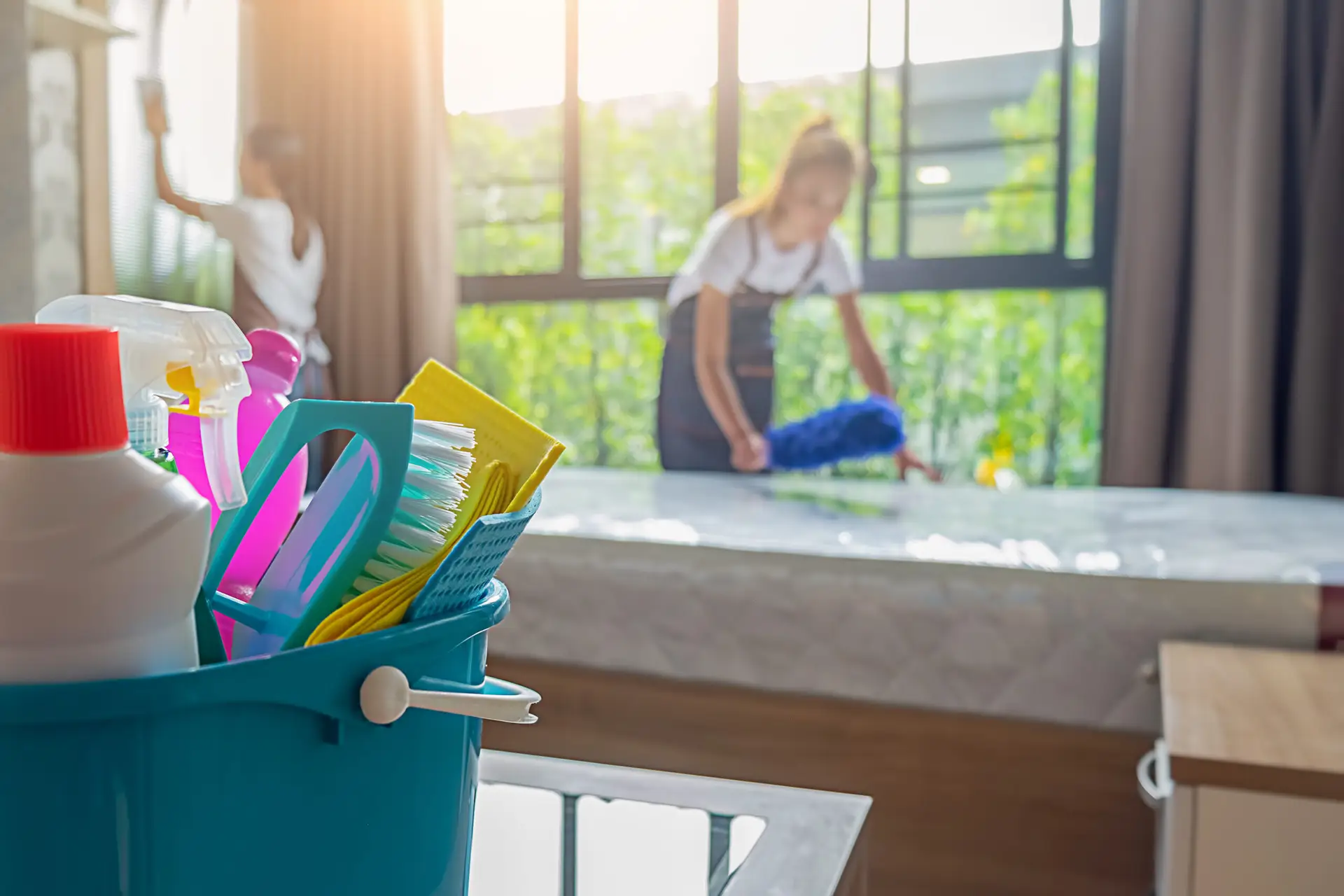
Household equipment typically includes a standard upright or stick vacuum without HEPA filtration, spray bottles with general-purpose cleaner, cotton cloths or paper towels that spread dust rather than capture it, and a single mop and bucket used for all floor types regardless of manufacturer recommendations.
Professional equipment includes HEPA-filter vacuums that trap 99.97% of particles down to 0.3 microns, microfiber systems designed to capture bacteria and dust without redistribution, commercial-grade disinfectants registered with the EPA for specific pathogen kill claims, and separate specialized tools for different surface types including hardwood, tile, carpet, and upholstery.
The result is measurable on every surface. Professional cleaning removes more allergens, kills more bacteria, and leaves surfaces cleaner for longer periods between visits. Equipment quality explains most of the gap between household and professional results.
3. Consistency of Results Over Time
When you handle cleaning yourself, quality depends entirely on your energy level, your mood, and how much time you have on any given day. Some weekends you deep clean the kitchen with real effort. Other weekends you barely sweep the floors before heading out. This inconsistency creates a cycle where dirt builds up until a marathon session forces you to spend an entire Saturday catching up.
Professional service eliminates this variation completely. Every visit follows a standardized checklist. The same tasks get completed to the same quality level every time, regardless of what happened during your week.
Consistency matters because dust and allergens stay below levels that trigger symptoms in sensitive family members. Bathroom mold never gains a foothold because surfaces are cleaned before growth begins. Kitchen grease gets removed regularly before it hardens into permanent residue. Floors stay clean enough for bare feet at all times, not just on cleaning day.
In the diy cleaning vs professional comparison, consistency is the factor that compounds over time. A weekly cleaning service delivers this consistency automatically without requiring any effort from you.
4. Depth of Cleaning Per Visit
Household cleaning tends to focus on visible surfaces: countertops, floors, and bathroom fixtures that you see every day. Areas that require bending, reaching, or moving furniture often get skipped because of time constraints or physical effort.
Professional cleaners follow a checklist that includes areas household cleaning commonly misses:
- Under and behind furniture where dust bunnies accumulate for months.
- Baseboards and door frames that collect a film of dust visible only up close.
- Light switches and door handles that transfer bacteria between every family member.
- Inside of microwave ovens and around stovetop edges where food residue hardens.
- Toilet base, hinges, and the floor immediately surrounding the toilet where bacteria concentrate.
- Ceiling fan blades and high shelves that stay dusty for weeks between attention.
- Vent covers and air returns that distribute dust through your HVAC system.
These neglected areas accumulate dust, allergens, and bacteria steadily. The difference between the two approaches shows most in air quality and allergen levels rather than in visible surface cleanliness alone.
5. Chemical Knowledge and Product Safety
Most homeowners use cleaning products based on brand recognition, scent preference, or whatever was on sale that week. Professional cleaners select products based on surface compatibility, disinfection efficacy, and family safety requirements.
Common household product mistakes include using acidic cleaners on natural stone surfaces, which causes permanent etching that cannot be reversed. Mixing bleach with ammonia-based products creates toxic fumes that are dangerous in enclosed spaces. Applying abrasive scrubbers on glass cooktops causes permanent scratches visible every time you cook. Using too much product leaves residue that actually attracts more dirt over time. Using all-purpose cleaner on hardwood floors damages the protective finish gradually.
Professional teams know which products work safely on each surface type. They use proper dilution ratios, respect manufacturer-specified dwell times for effective disinfection, and avoid product combinations that damage surfaces or create health risks for your family.
In the diy cleaning vs professional debate, product expertise protects both your surfaces and your health. This matters especially in homes with young children, pets, or allergy sufferers who are more sensitive to chemical exposure.
6. True Cost Comparison Beyond the Invoice
The sticker price of professional cleaning feels like an added expense at first glance. However, a complete cost comparison includes more than just the monthly invoice you receive.
Handling everything yourself carries hidden costs that add up. Cleaning supplies including vacuums, mops, sponges, and multiple specialized products typically cost households $200 to $400 per year. Surface damage from wrong product choices leads to professional repair bills for scratched cooktops, etched stone, or discolored grout. Time value matters significantly: if you earn $35 to $50 per hour and spend 6 hours cleaning on a weekend, the opportunity cost exceeds the price of professional service. Equipment maintenance adds recurring costs for vacuum filters, mop heads, and replacement parts throughout the year.
Professional cleaning involves a predictable flat rate per visit with no supply costs on your end. There are no equipment purchases or maintenance expenses. The risk of surface damage from incorrect product use drops dramatically. And the time savings go directly back into your life.
For many Maryland and Virginia homeowners, the total cost of handling everything yourself versus hiring help is closer than the invoice alone suggests when you account for all these factors.
7. Health and Allergen Impact
A clean-looking home is not necessarily a healthy home. Visible cleanliness does not reflect the presence of allergens, bacteria, or mold spores that affect your family’s respiratory health.
Professional cleaning produces better health outcomes for several measurable reasons. HEPA vacuums remove dust mites, pet dander, and pollen that standard vacuums recirculate into the air. Commercial disinfectants kill pathogens on contact surfaces that consumer sprays merely reduce in number. Consistent cleaning frequency prevents allergen accumulation that triggers respiratory symptoms over time. Additionally, trained cleaners identify mold growth in early stages before it becomes a larger health and structural problem.
For homes with asthma, allergies, or young children, the health difference between the two approaches is significant and measurable. Our deep cleaning service specifically addresses the accumulated allergens that routine household cleaning consistently misses.
8. Mental Load and Stress Reduction
Cleaning is not just a physical task. It carries a mental burden that affects your daily mood and energy. Planning what to clean, remembering what you missed, feeling guilty about tasks you keep putting off. This invisible labor affects relationships, weekend enjoyment, and overall well-being.
When you outsource cleaning, the mental load disappears completely. You do not plan, schedule, or worry about what needs to be done. The professional team handles everything. You come home to a clean house without investing mental energy into making it happen.
In the diy cleaning vs professional comparison, stress reduction is the benefit homeowners mention most frequently. It is also the hardest to quantify on paper and the easiest to feel in daily life.
Dual-income households in the DMV region report that hiring professional help reduces arguments about household responsibilities. The chore that neither partner wants to do simply gets done by someone who does it professionally and efficiently.
Making the Right Choice for Your Situation
Neither option is universally better for every household. The best choice depends on your specific situation and priorities.
Handling everything yourself works well when you have flexible time and genuinely enjoy the process of cleaning, your home is small with low daily traffic, you live alone or with one other person, and budget is extremely tight while time is more available than money.
Professional help works well when you work full-time and value your weekends for rest and family, your household includes children, pets, or allergy sufferers, your home is larger than 1,500 square feet, consistency matters more to you than doing the work yourself, and you want a healthier indoor environment backed by professional-grade equipment.
Many homeowners in Maryland, DC, and Virginia find success with a hybrid approach. They handle daily tidying themselves and book professional residential cleaning for weekly or bi-weekly deep maintenance. Business owners follow the same logic with our commercial cleaning services for their workspaces.
The Honest Comparison
The diy cleaning vs professional decision comes down to time, tools, consistency, and health outcomes. Professional cleaning costs money. Doing it yourself costs time and often delivers uneven results. Knowing these eight differences helps you make a decision based on facts rather than assumptions about what you should be doing.