
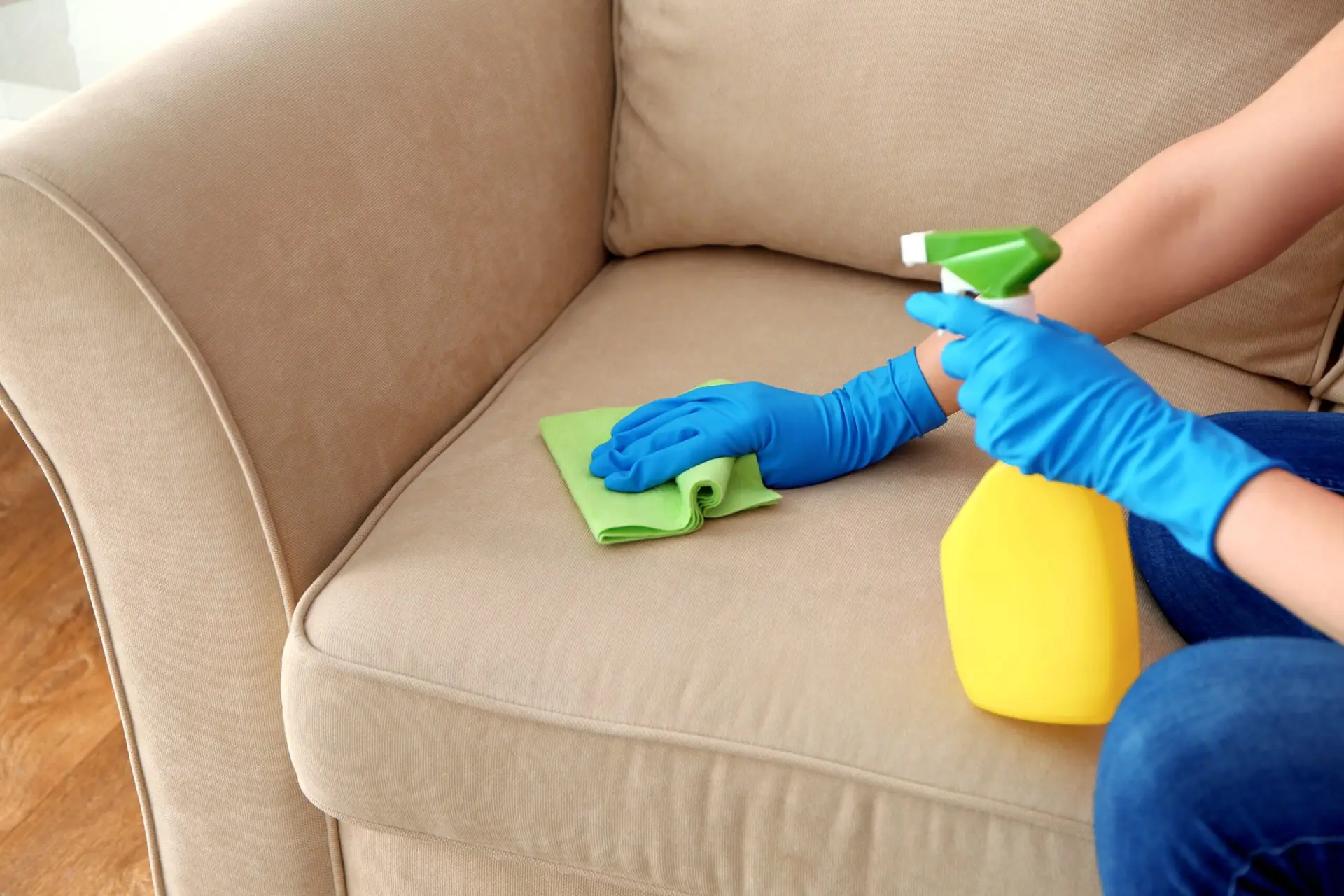
Quick Answer
To clean a fabric sofa without leaving water rings or stains, always check the manufacturer’s care tag first, vacuum away loose crumbs and pet hair, use the minimal amount of moisture necessary with a mild cleaning solution, and speed up drying using a clean microfiber towel or portable fan.
Why Fabric Sofas Need a Gentle Cleaning Method
Fabric upholstery absorbs liquids and traps dust deep within its fibers. Using harsh scrubbing, excessive water, or improper chemical cleaners can break down fabric threads, spread stains, or leave behind stubborn chalky water rings that are even harder to remove than the original spot.
What to Check Before Cleaning Upholstery
Fabric Care Tag
Always inspect the tag hidden beneath the cushions for cleaning codes: W (safe for water-based cleaners), S (use solvent-based cleaners only), WS (safe for either water or solvents), or X (vacuum only). Never ignore these codes or you risk permanently damaging the fabric.
Colorfastness test
Dab a small amount of your chosen cleaning solution onto a hidden area—such as the back or bottom hem of the sofa—and wait 10 minutes to ensure the fabric color does not bleed or fade.
Water-safe vs solvent-safe fabric
Knowing whether your upholstery tolerates water or requires dry-cleaning solvents prevents shrinkage, stiffness, and permanent discoloration.
Step-by-Step Fabric Sofa Cleaning Method
Vacuum crumbs, dust and pet hair first
Remove all cushions and use your vacuum’s soft brush attachment to thoroughly lift loose dirt, dust, and embedded pet hair from every crease and surface.
Spot treat visible stains carefully
Blot spills gently with a clean cloth rather than rubbing. Apply a mild, appropriate cleaning solution sparingly to targeted spots.
Use minimal moisture
Dampen a microfiber cloth rather than soaking the couch. Work in small sections, gently dabbing the fabric to lift dirt without saturating the inner padding.
Dry the sofa quickly
Press a dry, clean white towel firmly over damp areas to absorb residual moisture, and direct a fan toward the sofa to accelerate air drying and prevent water rings.
Common mistakes that leave water rings
Leaving soapy residue on fabric, soaking cushions all the way through to the inner foam, and allowing wet spots to air-dry slowly in humid conditions are the primary culprits behind unsightly water rings.
When a sofa needs a deeper professional clean
If your sofa has widespread staining, deep-seated odors, or delicate fabrics that require specialized extraction, routine home remedies won’t be enough. Pairing a thorough furniture refresh with comprehensive residential cleaning or intensive deep cleaning services keeps your entire home looking and feeling immaculate. For more tips on keeping your living space fresh, check out our guides on managing pet hair, proper dusting techniques, and overall furniture care.
CTA: Schedule residential or deep cleaning with Clean Day Maids
Frequently Asked Questions
Can I clean a fabric sofa with water?
Only if your sofa’s care tag features a W or WS code. If the tag says S, water can cause permanent staining and water rings.
How do I avoid water stains on upholstery?
Avoid water stains by using minimal moisture, dabbing instead of scrubbing, wiping cleaning solutions evenly across entire panel seams rather than spot-drying circles, and drying the fabric quickly with a fan.
Should I use vinegar on a fabric couch?
Diluted white vinegar can work well for spot-cleaning water-safe fabrics, but always test it on a hidden patch first to verify colorfastness and neutralize lingering vinegar scents.
How often should fabric sofas be cleaned?
Fabric sofas should be vacuumed weekly to control dust and pet hair, spot-treated as spills occur, and given a thorough surface clean every 6 to 12 months.
When should I hire professional help?
Hire professional upholstery cleaners if your sofa has delicate antique fabrics, heavy embedded odors, stubborn pet stains, or if DIY spot cleaning fails to remove discoloration.