Mopping a wooden floor incorrectly is one of the fastest ways to damage it. Unlike tile or vinyl, hardwood is sensitive to moisture. Excess water seeps between boards, causes swelling, and leads to warping or cupping that is expensive to repair. On finished hardwood, using the wrong cleaning product strips the protective layer over time, leaving the wood vulnerable to further damage.
The method described here is correct, practical, and based on what flooring professionals actually recommend.
Why most people damage hardwood floors when cleaning
Two mistakes cause the vast majority of hardwood floor damage during cleaning.
The first is too much water. A soaking-wet mop pushes water into the seams between boards and into any surface crack. Wood is hygroscopic: it absorbs moisture from its environment. Once water enters the seam, it expands the board edge and eventually causes buckling. Even a floor with a seemingly intact finish can absorb water at the seams over time.
The second is the wrong cleaner. Ammonia-based products, bleach, vinegar used regularly, and many all-purpose sprays degrade the polyurethane or oil finish applied to hardwood floors. Once the finish is compromised, the bare wood underneath is exposed to staining, moisture absorption, and accelerated wear. The floor looks dull first, then progressively harder to clean.
What you need to clean a wood floor safely
- A flat-head microfiber mop (not a string mop or sponge mop)
- A pH-neutral hardwood floor cleaner, or diluted dish soap as an alternative
- A spray bottle for controlled product application
- A dry microfiber cloth or second mop pad for buffing
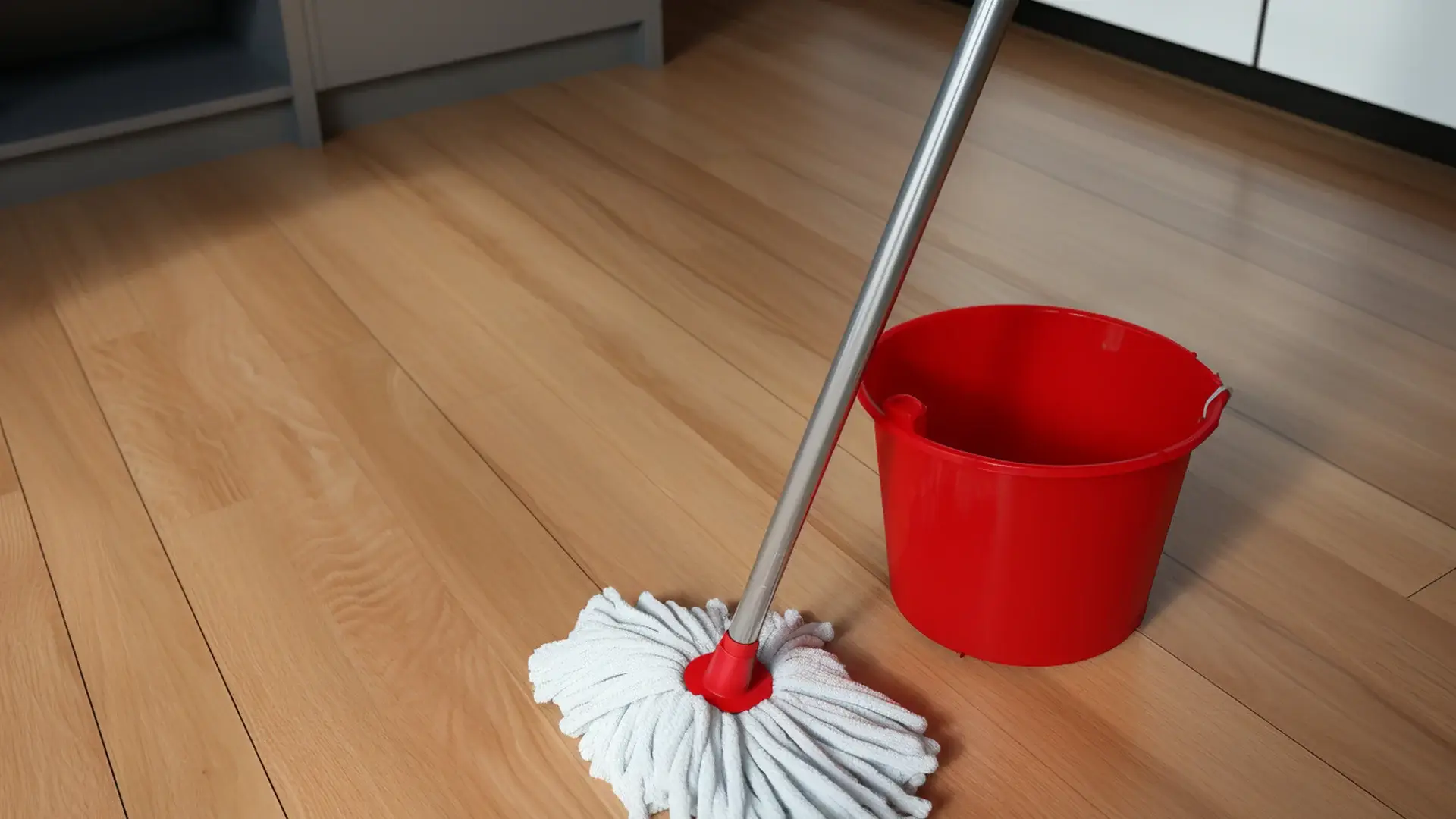
The best mop for hardwood floors is a flat microfiber mop without exception. String mops retain too much water. Sponge mops push liquid into seams. A flat microfiber pad picks up debris effectively and applies cleaning solution in a controlled, thin layer that does not saturate the surface.
Step-by-step: how to mop a wooden floor correctly
- Step 1: Dry clean first. Before any moisture touches the floor, sweep, dust-mop, or vacuum to remove grit, hair, and particles. Hard debris dragged under a wet mop acts like sandpaper on the finish.
- Step 2: Spray, do not pour. Apply your cleaning solution directly to the floor in a small area — three to four square feet at a time — using a spray bottle. Never pour liquid onto the floor. Never saturate the mop head and drag it across the surface.
- Step 3: Mop in the direction of the grain. Work parallel to the wood boards. Mopping across the grain increases the risk of streaking and pushes dirty water into the seams between boards.
- Step 4: Work backward in sections. Clean one section at a time and move backward so you do not step on cleaned areas. This produces more consistent results and prevents cross-contamination from foot traffic.
- Step 5: Dry as you go. After mopping each section, buff with a dry microfiber cloth or a second dry mop pad immediately. You should not see any standing water or visible wetness after this step. In humid months — summer in Maryland and Virginia is genuinely humid — any moisture left to air-dry leaves film.
How to wash hardwood floors naturally
For those who prefer cleaning without commercial products, a simple solution is effective: one tablespoon of plain dish soap per gallon of warm water. This creates a mild, pH-appropriate cleaner that removes dirt without stripping the finish. Apply with a spray bottle using the method described above.
For light cleaning between deeper sessions, plain water on a nearly-dry mop is adequate. The benchmark: when you press your hand against the mop pad, you should barely feel dampness.
Avoid vinegar solutions on hardwood despite their common recommendation online. The acidity in white vinegar is low enough that individual applications cause minimal damage, but repeated use over months gradually breaks down polyurethane finish and leaves the floor with a dull, clouded appearance. This is a well-documented issue that the National Wood Flooring Association specifically warns against in its maintenance guidelines.
Clean wood floors without streaks: the key step most people skip
Streaks on hardwood floors come from two sources: product residue drying on the surface, or moisture that evaporated before the floor was fully wiped. The fix is simple: buff with a dry cloth immediately after mopping each section, before the floor dries on its own.
This step is particularly important in the DMV region’s summer months, when humidity slows evaporation and leaves cleaning product concentrated on the surface as the water component evaporates.
Hardwood floor care tips for Maryland and Virginia homes
The Mid-Atlantic climate creates specific challenges for hardwood floors. High summer humidity causes wood to expand. Dry winter air — amplified by interior heating — causes contraction. These seasonal cycles create small gaps between boards, and over years can affect both the floor’s appearance and structural integrity.
Maintaining indoor relative humidity between 35% and 55% is the most important single factor in hardwood floor longevity. The National Wood Flooring Association recommends this range specifically for finished hardwood. A whole-home humidifier in winter and air conditioning in summer stabilizes this range across both seasons.
Regular dry cleaning — sweeping or dust-mopping two to three times per week in high-traffic areas — protects the finish more effectively than any cleaning product. Removing abrasive grit before it can scratch is the most valuable maintenance habit for hardwood floors.
How often should hardwood floors be mopped?
For most households, a full mopping once every one to two weeks is appropriate. High-traffic areas, homes with pets, and households with young children may benefit from slightly more frequent cleaning.
Over-mopping is a genuine risk. Hardwood floors cleaned too often with even small amounts of excess moisture accumulate that moisture over time. The appropriate frequency varies by household, but “less than you think” is often the right answer.
When professional floor care makes sense
Deeply soiled hardwood, sticky product buildup that home methods cannot resolve, or floors that have lost sheen despite correct maintenance often benefit from professional attention. Deep cleaning services include detailed hardwood floor care using hardwood-appropriate products and methods.
For ongoing floor maintenance in busy households, weekly cleaning or bi-weekly cleaning keeps hardwood consistently maintained without accumulation that makes periodic deeper cleaning harder.
Frequently asked questions about mopping hardwood floors
Can I use a steam mop on hardwood floors? No. Steam mops force moisture and heat into wood grain, causing swelling and finish damage. They are not appropriate for hardwood floors regardless of the floor’s finish type.
What is the white haze on my hardwood floor after mopping? A white haze or film is almost always product residue. Clean the affected area with a barely damp cloth followed immediately by a dry buff. Switch to a pH-neutral cleaner and use less product per application.
How do I remove pet urine stains from hardwood? Fresh urine: blot immediately, do not rub, and clean with a pH-neutral cleaner. Old urine stains that have penetrated the wood typically require sanding and refinishing — surface cleaning cannot fully remove them.
Should I use wood floor polish on top of the cleaner? Polish adds a layer of shine but builds up over time and requires periodic stripping. If your floor’s finish is intact, polish is not necessary. If the floor looks dull, the finish may need professional refinishing rather than surface polish.
The discipline behind beautiful hardwood
Mopping a wooden floor correctly is mostly about restraint — less water, gentler cleaners, more frequent dry cleaning. That combination preserves the finish, prevents moisture damage, and keeps hardwood looking genuinely good for decades rather than needing refinishing every few years.
How to restore shine to hardwood floors without refinishing
Dull hardwood that has lost its sheen but is otherwise structurally sound can often be revived without full refinishing. After a thorough cleaning with a pH-neutral cleaner to remove any residue or buildup, a hardwood floor restorer product — available at hardware stores — fills minor surface scratches and adds a protective layer that restores sheen. This is significantly less expensive and disruptive than sanding and refinishing. Results depend on the degree of finish degradation; floors with deep scratches, heavy wear through the finish layer, or significant water damage typically require professional refinishing rather than a topical restorer.
Protecting hardwood floors in entryways and transition zones
Entryways and the first few feet of floor inside an exterior door receive dramatically more stress than the rest of a hardwood floor: tracked grit, moisture from wet shoes, and concentrated foot traffic all accelerate finish wear in these zones. A high-quality entrance mat — both outside and inside the door — reduces the abrasive material that reaches the floor. Inspect entryway and transition zones more frequently than other areas of the floor, and address any finish wear before it deepens into the wood.