
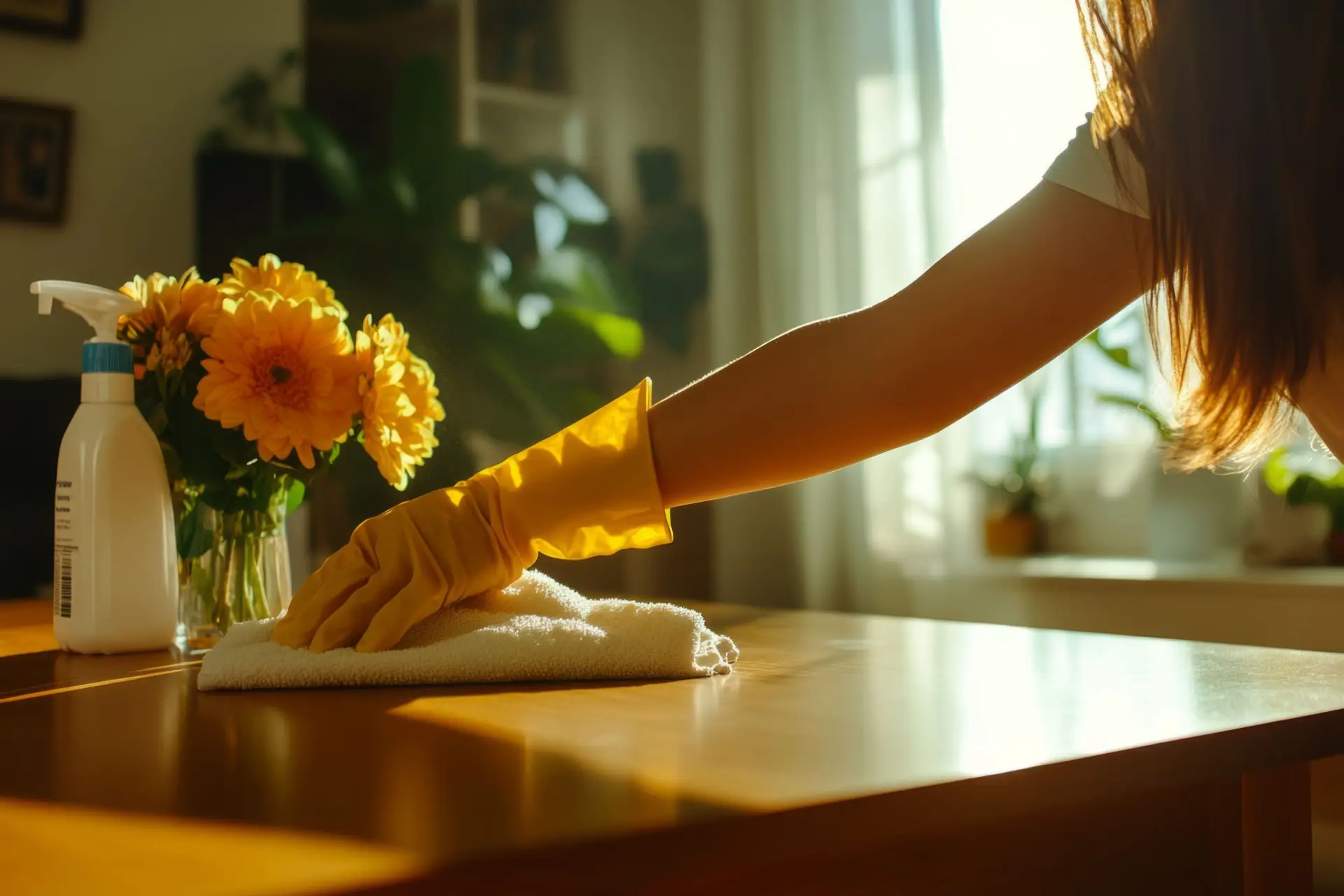
We often think of “air pollution” as something that happens outdoors, but the air inside your home can actually be more concentrated with irritants. Every day, dust, pet dander, pollen, and other microscopic particles settle on your floors, shelves, and upholstery. If left unaddressed, these particles don’t just stay put—they get kicked back into the air every time you walk across a rug or turn on a fan.
Regular house cleaning is your first and most effective line of defense against these airborne triggers, transforming your home into a fresher, more breathable environment.
How Dust and Allergens Build Up Indoors
Dust is a complex mixture of dead skin cells, fabric fibers, tracked-in soil, and pet dander. It enters your home through open windows, on your shoes, and even through your HVAC system. Once inside, it settles into “hotspots” where it waits to be redistributed:
- HVAC Systems: Vents and air ducts can accumulate debris, which then gets blown into every room in your home.
- Soft Surfaces: Carpets, curtains, and upholstery act like giant filters, trapping allergens that standard surface cleaning often misses.
- High-Touch & Hidden Areas: Baseboards, ceiling fans, and the tops of shelves are common collection points where dust accumulates until air movement knocks it loose.
Cleaning Tasks That Help Reduce Airborne Particles
To truly improve your indoor air quality, you need a strategy that captures dust rather than just moving it around.
- The “Top-to-Bottom” Rule: Always dust high surfaces (like ceiling fans and shelves) before vacuuming. This ensures that any falling debris is captured by your final floor cleaning.
- Use Microfiber and HEPA: Microfiber cloths are essential because they “hook” onto dust particles rather than spreading them. When vacuuming, a HEPA-filter equipped vacuum is your best friend—it captures up to 99.97% of fine particles, ensuring they don’t simply blow out of the exhaust and back into your air.
- Focus on Soft Surfaces: Regular vacuuming of carpets, rugs, and upholstery is crucial for keeping allergens from becoming airborne.
Kitchens, Bathrooms, and Moisture Control
Air freshness isn’t just about dust; it’s about managing the invisible moisture and odors that linger in kitchens and bathrooms.
- Moisture Management: Mold and mildew thrive in damp areas like shower grout and under-sink cabinets. Consistent cleaning and proper ventilation (using exhaust fans) prevent these spores from circulating through your home’s air.
- Odors: Cleaning grease in the kitchen and sanitizing high-touch bathroom surfaces doesn’t just make a home look better—it removes the organic matter that feeds bacteria and creates unpleasant, lingering odors.
Why Recurring Cleaning Works Better Than Occasional Deep Cleaning
The biggest challenge with home hygiene is the “buildup cycle.” When you wait too long between cleans, allergens and dust reach a critical mass where they become impossible to manage with a quick wipe-down.
Recurring professional cleaning from Clean Day Maids shifts the paradigm from “damage control” to “maintenance.” By keeping your home at a consistent baseline of cleanliness, we ensure that dust, dander, and grime never have the chance to accumulate to levels that affect your indoor air quality. You aren’t just getting a clean home—you are maintaining a healthier, more breathable space for your family year-round.
Frequently Asked Questions
- Can house cleaning improve indoor air quality? Yes. By removing the source of dust, dander, and mold spores, cleaning prevents these irritants from becoming airborne and circulating throughout your home.
- How often should I clean to reduce dust? For most homes, a weekly or biweekly maintenance schedule is ideal to prevent the buildup of particles in carpets, vents, and on high surfaces.
- What rooms affect indoor freshness most? Kitchens and bathrooms are the highest priority due to moisture and organic waste, but bedrooms are also critical because you spend a significant portion of your time there breathing in whatever is on your linens and carpets.
- Is recurring cleaning helpful for dusty homes? Absolutely. Consistency is key. Recurring service ensures dust is captured regularly, preventing it from recirculating and settling deep into your home’s fabrics.
Ready to breathe easier? Stop catching up on chores and start enjoying a fresher home. Contact Clean Day Maids today to schedule your recurring cleaning service!