
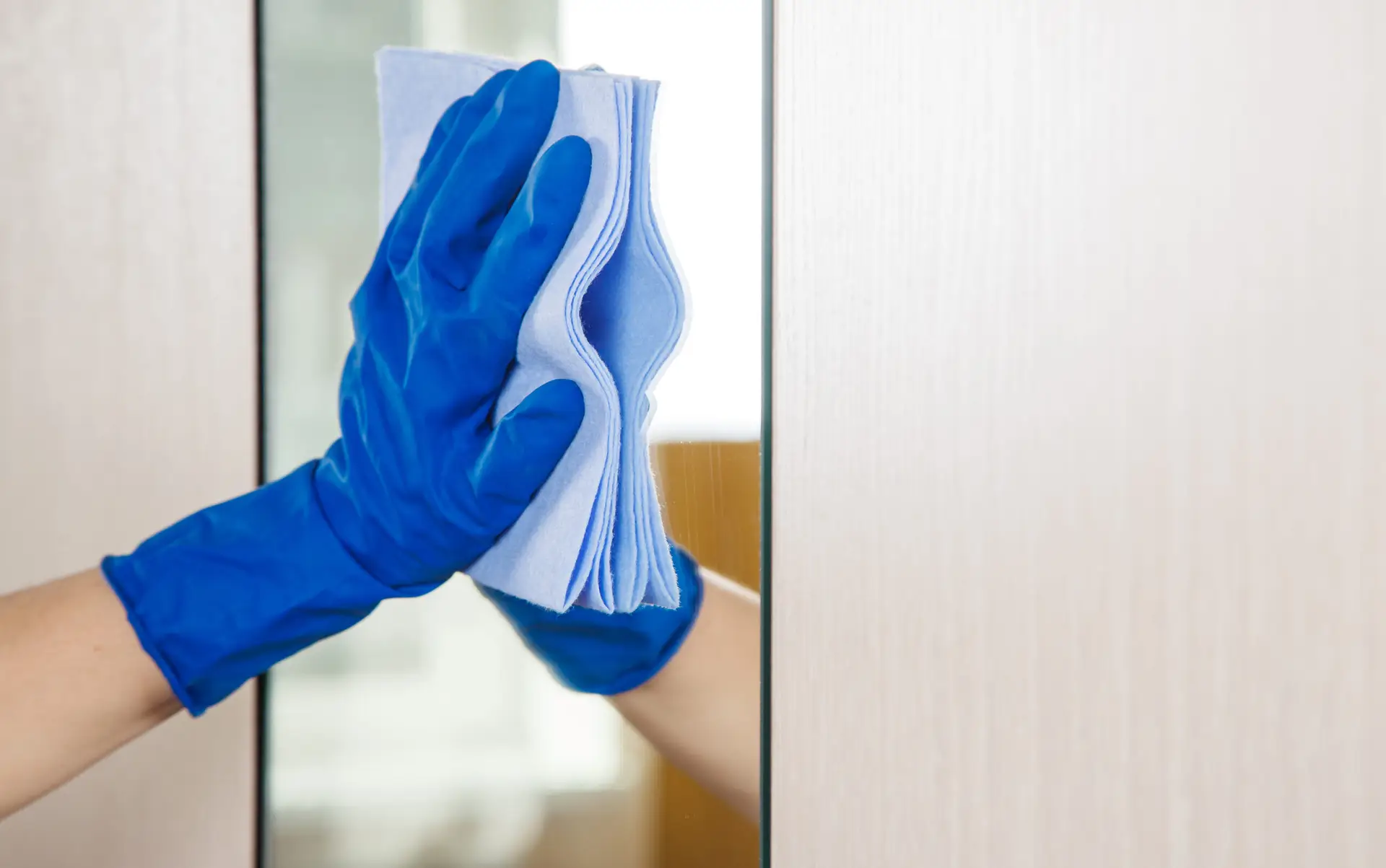
The goal of cleaning a mirror is crystal clarity, so finding a cloudy or hazy film afterward is counterintuitive. The cloudiness is almost never a problem with the mirror itself; rather, it is a direct result of leftover residue, poor rinsing, or mineral deposits from water.
Understanding these common cleaning mistakes is the first step toward achieving a perfect, streak-free shine.
Common Causes of Cloudy Mirrors
A cloudy mirror is typically covered in an invisible layer of residue that scatters light, making the surface look hazy instead of reflective.
Soap or Cleaner Residue Left Behind
The most frequent culprit is the cleaning product itself. Many commercial glass cleaners contain soaps, dyes, and surfactants (the compounds that help break down grease).
- Failure to Rinse: If you spray a cleaner and simply wipe it away with a single paper towel, you are often just moving the residue around the glass. As the cleaner evaporates, it leaves behind a film of non-volatile ingredients (the dyes, perfumes, or soaps).
- Heavy Build-up: This is especially true for bathroom mirrors, which are constantly subjected to hairspray, deodorant, and makeup. The cleaner mixes with this gunk, and if not fully removed, it dries into a cloudy haze.
Using Hard Water or Paper Towels
Your tools and water source can also be the problem, even if your technique is perfect.
- Hard Water Spots: If you are using tap water to dilute a DIY cleaner or to rinse the surface, the minerals (calcium and magnesium) in hard water can be left behind when the water evaporates. These mineral deposits appear as faint, whitish spots or a general film of cloudiness.
- Paper Towel Lint: Standard paper towels shed lint and fibers when they get wet. These minuscule fibers cling to the glass, creating a dusty, cloudy appearance that you can’t seem to buff away. The rough texture of paper towels can also subtly scratch certain mirror coatings over time.
How to Fix a Cloudy Mirror
Fortunately, a cloudy mirror is often a quick fix that requires going back to basics: rinsing and polishing.
Wipe Again with Diluted Vinegar Solution
The fastest way to strip away stubborn soap and chemical residue is with a mild, acidic solution that breaks down alkaline films.
- Preparation: Mix $1$ part distilled white vinegar with $4$ parts distilled water. (Using distilled water prevents new mineral deposits from hard water.)
- Application: Dampen a clean, folded microfiber cloth with this solution. Do not spray the mirror directly.
- Wipe Down: Gently wipe the entire surface of the mirror, focusing on dissolving the residue left from the previous cleaning attempt. Vinegar’s natural acidity is highly effective at neutralizing soap film.
Polish with a Dry Microfiber Cloth
The key to preventing streaks and final cloudiness is the polishing step. You must not only lift the residue but ensure the surface is completely dry.
- The Two-Cloth Method: Use a second, completely dry, clean microfiber cloth immediately after the vinegar wipe.
- Buffing: Vigorously buff the mirror’s surface using long, overlapping S-strokes (or horizontal/vertical motions). The friction and absorbency of the dry cloth will wick away the last bits of moisture and polish the glass to a perfect, streak-free shine.
Best Practices for Streak-Free Mirrors
Once you’ve restored clarity, adopt these habits for effortless maintenance moving forward.
Use Minimal Cleaner and Consistent Motion
You need just enough cleaner to emulsify the dirt and oil, but not so much that you leave behind excess residue.
- Less is More: Always spray the product onto the cleaning cloth, not the mirror. This controls the amount of liquid applied to the glass.
- Wipe Pattern: Use a consistent cleaning pattern (e.g., starting at the top left and moving in steady horizontal overlapping rows) to ensure you cover every square inch of the mirror and don’t miss any spots.
Avoid Oversaturating the Surface
Excess moisture is the number one long-term danger to the mirror’s structural integrity.
- Risk of Mirror Rot: When too much liquid is applied, it runs to the edges and seeps behind the glass, attacking the reflective coating. This causes permanent “mirror rot” (black spots or discoloration along the edges).
- Damp, Not Soaked: Ensure your cloth is only damp—not soaked—with cleaner. If you see liquid running down the face of the mirror, you’ve used too much.
Preventing Cloudiness in the Future
Long-term mirror maintenance should focus on product safety and regularity.
Switch to Ammonia-Free, Alcohol-Based Sprays
Ammonia-based cleaners can react poorly with certain older or less-protected mirror backings. Switching to an ammonia-free product greatly reduces the risk of long-term cloudiness and damage.
- Alcohol’s Benefit: Alcohol-based glass cleaners are highly effective because alcohol evaporates almost instantly, leaving virtually no time for streaks or mineral deposits to form.
Regular Light Maintenance Cleaning
If you allow heavy build-up of hairspray, toothpaste, and dust, you will need to use more cleaner and more effort, increasing the risk of residue.
- Quick Wipe-Down: Perform a fast wipe with a dry microfiber cloth every two or three days.
- Deep Clean: Use your chosen cleaner once a week. This prevents the heavy accumulation of grime, meaning you only need a light application of product to get a sparkling finish.
FAQs
Can humidity make mirrors look foggy?
Yes, high humidity is the classic cause of mirror fogging. Fog forms when the warm, moist air in your bathroom contacts the mirror’s cooler surface. This condensation is temporary water vapor, not dirt or residue.
- The Fix: Ventilation is key. Running an exhaust fan during and after a shower, or opening a window, will quickly bring the mirror surface up to room temperature, causing the fog to dissipate.
What’s the best cleaner for antique mirrors?
Antique mirrors are extremely delicate, as their protective backing paint is often decades old and brittle.
- Strictly Avoid: Water, liquids, and all commercial chemical sprays, including vinegar and ammonia.
- Best Method: The safest and most recommended method is to use a slightly damp, clean microfiber cloth only to remove surface dust, followed by a dedicated dry buff. For light soil, a tiny amount of denatured alcohol on a cotton ball applied only to the center of the mirror can be used, but extreme caution is advised to keep liquids away from the edges.
See the world clearly again.
Don’t let streaks and haze compromise your home’s appearance. The professional cleaning teams at Clean Day Maids are trained in the best practices for cleaning glass and delicate mirror surfaces, ensuring a perfect, lasting shine every time.
Contact us today to schedule your streak-free cleaning service!