
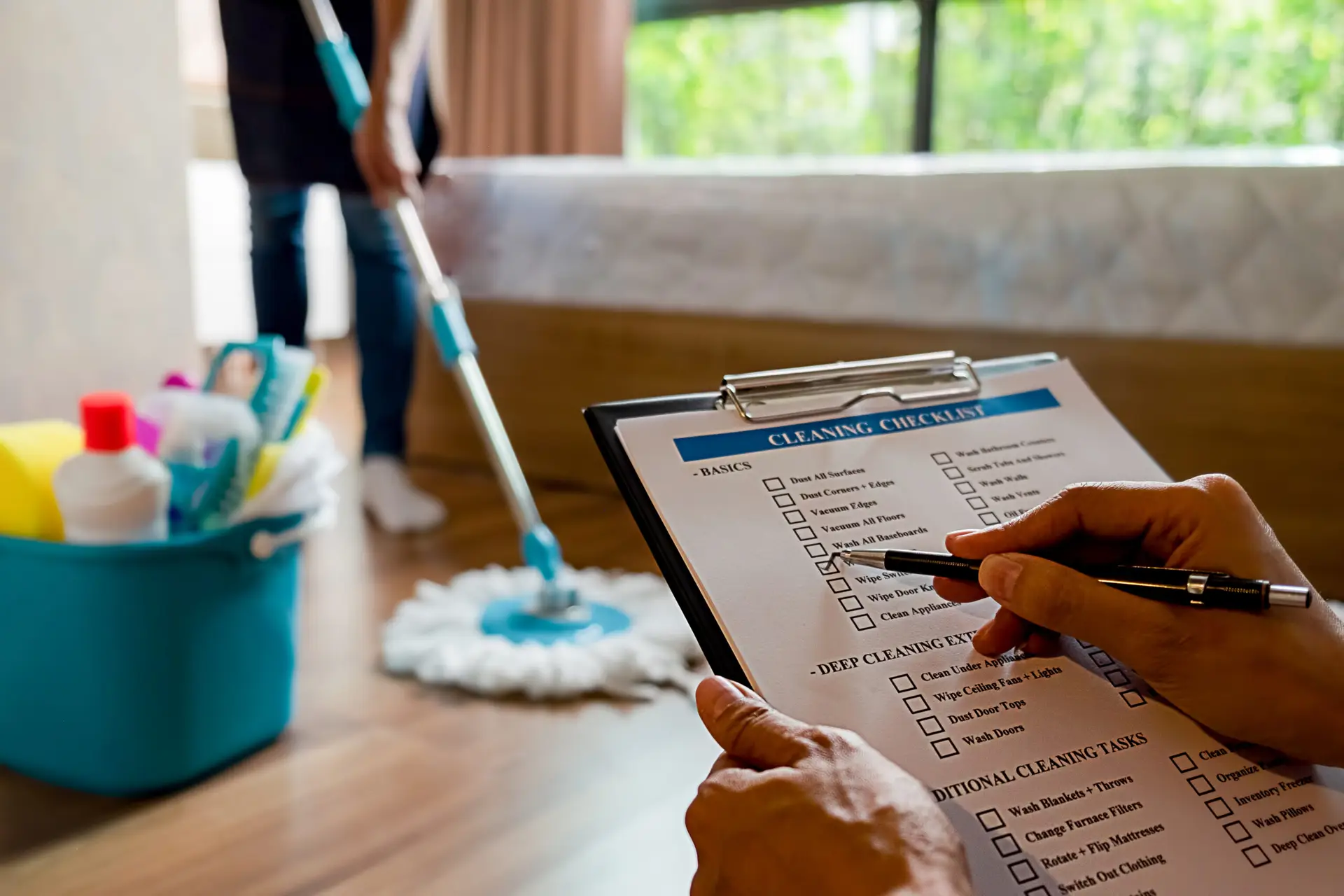
A structured cleaning plan turns an overwhelming seasonal job into a clear set of manageable tasks. Instead of guessing what to clean next, you follow a room-by-room system that covers every surface, fixture, and hidden zone. This approach saves time because you clean each space once, thoroughly, and then move on.
This winter home cleaning checklist is designed for homeowners in Maryland, DC, and Virginia who want a healthier indoor environment during the cold months. Use it as a printable guide. Work through one room per day or tackle the entire house over a weekend. Either way, crossing off each task gives you real progress you can see and feel.
Entryway and Mudroom: Winter Home Cleaning Checklist
The entryway absorbs the worst of winter weather. Salt, mud, and moisture enter here first. Cleaning this zone protects the rest of your home from damage and contamination.
- Vacuum or sweep all floor surfaces, including corners and under shoe racks.
- Mop hard floors with one part white vinegar to three parts warm water. This neutralizes corrosive salt residue that causes permanent staining on hardwood and tile.
- Wash all doormats, both interior and exterior. Shake outdoor mats vigorously before washing.
- Wipe down the coat closet shelf, rod, and interior walls with a damp microfiber cloth.
- Clean boot trays and replace liners if stained or cracked.
- Disinfect door handles, light switches, and hooks throughout the entryway.
- Organize winter gear: gloves, hats, scarves, and umbrellas. Donate items your family no longer uses.
- Check for water damage or staining along baseboards near the entrance.
Frequency: Sweep or vacuum the entryway daily during wet weather. In the DMV region, road salt use peaks between December and February, so daily attention prevents long-term floor damage. Complete the full entryway section every two weeks during this period.
Kitchen Tasks on Your Winter Home Cleaning Checklist
The kitchen works harder during cold months. Heavier cooking produces more grease, and closed windows trap cooking odors inside. A thorough seasonal clean prevents the buildup that regular wipe-downs miss.
Appliance tasks:
- Remove oven racks and soak them in hot soapy water. Scrub the oven interior with a dedicated cleaner or use the self-clean function.
- Pull the refrigerator away from the wall. Vacuum condenser coils underneath or behind the unit. Wipe the floor beneath.
- Empty the refrigerator shelf by shelf. Discard expired items. Wash removable shelves and drawers with warm water and baking soda.
- Remove and soak range hood filters in boiling water with degreasing dish soap until grease dissolves completely.
- Clean the microwave interior with the steam method: heat a bowl of water and lemon juice for three minutes, then wipe surfaces clean.
- Run an empty dishwasher cycle with a cup of white vinegar placed on the top rack.
Surface and storage tasks:
- Wipe the exterior of all appliances, including handles and control panels.
- Clean the top of the refrigerator and upper cabinets where greasy dust settles over months.
- Wipe down all cabinet fronts with a damp cloth and mild degreaser.
- Organize the pantry. Remove everything, wipe shelves, and discard expired items.
- Sanitize the trash can interior with a disinfectant spray.
- Scrub the sink and faucet. Clean the garbage disposal with ice cubes and coarse salt.
Frequency: Complete the kitchen section of your winter home cleaning checklist once at the start of winter and again mid-season. For ongoing maintenance between deep sessions, a bi-weekly cleaning keeps counters, floors, and sinks consistently clean.
Bathroom Sanitation Tasks
Bathrooms generate the most moisture in any home. Hot showers in enclosed spaces create conditions where mold and mildew thrive quickly. This section focuses on moisture control and deep sanitation.
Fixture and surface tasks:
- Scrub all grout lines with an oxygen bleach paste and a stiff brush. Focus on shower corners and floor edges where mold starts first.
- Remove hard water deposits from faucets, showerheads, and glass doors using a limescale remover or white vinegar.
- Clean the toilet completely: bowl, base, seat hinges, tank exterior, and the floor around the base.
- Wipe mirrors, light fixtures, and towel bars.
- Disinfect countertops, drawer pulls, and cabinet handles.
- Clean the exhaust fan cover. Dust buildup reduces airflow and traps humidity in the room.
Moisture prevention tasks:
- Check caulking around the tub, shower, and sink. Remove and replace any that shows cracks or discoloration.
- Wash fabric shower curtains in the washing machine. Replace plastic liners that show mildew.
- Treat all drains with an enzyme-based cleaner to dissolve hair and soap buildup.
- Verify the exhaust fan works properly. Run it during and for at least 20 minutes after every shower.
The American Lung Association indoor air resources confirm that controlling indoor humidity is essential for preventing mold and protecting respiratory health. This part of your seasonal routine directly supports that goal.
Frequency: Complete the full bathroom section of this winter home cleaning checklist monthly. Between sessions, squeegee shower walls daily and wipe counters weekly.
Living Room and Family Room Tasks
Living rooms get the most daily use during winter. Families gather here for meals, entertainment, and relaxation. Consequently, dust, pet hair, and crumbs accumulate quickly on soft surfaces and in hidden corners.
Soft surface tasks:
- Vacuum all upholstered furniture using the crevice and upholstery attachments.
- Remove and wash all throw pillow covers and throw blankets.
- Sprinkle baking soda on fabric cushions, wait 15 minutes, then vacuum thoroughly. This neutralizes trapped odors without chemicals.
- Vacuum area rugs on both sides. Rotate rugs to even out wear patterns.
Hard surface and detail tasks:
- Dust all shelves, picture frames, and decorative items.
- Wipe TV screens and electronics with a dry microfiber cloth. Use screen-safe cleaner only when needed.
- Clean ceiling fan blades using the pillowcase method: slide a pillowcase over each blade and pull it back to trap dust inside.
- Dust all blinds with a microfiber duster or vacuum brush attachment.
- Wipe baseboards and door frames with a damp cloth throughout the room.
- Vacuum under all furniture. Move sofas and chairs to reach hidden dust accumulation.
Frequency: Complete this section once per month. Additionally, vacuum high-traffic areas twice weekly between deep sessions. For a complete overview of seasonal habits, see our winter cleaning tips guide.
Bedroom Deep Clean Tasks
Bedrooms are sleep environments where air quality matters most. You spend eight hours breathing in an enclosed room. Dust mites thrive in warm, undisturbed bedding and carpets, which makes winter the peak season for allergen accumulation.
Bedding and mattress tasks:
- Wash all sheets, pillowcases, and duvet covers in hot water.
- Wash or dry clean heavy comforters and duvets at least once during winter.
- Vacuum the mattress surface with the upholstery attachment to remove dust mites and skin cells.
- Flip or rotate the mattress according to the manufacturer’s recommendation.
- Wash all pillow protectors. Consider replacing pillows older than two years.
Room detail tasks:
- Dust nightstands, lamps, and headboards thoroughly.
- Clean under the bed completely. Use a flat vacuum attachment or microfiber mop.
- Wipe closet shelves and vacuum the closet floor.
- Donate or store clothing you will not wear this season. This frees space and reduces dust traps.
- Wipe window sills where condensation collects during cold nights.
Frequency: Wash sheets weekly. Complete the full bedroom section of this winter home cleaning checklist once per month.
Utility and Extra Spaces Tasks
Laundry rooms, basements, and utility closets often get skipped during cleaning. However, these spaces affect air quality and safety throughout the house. Therefore, they deserve attention on your seasonal plan.
Laundry room tasks:
- Clean the dryer vent hose and exterior exhaust. Lint buildup is a serious fire hazard. Disconnect the hose and use a vent brush to remove all lint thoroughly.
- Run an empty washing machine cycle with hot water and two cups of white vinegar to remove residue and odors.
- Wipe the rubber gasket on front-load washers where mold develops in the folds.
- Organize detergents and cleaning supplies. Discard expired products.
HVAC and safety tasks:
- Replace the furnace filter. Use MERV 8 or higher for better filtration of indoor particles.
- Test smoke detectors and carbon monoxide detectors. Replace batteries in all units.
- Check fire extinguisher expiration dates.
- Vacuum all heating vents and registers throughout the house.
Frequency: Complete utility space tasks once at the start of winter. Check the furnace filter monthly throughout the season.
Supplies You Need for This Winter Home Cleaning Checklist
Having the right supplies ready before you begin prevents interruptions and wasted trips to the store. Gather these items into a cleaning caddy that moves from room to room with you.
Essential supplies for this plan:
- Microfiber cloths in multiple colors. Use one color for bathrooms, another for kitchens, and a third for general surfaces. This prevents cross-contamination between rooms.
- A HEPA-filter vacuum with brush and crevice attachments for upholstery, baseboards, and tight spaces.
- White vinegar for natural descaling and salt neutralization on entryway floors.
- Baking soda for deodorizing refrigerators, upholstery, and drains.
- An oxygen bleach paste for grout deep cleaning in bathrooms.
- An enzyme-based drain cleaner for bathroom and kitchen drains.
- Degreasing dish soap for range hood filters and kitchen surfaces.
- A squeegee for shower glass and bathroom mirrors.
- Trash bags, paper towels, and replacement liners for every trash can in the house.
Having everything assembled before you start the first room saves at least 30 minutes of searching and interruption across the full cleaning session.
How to Use This Plan Effectively
The best approach is to break the work into manageable sessions rather than attempting everything in one day. Here is a suggested schedule:
- Day 1: Entryway and living room.
- Day 2: Kitchen appliances and surfaces.
- Day 3: All bathrooms.
- Day 4: Bedrooms.
- Day 5: Utility spaces and HVAC.
You can also spread the work across weekends. The goal is completion, not speed. Each session takes two to four hours depending on room size and condition.
For homeowners who prefer to hand off the heavy work, our residential cleaning team in Maryland, DC, and Virginia can complete this entire winter home cleaning checklist in a single visit. A quarterly deep cleaning session covers the seasonal tasks that go beyond routine maintenance.
Every Room Checked, Every Surface Clean
A thorough winter home cleaning checklist protects your home, your health, and your comfort through the coldest months of the year. When you clean each room with intention, dust levels drop, air quality improves, and your home feels lighter. Use this approach every season, and the results will speak for themselves.